Asian equities moved mostly higher on Thursday, extending gains after Wall Street’s benchmark indexes closed at fresh highs, as investors balanced resilient U.S. earnings, stable oil prices and signs that tensions around Iran may be contained. Japan and South Korea led regional advances, while Chinese shares posted more modest gains despite persistent questions over export momentum.
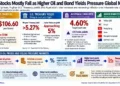
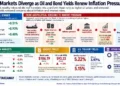
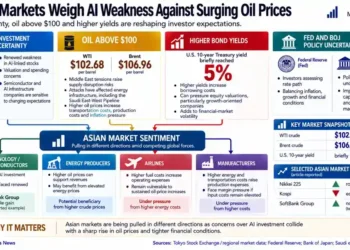
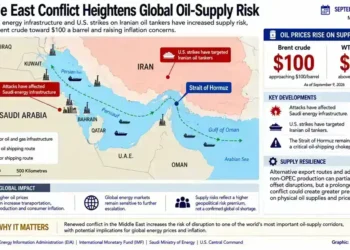
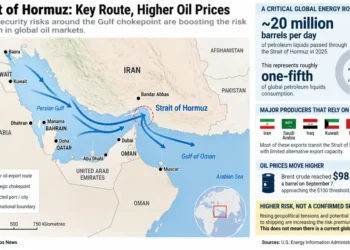
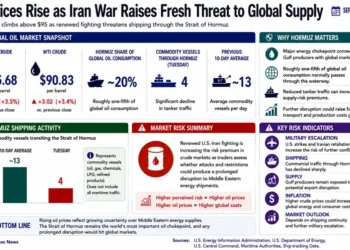
The dominant market angle was cross-market risk sentiment, with investors increasingly positioning around the view that global growth may avoid a deeper shock from elevated crude prices and Middle East shipping risks. Brent crude held near $94.94 per barrel, while U.S. benchmark crude traded around $91.66, levels that remain elevated but have steadied after recent volatility linked to the Strait of Hormuz.
Market Reaction Across Asia
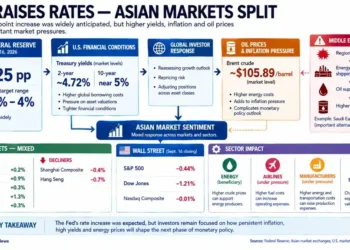
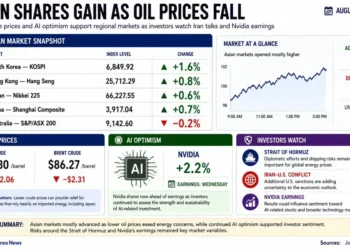
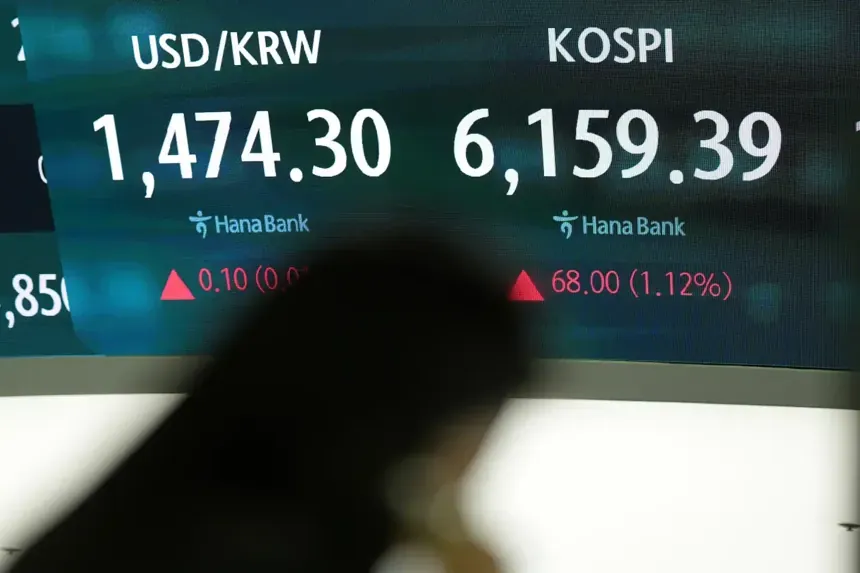
Japan’s Nikkei 225 rose 2.4%, outperforming major regional peers as exporters and technology shares tracked overnight gains in the U.S. South Korea’s Kospi added 2.0%, supported by semiconductor and industrial names, while Hong Kong’s Hang Seng Index climbed 1.2%. Mainland China’s Shanghai Composite advanced 0.6%, helped by first-quarter GDP growth data showing the economy expanded 5% year-over-year, broadly in line with policy targets.

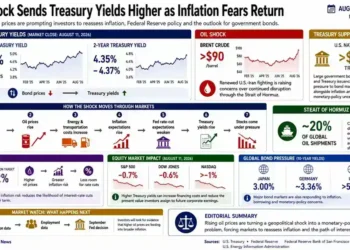
The move followed another record session on Wall Street, where the S&P 500 closed at 7,022.95, up 0.8%, while the Nasdaq Composite gained 1.6%. According to Reuters market reporting, the rally was reinforced by strong first-quarter bank earnings, softer inflation concerns and optimism that geopolitical risks may not materially derail near-term corporate performance.
Oil and Macro Sensitivity Remain Central
Despite the positive equity tone, energy markets remained a key variable for Asia-Pacific trading desks. Crude prices have risen sharply since the conflict began earlier this year, raising the risk of imported inflation for major oil-consuming economies including Japan, South Korea and India.
Still, the recent stabilization in oil prices appears to have eased immediate fears of margin pressure for transport, manufacturing and consumer sectors. Market participants are now focusing on whether diplomatic efforts can preserve shipping flows through the Gulf and prevent renewed supply disruptions.
Strategic Outlook for Regional Markets
The broader implication for Asian markets is that investors are shifting from pure geopolitical defense positioning toward a more selective risk-on stance, especially in export-heavy sectors leveraged to U.S. demand and AI-driven technology spending.
However, analysts continue to flag China’s external sector as a vulnerability if slower global trade volumes emerge from prolonged energy-related uncertainty. That leaves oil stability, U.S. earnings momentum and diplomatic developments as the three principal drivers for regional equity direction into the coming sessions.