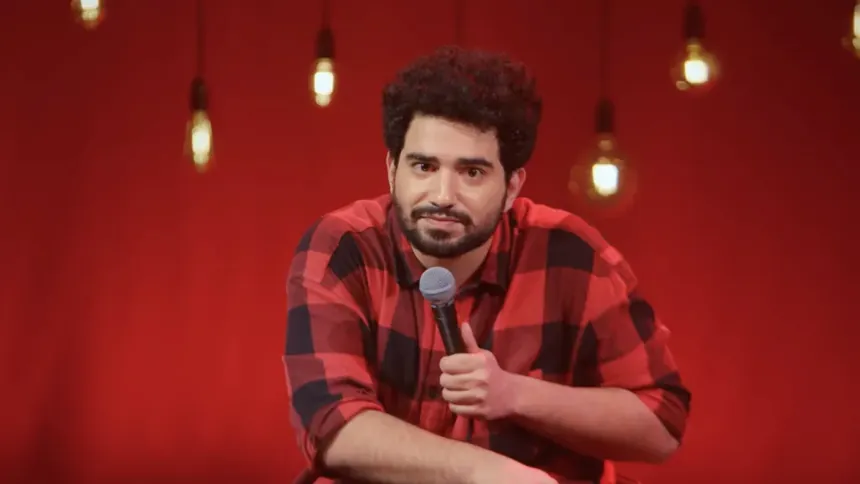
Samay Raina has returned to India’s entertainment spotlight with Still Alive, a new stand-up special that positions his comeback as both a career milestone and a reflection on the pressures facing creators in the country’s fast-expanding digital comedy economy. The release marks his first major on-camera project after months of reduced public visibility following controversy linked to his hit YouTube format India’s Got Latent. According to reporting by the BBC, the special turns his hiatus, legal scrutiny and the instability of internet fame into its central narrative engine.
Rather than presenting the comeback as a personal redemption arc alone, the stronger entertainment industry angle is how Still Alive re-establishes Raina’s commercial and cultural relevance in India’s creator-led comedy ecosystem. The special underscores how streaming-native comedians are increasingly building careers outside traditional television and film pipelines, while also confronting heightened legal and reputational exposure.
Career Milestone Through Streaming-Led Reinvention
Raina’s return is significant because his rise was built almost entirely through digital-native formats. A former competitive chess streamer, he cultivated an audience during the pandemic by blending gameplay with bilingual humour, sarcasm and live audience interaction before scaling that appeal into India’s Got Latent, an improvised parody talent format that became a viral success.

That creator-first trajectory mirrors a broader entertainment business shift in India, where comedians and performers are bypassing legacy media gatekeepers through YouTube-led franchises, direct ticketed shows and cross-platform fandoms. In that context, Still Alive functions less as a simple stand-up release and more as a strategic relaunch of a brand that had briefly stalled under controversy.
The Commercial Stakes of Controversy
The professional stakes surrounding Raina’s return remain closely tied to the fallout from the earlier backlash surrounding a guest’s widely criticised remarks on India’s Got Latent. Police complaints and obscenity allegations triggered a rapid retreat from public-facing projects, while collaborators and portions of his audience distanced themselves.
For entertainment industry observers, the episode highlighted the fragility of creator-driven formats whose spontaneity is also their market strength. In a business environment that rewards improvisation, virality and rapid clipping across platforms, the same content can also move beyond intended audience context and generate regulatory consequences.
That tension gives Still Alive clear industry relevance: it explores how digital performers are recalibrating risk without abandoning the loose, unfiltered tone that made them successful in the first place.
Cultural Influence Beyond the Comeback Narrative
The special also lands at a moment when Indian comedy is experiencing rapid regional and demographic expansion. Once concentrated in English-speaking urban circuits, the sector now spans multilingual creators, smaller-city live tours and social-first discovery systems powered by YouTube and Instagram.
■ Related News




Raina’s renewed visibility therefore carries broader cultural significance. His material now reflects not just personal resilience, but the uneasy balance comedians face between authenticity and scrutiny in a mass-market online environment.
By anchoring the set in anxiety, audience backlash and performance pressure, Still Alive extends beyond celebrity comeback framing into a commentary on how entertainment careers are now shaped by platform volatility, legal sensitivity and algorithmic reputation cycles.
Industry Outlook
For the entertainment business, Raina’s re-entry suggests that audience loyalty in creator culture can survive even severe reputational disruption if the returning work feels narratively honest and artistically evolved.
Instead of dramatically reinventing his persona, he appears to be refining it—retaining the spontaneity and irony that built his following while introducing a more reflective tone shaped by recent events. That balance may prove crucial as India’s comedy economy matures into a higher-stakes segment of the wider streaming and live-performance market.
If Still Alive sustains momentum, it could mark not just a personal comeback, but a case study in how internet-era performers rebuild franchises after controversy.