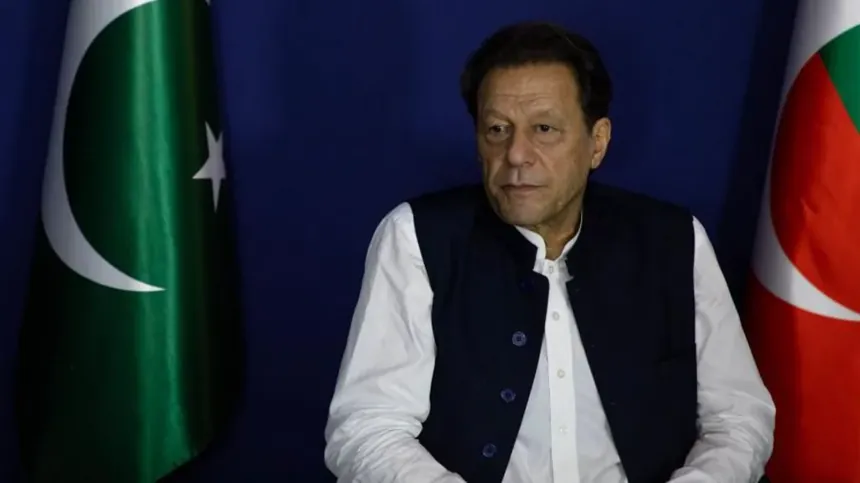
A new court ruling against former prime minister Imran Khan has heightened Pakistan’s ongoing governance crisis, with additional prison sentences handed down in a state gifts case involving his wife Bushra Bibi.
The latest verdict, part of what is widely known as the Toshakhana case, adds to a series of legal challenges facing Khan, who has been in detention since 2023. The ruling is expected to intensify scrutiny of Pakistan’s judicial process and its political implications, particularly as the country navigates heightened internal divisions.
Reporting from BBC News indicates the court sentenced Khan to 10 years for criminal breach of trust and seven years for criminal misconduct, with the terms to run concurrently. Bushra Bibi received related penalties, along with a substantial financial fine imposed on the couple.

Governance Crisis Deepens Amid Legal Escalation
The Imran Khan sentencing marks a significant escalation in Pakistan’s political instability, as the former leader continues to face a growing number of legal cases. His legal team has rejected the verdict, describing the charges as politically motivated and confirming plans to challenge the ruling in a higher court.
According to his lawyer, the defense was notified of the sentencing late, raising procedural concerns that may form part of the appeal. The case adds to an already complex legal landscape surrounding Khan, who has faced numerous allegations ranging from corruption to national security violations.
The developments come as Pakistan’s political environment remains polarized, with Khan’s supporters alleging institutional bias, while government officials maintain that due process is being followed.
Legal Dispute Centers on State Gift Regulations
At the center of the case is a luxury jewellery set reportedly gifted by Mohammed bin Salman during a 2021 state visit. Under Pakistan’s Toshakhana rules, state gifts must be declared and deposited, though officials may purchase them under regulated procedures.
Prosecutors alleged that the jewellery was undervalued through a private firm before being acquired at a reduced price, constituting a breach of public trust. The defense disputes these claims, arguing that the process followed established mechanisms.


The case reflects broader concerns over transparency and accountability in public office, issues that have long shaped Pakistan’s political discourse.
Political Tensions Intensify Amid Broader Crackdown
Khan’s legal challenges extend beyond the Toshakhana case, with multiple proceedings still pending, including charges linked to unrest following his arrest in May 2023. His continued detention and limited access to family and legal counsel have drawn criticism from supporters and rights advocates.
Despite incarceration, Khan has remained a central figure in Pakistan’s political landscape, with messages attributed to him continuing to circulate on social media. These communications have been sharply critical of the current government and the military leadership, particularly Asim Munir.
The intensifying legal pressure has coincided with broader tensions between civilian political actors and the country’s powerful military establishment, a dynamic that has historically influenced governance outcomes in Pakistan.
Strategic Implications for Political Stability
The expanding scope of the Imran Khan sentencing cases underscores the fragile state of Pakistan’s political system, with potential implications for institutional stability and investor confidence. Analysts note that prolonged legal battles involving a major opposition figure could further complicate governance and policy continuity.
Khan, who was removed from office in 2022 following a no-confidence vote, remains a polarizing figure whose political future is closely tied to the outcome of ongoing legal proceedings. The appeal process is expected to be closely watched both domestically and internationally.
As Pakistan confronts economic pressures and political fragmentation, the trajectory of these legal cases may play a decisive role in shaping the country’s near-term stability and its relations with global partners.