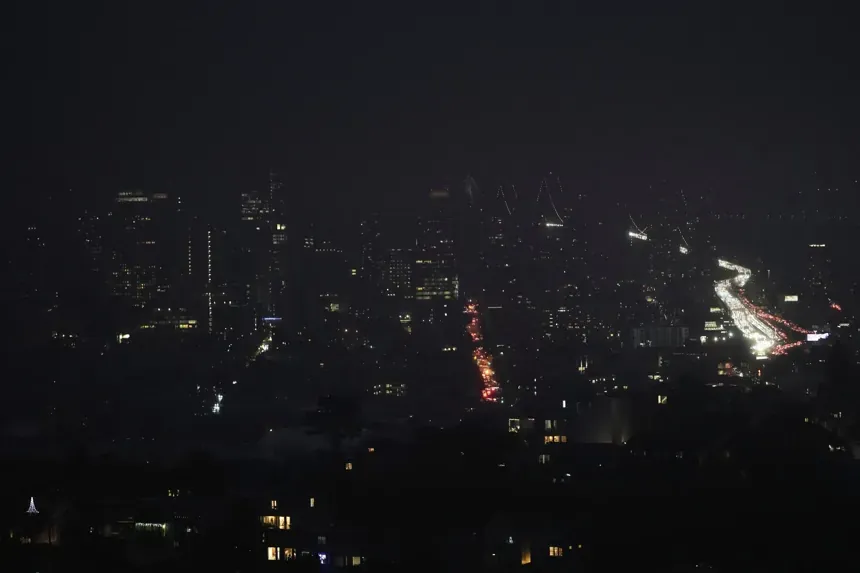
A major San Francisco power outage affecting more than 130,000 customers has exposed infrastructure vulnerabilities in one of the United States’ key economic centers, with authorities racing to restore full service after widespread disruption to businesses and transport systems.
Electricity had been restored to most residents and businesses across San Francisco by Sunday, though around 17,000 customers remained without power, according to utility provider Pacific Gas and Electric Company. The outage, triggered by a substation fire, prompted concerns over grid resilience in densely populated urban regions.
Reporting from The Associated Press indicates the blackout began early Saturday afternoon, quickly expanding across large parts of the city and affecting roughly one-third of the utility’s customer base at its peak. The scale of disruption drew attention to the risks posed by aging infrastructure in globally connected cities.

Economic Disruption Spreads Across Key Urban Sectors
The outage forced widespread closures of restaurants, retail stores, and commercial establishments during a peak shopping period, amplifying its economic impact. Local media reports described darkened streets and halted business activity in several districts, underscoring the vulnerability of urban economies to sudden infrastructure failures.
Transport systems were also significantly affected. The city’s Department of Emergency Management warned of widespread transit disruptions and advised residents to limit travel, while traffic signals going offline created safety risks across multiple intersections.
Autonomous mobility services were not immune. Waymo, a key operator of driverless ride-hailing vehicles, suspended operations during the outage, highlighting how emerging transport technologies remain dependent on stable energy infrastructure.
Infrastructure Pressure Raises Broader Grid Reliability Questions
Pacific Gas and Electric Company said the outage stemmed from “significant and extensive” damage caused by a fire at a substation, with repairs described as complex and requiring heightened safety measures. The company deployed additional engineers and technical crews to accelerate restoration efforts.
While officials confirmed no injuries, the incident has intensified scrutiny of grid resilience in major metropolitan areas. Analysts note that similar outages in global cities can have cascading effects on financial activity, logistics, and public safety, particularly where infrastructure modernization has lagged behind demand.



International Implications for Urban Infrastructure Resilience
Although localized, the San Francisco power outage carries broader implications for global cities facing similar pressures from population density, climate risks, and increasing electrification. Urban planners and policymakers worldwide are closely monitoring such incidents as they assess vulnerabilities in critical infrastructure systems.
The disruption also highlights the growing interdependence between energy systems and digital economies, where outages can interrupt everything from payments to autonomous transport. Experts say the incident may prompt renewed investment discussions in grid modernization across advanced economies.
Pacific Gas and Electric Company said it expects full restoration no later than Monday afternoon, as investigations into the exact cause of the substation fire continue.