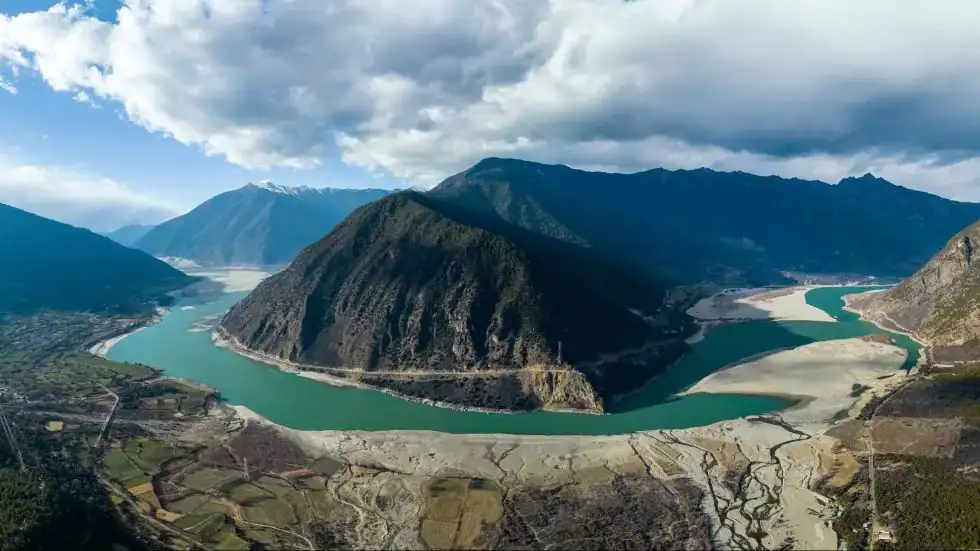
China’s construction of a विशाल hydropower system in the Himalayas is emerging as a major source of regional tension, as limited transparency and strategic concerns raise alarm among downstream countries dependent on shared water resources.
The China Himalayan hydropower project, centered on the lower reaches of the Yarlung Tsangpo river in Tibet, is expected to become the most powerful electricity-generating system in the world. But its scale, secrecy, and proximity to disputed borders have elevated it from an engineering feat to a potential geopolitical flashpoint.
Global attention has intensified as experts warn that the project could reshape water flows across South Asia, affecting millions in India and Bangladesh while complicating already fragile diplomatic relations between Beijing and New Delhi.

Strategic Stakes Rise Over Shared Water Resources
The China Himalayan hydropower development is unfolding in a region often described as Asia’s “water tower,” where major rivers originate and sustain large populations downstream. The Yarlung Tsangpo river, which flows into India as the Brahmaputra, supports agriculture, fisheries, and livelihoods across multiple countries.
According to reporting by CNN, the project could harness an immense drop in elevation through a network of dams, tunnels, and underground power stations, potentially generating far more electricity than existing global benchmarks. While Chinese officials say the initiative will advance clean energy and climate goals, downstream nations remain wary of its implications.
Indian authorities have expressed concern that upstream control over water flows could alter seasonal patterns, raising fears of both flooding and water scarcity. Analysts note that such control could carry strategic leverage in times of political tension.
Secrecy Complicates Regional Trust
A central issue surrounding the China Himalayan hydropower project is the limited availability of detailed information about its design and operation. While Beijing maintains that the project has undergone extensive research and includes environmental safeguards, independent experts say the lack of transparency makes it difficult to assess potential risks.
CNN reporting indicates that much of the project’s structure has been pieced together through satellite imagery, public documents, and expert analysis rather than official disclosures. This opacity has fueled skepticism among neighboring countries and international observers.
■ Related News




Water governance specialists emphasize that transparent data-sharing mechanisms will be critical to reducing uncertainty and preventing disputes. Without clear communication, even routine water management decisions could be misinterpreted as strategic actions.
Environmental and Human Impact Concerns Grow
Beyond geopolitical considerations, the project has raised significant environmental and humanitarian concerns. The construction site lies in a seismically active and ecologically sensitive region, home to diverse wildlife and indigenous communities.
Experts warn that large-scale infrastructure in such terrain could disrupt ecosystems, increase the risk of landslides, and alter river dynamics. Climate-related hazards, including glacial flooding and extreme weather, add further uncertainty to the project’s long-term safety.
Local communities are also expected to be affected, with reports indicating that relocations may be required to accommodate construction. While Chinese authorities say they will prioritize livelihoods and cultural preservation, rights groups have questioned how displacement and environmental disruption will be managed.
Regional Competition and Security Dynamics Intensify
The China Himalayan hydropower initiative is also influencing infrastructure planning beyond its borders. In India, officials are accelerating their own dam projects along the same river system, partly in response to developments upstream.
Analysts warn that this dynamic could lead to a broader “infrastructure race,” increasing environmental risks and complicating cooperative water management. The proximity of the project to disputed border areas adds another layer of sensitivity, linking resource management with territorial security concerns.
Strategic experts cited in CNN reporting suggest the project aligns with broader efforts by Beijing to strengthen control over critical regions while securing long-term energy independence.
Uncertain Outlook for Regional Cooperation
As construction progresses, the China Himalayan hydropower project underscores the challenges of managing shared natural resources in a geopolitically sensitive region. While the project could contribute to global clean energy goals, its broader implications remain uncertain.
Without robust mechanisms for transparency and cross-border coordination, experts warn that tensions could escalate, particularly if downstream impacts become more pronounced. The coming years are likely to test whether regional powers can balance development ambitions with cooperation and environmental stewardship.
For now, the project stands as both a symbol of technological ambition and a potential catalyst for geopolitical friction, with consequences that could extend far beyond the Himalayas.