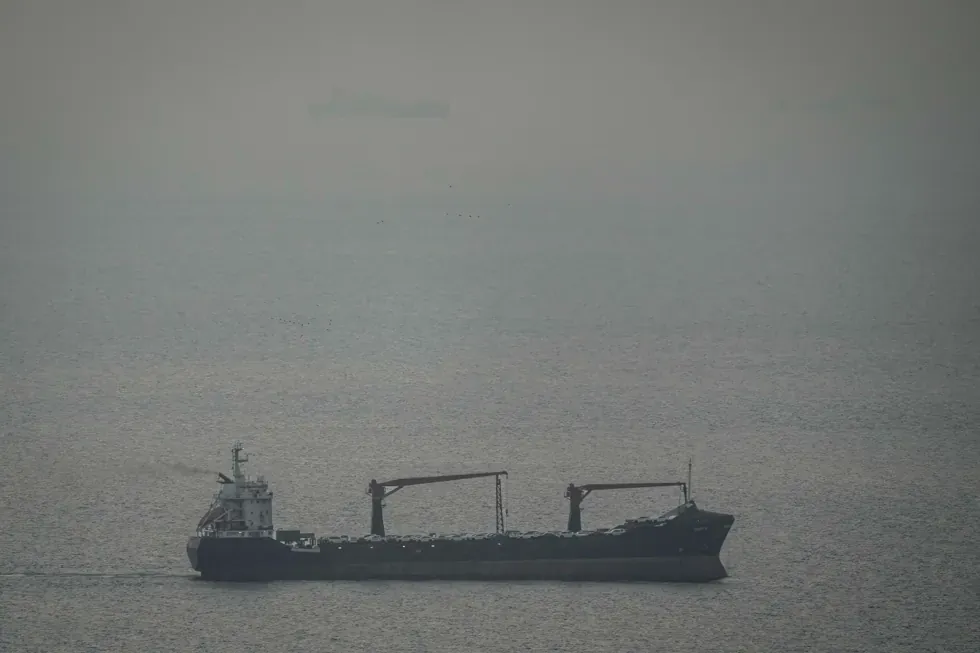
A rapidly shifting U.S. approach to the Strait of Hormuz crisis is intensifying scrutiny of Washington’s war strategy, as President Donald Trump pivots from diplomacy and economic maneuvering to explicit threats against Iranian civilian infrastructure. The escalation underscores growing concern that the administration is navigating a conflict without a defined resolution pathway.
As first reported by the Associated Press, Trump’s latest warning—demanding that Iran reopen the strait within 48 hours or face strikes on major power plants—marks a significant departure from prior messaging centered on military targets. The move places U.S. strategy under renewed pressure at a moment when global energy markets remain volatile and regional tensions are increasingly fragile.
Strategic Coherence Erodes Under Escalating Pressure
Within days, U.S. policy signals have moved through multiple, sometimes conflicting phases—coalition-building, unilateral action, economic concessions, and now direct coercion. This rapid recalibration is raising questions among policymakers and allies about whether Washington retains a coherent operational framework.

Trump’s earlier calls for an আন্তর্জাতিক naval coalition to secure the waterway were met with reluctance from key partners, exposing limits to allied alignment. Subsequent remarks suggesting the U.S. could act alone, followed by indications of potential withdrawal, added to perceptions of inconsistency.
Sen. Thom Tillis noted in remarks on ABC’s “This Week” that shifting responsibility after initiating escalation risks undermining credibility, reflecting broader unease within U.S. political circles.
The cumulative effect is a narrowing of strategic clarity at a time when decisive coordination is critical.
Economic Leverage Weakens as Tactical Options Narrow
Efforts to stabilize global oil markets have further complicated the administration’s posture. The Treasury Department’s decision to ease sanctions on Iranian oil—an unusual step after decades of restrictions—signals an attempt to relieve price pressure affecting both global markets and domestic consumers.
However, the move introduces a paradox: economic concessions traditionally used as leverage are now being deployed amid active conflict, potentially diluting their strategic impact. It remains uncertain whether increased oil supply can meaningfully offset price volatility or prevent Tehran from benefiting financially.
■ Related News



This recalibration suggests that economic tools are no longer sufficient on their own, pushing Washington toward more direct—and risk-laden—forms of pressure.
Civilian Infrastructure Enters the Targeting Debate
The most consequential shift lies in the administration’s explicit threat to strike Iran’s energy grid. Unlike prior operations focused on military assets, targeting power plants introduces complex legal and ethical considerations under international humanitarian law.
According to legal analysts cited in the AP report, such actions would require a high threshold of justification, balancing military advantage against civilian harm. Geoffrey Corn, a former U.S. military lawyer, characterized the evolving posture as lacking procedural rigor typically associated with decisions of this magnitude.
Iran’s representative to the United Nations has already warned that attacks on power infrastructure would be inherently indiscriminate, signaling potential diplomatic fallout at the Security Council level.
This development places U.S. military planners in a sensitive position, where operational directives could intersect with legal constraints and institutional risk.
Allied Support Fractures as Regional Risks Expand
International responses to the ultimatum reveal emerging fractures. While NATO Secretary-General Mark Rutte indicated that multiple countries are working toward restoring navigation in the strait, key regional voices have urged restraint.
Israel’s ambassador to Washington cautioned against broad infrastructure attacks, emphasizing the long-term implications for post-conflict recovery. The divergence highlights a widening gap between immediate tactical escalation and longer-term strategic stability.
Meanwhile, Iranian officials have warned that any strike on civilian infrastructure would trigger a full closure of the Strait of Hormuz and retaliatory action against U.S. and allied assets—raising the prospect of a wider regional confrontation.
Diplomatic Off-Ramps Narrow as Conflict Risks Deepen
The current trajectory suggests diminishing space for de-escalation. Diplomatic initiatives have struggled to gain traction, while economic adjustments have yielded uncertain results. The introduction of infrastructure targeting as a policy lever further complicates potential off-ramps.
Critics within the United States have framed the escalation as evidence of reactive policymaking, while administration officials argue it reflects necessary resolve against Iranian actions. The divergence underscores a broader debate over whether the strategy is adaptive or improvisational.
What remains clear is that each successive step is raising the stakes—not only for the immediate conflict but for the broader stability of global energy flows and regional security architecture.
If the ultimatum fails to achieve its objective, Washington may face a narrowing set of choices, each carrying higher risks of unintended escalation and long-term geopolitical consequences.