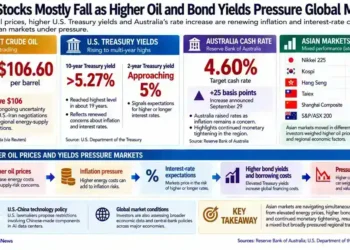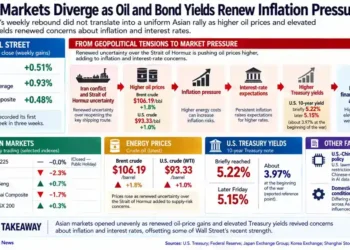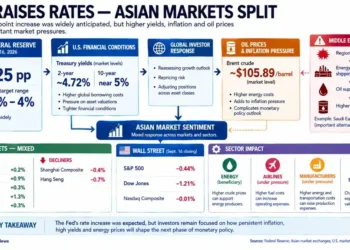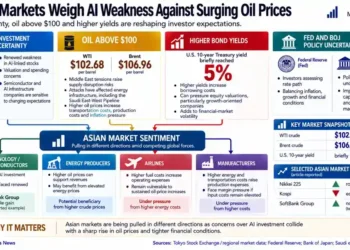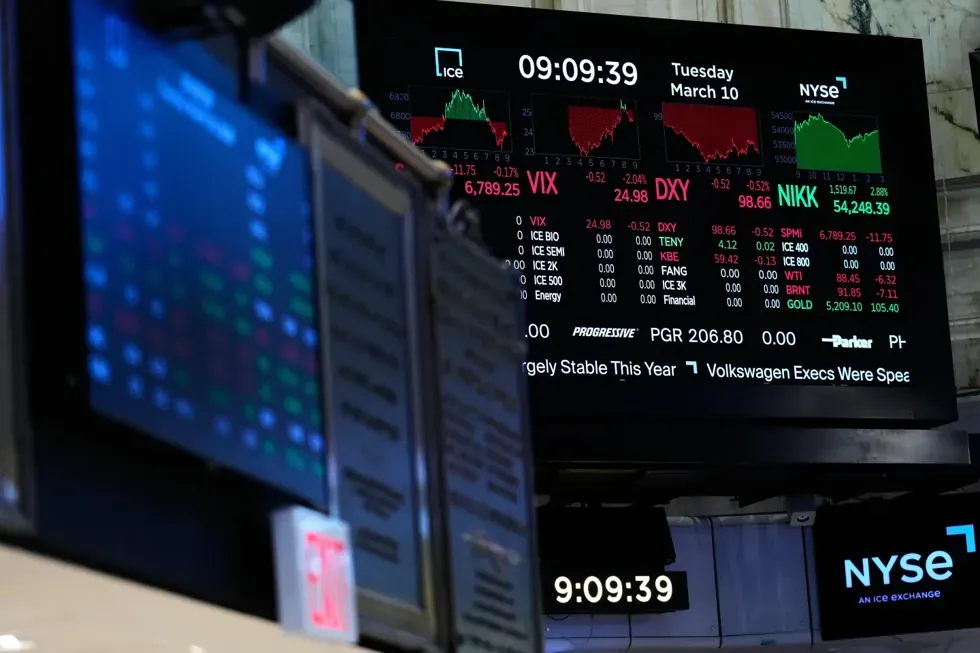
The S&P 500 closed Thursday just 4.4% below its January peak, illustrating market resilience amid the ongoing Iran conflict that has disrupted global oil flows. Oil prices spiked to nearly $120 per barrel, the highest since summer 2022, as disruptions in the Strait of Hormuz prompted producers to announce output cuts, according to Bloomberg market data.
Earnings and Market Behavior
Despite heightened volatility, analysts stress that historical patterns favor long-term investors who maintain equity positions. Anthony Saglimbene, chief market strategist at Ameriprise, noted that extreme market swings often provide entry points rather than signals to sell. Daily fluctuations have seen the Dow Jones Industrial Average drop roughly 900 points in mornings, only to recover by close, reflecting intraday volatility rather than sustained declines.
Oil Supply Constraints and Inflation Risks
The conflict has effectively stalled traffic through the Strait of Hormuz, where roughly one-fifth of global oil transits daily. Crude storage in the region is approaching capacity, prompting output reductions and raising concerns of prolonged supply constraints. Analysts warn that sustained oil prices above $120 per barrel could trigger stagflation—simultaneously high inflation and stagnant growth—which central banks have limited tools to counter, Financial Times reports indicate.

Investor Guidance and Portfolio Strategy
Investment advisors continue to recommend patience, particularly for those with long-term horizons. Younger investors benefit from time to recover from market shocks, while retirees may need to adjust withdrawal strategies to preserve portfolio compounding. Diversification remains crucial, though Treasury yields and gold have faced headwinds, reducing traditional safe-haven appeal amid the current crisis.
Outlook
Market experts caution that uncertainty remains high. While S&P 500 corrections of 10% or more are relatively common, the combination of geopolitical risk and inflation pressures presents a complex landscape for asset allocation. Strategic patience, informed by historical trends and portfolio diversification, is emphasized as the primary approach for navigating current volatility.
■ Related News