SAN DIEGO (JN) – California health authorities are urging the public to avoid mushroom foraging after an unusual surge in poisonings linked to death cap mushrooms, one of the most toxic fungi in the world. Since mid-November, four people have died and three others have required liver transplants after consuming the mushroom, which has spread widely following recent rains.
The California Department of Public Health (CDPH) said more than three dozen cases of suspected death cap poisoning have been reported since Nov. 18 — a figure far above the typical annual range of two to five cases. Many patients developed acute liver failure, with several requiring intensive care treatment. Those affected have ranged in age from a toddler of 19 months to adults in their sixties.
Officials say warm autumn temperatures followed by early seasonal rains created ideal conditions for what experts describe as a “super bloom” of the mushroom across Northern California, the Central Coast, and parts of the Bay Area.
Why death caps are especially dangerous
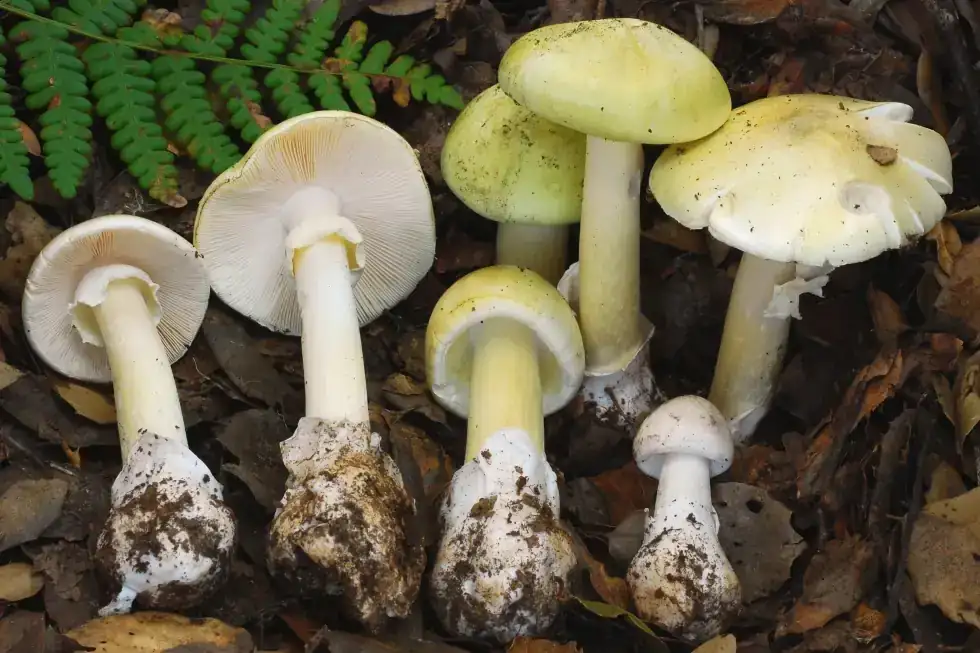
The death cap mushroom, known scientifically as Amanita phalloides, contains amatoxins — highly potent compounds responsible for about 90% of fatal mushroom poisonings worldwide. Even a small amount can be deadly. Cooking, drying, or freezing the mushroom does not reduce its toxicity.
The fungi are often found in forests, city parks, and neighborhoods, commonly growing beneath oak trees. Their appearance varies by growth stage, making identification difficult even for experienced foragers.
“Unless you’re an expert who studies mushrooms it can be very difficult to know,” said Dr. Craig Smollin, medical director for the San Francisco Division of the California Poison Control System. “The main thing this year is just the magnitude — having almost 40 cases is very unusual.”
Early symptoms can include stomach cramping, nausea, vomiting, and diarrhea within 24 hours. These symptoms may temporarily subside, but severe liver damage can develop within two to three days, sometimes fatally. Health officials stress that medical treatment becomes far more complex once symptoms appear.
Families misled by familiar-looking mushrooms
Several cases have involved families who mistook the mushrooms for edible varieties common in their home countries.
Laura Marcelino, a seasonal farmworker from Salinas, told the San Francisco Chronicle that she and her husband gathered mushrooms resembling those they used to forage in Oaxaca, Mexico. After feeling unwell the next day, they cooked the mushrooms again in soup. Both later became seriously ill. Marcelino was hospitalized for five days, and her husband required a liver transplant. Their children did not eat the mushrooms.
State health officials said a significant number of those poisoned speak Spanish, Mixteco, or Mandarin Chinese, and warnings have since been expanded in multiple languages. Spanish was the primary language for more than 60% of those affected.
Poisonings reported across parks and neighborhoods
Clusters of death cap mushrooms have been identified in Monterey County, the San Francisco Bay Area, and other parts of Northern California. Reports indicate the mushrooms have been collected in local and national parks as well as residential areas.
Children and pets are also considered at risk, as the mushrooms can grow in lawns, parks, and playgrounds. Authorities advise close supervision outdoors and recommend purchasing mushrooms only from trusted grocery stores or licensed sellers.
The CDPH emphasized that mushroom color is not a reliable way to determine whether a mushroom is safe to eat. The death cap can range from brownish-white to greenish as it matures, closely resembling edible species from around the world.
Surge in mushroom exposures nationwide
U.S. Poison Centers reported a broader 40% rise in exposures to all types of wild mushrooms between September and January compared with the same period a year earlier. Not all exposures lead to poisoning, but officials say the trend underscores the risks of foraging without expert knowledge.
Doctors advise seeking immediate medical care if someone suspects they have eaten a poisonous mushroom — even before symptoms develop.
Poison control specialists in the United States can be reached 24 hours a day at 1-800-222-1222 or through PoisonHelp.org for guidance in suspected cases.
Health officials say the safest course this year is to avoid wild mushroom foraging altogether.
This article was rewritten by JournosNews.com based on verified reporting from trusted sources. The content has been independently reviewed, fact-checked, and edited for accuracy, neutrality, tone, and global readability in accordance with Google News and AdSense standards.
All opinions, quotes, or statements from contributors, experts, or sourced organizations do not necessarily reflect the views of JournosNews.com. JournosNews.com maintains full editorial independence from any external funders, sponsors, or organizations.
Stay informed with JournosNews.com — your trusted source for verified global reporting and in-depth analysis. Follow us on Google News, BlueSky, and X for real-time updates.