The global economy is facing renewed uncertainty after the conflict involving Iran disrupted oil shipments through the Strait of Hormuz, a critical maritime corridor for global energy trade. The disruption has tightened oil supplies and pushed energy prices higher, raising concerns among policymakers and economists about inflation pressures and slower economic growth.
Oil prices climbed sharply following missile strikes on Feb. 28 that killed Iranian leader Ayatollah Ali Khamenei, according to reporting by the Associated Press. Benchmark crude briefly approached $120 per barrel before easing to around $90 in subsequent trading, reflecting market volatility tied to the conflict and concerns about supply disruptions.
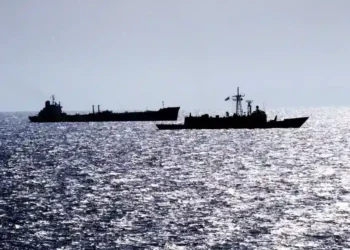
The Strait of Hormuz normally carries roughly 20 million barrels of oil per day—about one-fifth of global consumption—making it one of the most strategically important energy chokepoints in the world.

Energy Supply Disruption Reshapes Market Expectations
The interruption of shipments through the strait has highlighted how geopolitical risks in the Middle East can quickly affect global commodity markets.
Economists note that a sustained rise in oil prices can ripple across the global economy. Kristalina Georgieva, managing director of the International Monetary Fund, said that every 10% increase in oil prices could lift global inflation by about 0.4 percentage points while reducing worldwide economic output by roughly 0.2%, according to IMF estimates.
Analysts warn that alternative supply sources cannot quickly compensate for the loss of shipments through the strait. Simon Johnson, an economist at the Massachusetts Institute of Technology and a former IMF chief economist, said there is little excess production capacity available globally to offset a prolonged disruption.
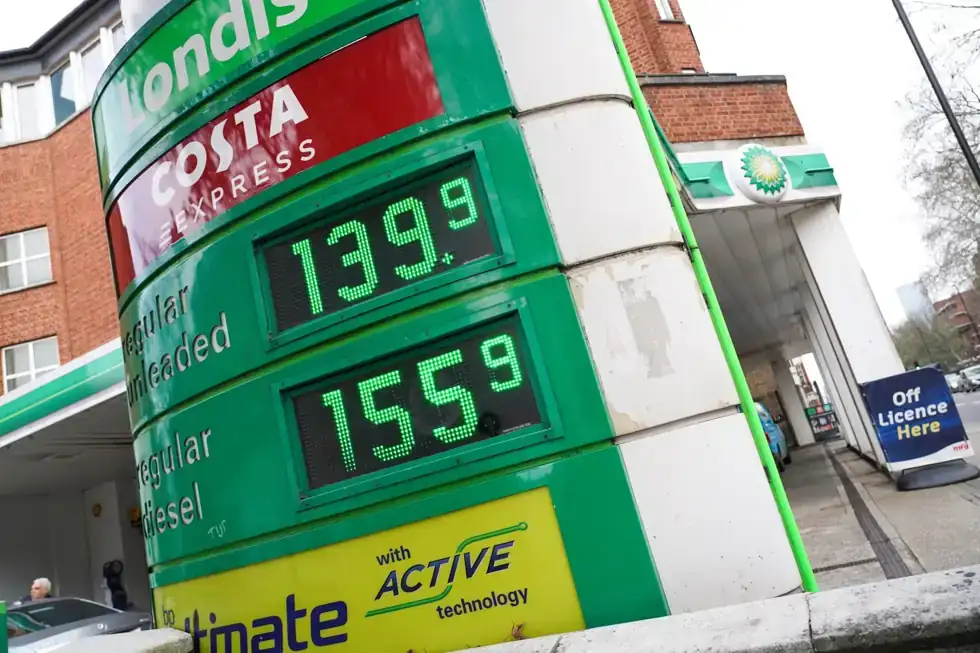
Energy price increases are already filtering through to consumer markets. Data from AAA shows the average U.S. gasoline price rising to $3.48 per gallon from just under $3 a week earlier.
Central Banks Face Renewed Inflation Challenge
The surge in energy costs is complicating the outlook for monetary policy as central banks balance inflation risks against slowing economic growth.
■ Related News




Higher fuel costs tend to increase consumer prices, while also reducing disposable income and business investment. That combination can slow economic activity even as inflation remains elevated.
Policymakers at the Federal Reserve are already divided on the path for interest rates. Some officials have expressed concern about persistent inflation above the central bank’s 2% target, while others have emphasized signs of weakness in the labor market.
The latest energy shock could intensify the debate within the Fed and other major central banks about whether to prioritize inflation control or economic support.
Energy Importers Face Greater Exposure
Countries that rely heavily on imported energy are likely to experience the most immediate economic pressure.
According to analysis cited by Capital Economics, economies including Japan, South Korea, India, China, and much of Europe remain highly dependent on oil and gas supplies from the Middle East. Higher energy costs could weigh on growth by raising manufacturing and transportation expenses.
Pakistan may face particularly severe challenges. The country imports around 40% of its energy and relies heavily on liquefied natural gas shipments from Qatar, some of which have been disrupted by the conflict.
Economists Gareth Leather and Mark Williams of Capital Economics noted that rising energy prices could force Pakistan’s central bank to maintain or raise interest rates despite weak economic conditions, as policymakers attempt to contain inflation.
Oil Producers Outside the Region May Benefit
While import-dependent economies face higher costs, some energy exporters could see improved revenues.
Producers outside the immediate conflict zone—including Norway, Russia and Canada—may benefit from higher oil prices without facing the same geopolitical risks affecting Middle Eastern supply routes.
The price shift illustrates how geopolitical disruptions often redistribute economic gains and losses across global markets.
Fertilizer Trade Disruption Raises Food Security Risks
The economic impact of the conflict extends beyond oil markets.
According to Joseph Glauber of the International Food Policy Research Institute, up to 30% of global fertilizer exports—including urea, ammonia, phosphates and sulfur—normally transit through the Strait of Hormuz.
Disruptions to these shipments could raise input costs for farmers worldwide, increasing the likelihood of higher food prices. Economists warn that the consequences may be most severe in low-income countries with already fragile agricultural systems.
Maurice Obstfeld, a senior fellow at the Peterson Institute for International Economics and former chief economist at the IMF, said higher fertilizer costs could reduce agricultural productivity in vulnerable economies and increase the risk of food shortages.
U.S. Economy Partially Shielded but Consumers Feel Impact
The United States may be somewhat insulated compared with other economies because it is now a net exporter of energy.
However, higher gasoline prices are still likely to affect household spending. Mark Mathews, chief economist at the National Retail Federation, estimates that U.S. households spend roughly $2,500 annually on fuel.
A 20% increase in gasoline prices would add around $10 per week to household budgets, potentially reducing discretionary spending in other areas of the economy.
Analysts at Evercore ISI estimate that if oil prices remain near $100 per barrel, the resulting rise in gasoline prices could offset much of the financial benefit that many U.S. households received from tax reductions enacted in 2025.
Global Economic Resilience Still Uncertain
Despite the risks, some economists believe the global economy could absorb the shock if energy markets stabilize.
Eswar Prasad, a professor of trade policy at Cornell University, said global economic systems have demonstrated resilience in recent years despite major disruptions such as the war in Ukraine and broad U.S. tariffs introduced in 2025.
The duration of the conflict and the reopening of shipping routes through the Strait of Hormuz will likely determine the scale of the economic fallout.