FRANKFURT, Germany (Journos News) – The expanding conflict involving Iran is rapidly evolving into a test of global energy security, as critical oil and gas infrastructure across the Persian Gulf region faces mounting disruption. Drone strikes, operational shutdowns, and shipping bottlenecks are converging to threaten a network of pipelines, refineries, and export terminals that collectively supply a large share of the world’s energy.
Energy analysts warn that the consequences extend far beyond the immediate battlefield. With major export facilities offline and tanker routes constrained, the conflict is placing sustained pressure on global supply chains, pushing prices higher and raising concerns about longer-term instability in international energy markets.
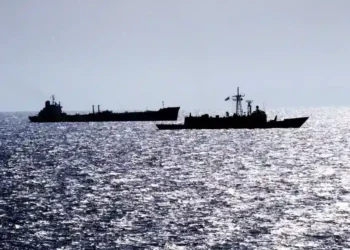
As first reported by The Associated Press, Iranian drone strikes and the heightened risk of further attacks have significantly disrupted operations across several key facilities. In parallel, the effective closure of the Strait of Hormuz — a vital maritime chokepoint for global oil and liquefied natural gas shipments — has halted the movement of millions of barrels of energy exports each day.

Brent crude prices have already surged from roughly $73 per barrel before the conflict began to nearly $103, underscoring the scale of the market reaction.
Shipping Chokepoint Strains Global Energy Arteries
The Strait of Hormuz sits at the center of the unfolding disruption. Roughly one-fifth of the world’s oil and liquefied natural gas normally passes through the narrow waterway linking the Persian Gulf to global markets.
With tanker traffic effectively stalled, production across the Gulf has begun to slow as storage facilities fill and exporters struggle to move cargo. According to Torbjorn Soltvedt, principal Middle East analyst at risk intelligence firm Verisk Maplecroft, damage to facilities and the inability to ship oil are compounding the disruption simultaneously.
This dual pressure — physical strikes and logistical paralysis — is creating ripple effects across the international energy system, affecting industries ranging from aviation and manufacturing to agriculture and shipping.
Gas Markets Jolt as Qatar’s Export Hub Shuts Down
One of the most consequential disruptions involves Qatar’s Ras Laffan industrial complex, the world’s largest liquefied natural gas export facility.

Following a drone strike, state-owned QatarEnergy halted operations at the terminal and invoked force majeure, indicating that extraordinary circumstances prevent it from fulfilling contractual deliveries. Qatar accounts for roughly 20 percent of global LNG exports, making any sustained shutdown highly significant for energy markets.
Asian buyers are expected to feel the immediate impact because the region relies heavily on Qatari LNG shipments. However, European customers may also face tighter supplies as competition intensifies for the remaining cargoes available worldwide.
Alternative Export Routes Face Growing Pressure
Several regional facilities designed to bypass the Strait of Hormuz are now themselves under strain, narrowing options for rerouting energy flows.
Saudi Arabia’s Ras Tanura port and refinery — the kingdom’s largest oil export hub — experienced a temporary shutdown after a drone strike caused a fire. The facility plays a central role in Saudi Aramco’s export system and accommodates some of the world’s largest oil tankers.
At the same time, the UAE’s Fujairah terminal on the Gulf of Oman, another critical alternative export route, has reportedly experienced disruptions linked to the fighting. Analysts say the location’s strategic value lies in its ability to ship crude without passing through Hormuz.
Soltvedt noted that targeting storage facilities there could represent a deliberate attempt to block one of the few remaining pathways for trapped Persian Gulf oil to reach global markets.
Production Slowdowns Spread Across the Region
The conflict’s logistical fallout is now forcing production cuts across multiple Gulf producers. Iraq has suspended approximately 1.5 million barrels per day of output at major fields including Rumaila and West Qurna as storage capacity tightens.
Rumaila, considered a “supergiant” oil field with more than a billion barrels in reserves, is a cornerstone of Iraq’s production system. If shutdowns persist, restarting wells could take weeks or even months due to the technical challenges involved.
Analysts warn that similar bottlenecks could spread across other producers if tanker traffic does not resume soon.
Regional Facilities Increasingly Exposed
Beyond production fields, key export infrastructure throughout the Gulf is also vulnerable.
Iraq’s Al Basra Oil Terminal — an offshore facility responsible for exports equal to roughly 80 percent of the country’s GDP — remains a critical node in the global supply chain. Meanwhile, Bahrain’s Bapco refinery on Sitra Island halted operations after a missile strike disrupted supplies of jet fuel and diesel.
Elsewhere, Israel’s Leviathan natural gas field in the Mediterranean has been shut down by authorities as a precaution due to the broader security situation. The field supplies gas to neighboring Egypt and has previously triggered industrial disruptions when taken offline.
Even Iran’s own export network faces uncertainty. Kharg Island, the main terminal handling most of the country’s prewar crude exports, has reportedly accelerated shipments prior to the conflict, though its current operational status remains unclear.
Recovery Likely to Lag Even if Fighting Eases
Energy specialists caution that restoring the region’s supply network will take time even if maritime routes reopen quickly.
Oil and gas facilities cannot simply resume operations instantly after shutdowns, particularly when infrastructure damage or storage constraints are involved. According to Soltvedt, restarting some fields and export facilities could require weeks of technical work before full capacity returns.
That delay means the global energy market could continue to experience volatility long after the immediate military tensions subside.