The Gulf conflict involving Iran has disrupted commercial aviation across the region, leaving tens of thousands of passengers stranded and sharply increasing demand for private charter flights. Charter operators report prices for flights from the Gulf to Europe have risen to as much as €200,000 ($232,000), reflecting aircraft scarcity and elevated operational risk.
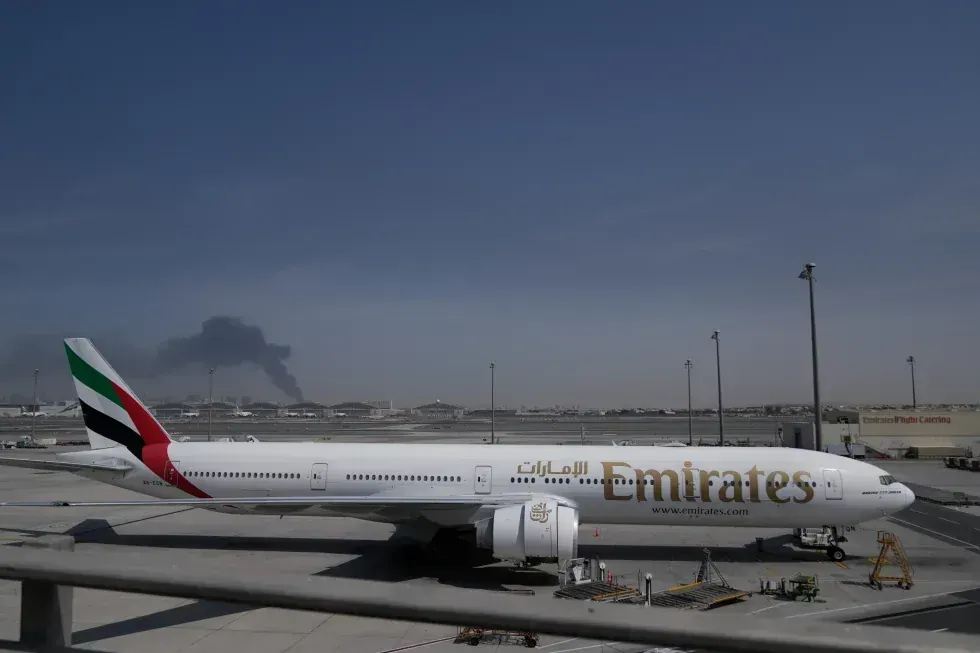
Major airports in Dubai, Abu Dhabi and Doha suspended operations following the escalation of hostilities, including reported drone and missile activity. The disruption has forced travelers to seek alternative departure points in neighboring countries, creating secondary congestion and logistical strain.
Airport Closures and Airspace Constraints
Airspace restrictions and temporary airport closures across parts of the Gulf have significantly reduced scheduled commercial capacity. Industry officials said that while some airports have partially reopened, operational constraints remain, particularly for long-haul departures.

With primary hubs affected, travelers have been moving overland to airports in Muscat, Oman — approximately a four-hour drive from Dubai — and Riyadh, Saudi Arabia, which can require more than 10 hours by road depending on traffic and border processing times.
Private jet broker JET-VIP said demand has exceeded available aircraft. Chief Executive Altay Kula stated that a typical charter flight from Riyadh to Porto, Portugal, normally priced at about €100,000 for a jet accommodating up to 16 passengers, has roughly doubled in cost since the conflict began.
He attributed the increase to aircraft repositioning expenses, insurance considerations and operator risk assessments rather than speculative pricing.
Charter Market Pricing and Capacity Limits
Executives at Vimana Private Jets reported similar pricing dynamics, with Gulf-to-Europe charter flights ranging between €150,000 and €200,000 depending on aircraft type and routing constraints.
Operators noted that many aircraft remain grounded at temporarily closed airports, limiting available fleet supply. The imbalance between demand and available aircraft has intensified upward pressure on rates.
■ Related News



Elie Hanna, Middle East CEO of Air Charter Service, said most outbound charters are now departing from Muscat due to operational accessibility. He described Muscat International Airport as operating under heavy load, with high traffic volumes and constrained slots.
Clients include corporate executives, families, entrepreneurs and remote workers who had been based in the region. Some travelers who typically rely on commercial services are reportedly pooling resources to share charter costs.
Ground Transfers and Border Congestion
Risk management firms have been coordinating overland transfers from affected cities to operational airports. Alma Risk said wait times at border crossings into Oman have reached up to four hours amid heavy vehicle traffic.
Transfer arrangements can cost several thousand dollars depending on vehicle type and security requirements. According to the firm, most clients are stranded travelers rather than permanent residents.
Infrastructure and Energy Implications
Security advisory firm International SOS indicated that disruptions to transportation and energy infrastructure could persist for weeks if hostilities continue.
For airlines, prolonged airspace restrictions in the Gulf — a critical long-haul transit corridor between Europe and Asia — may result in extended rerouting, higher fuel consumption and scheduling inefficiencies. Industry analysts note that sustained instability in the region could affect quarterly capacity forecasts and yield performance for carriers reliant on Gulf hub connectivity.
While commercial services are expected to resume incrementally as security conditions permit, the current situation underscores the vulnerability of regional aviation networks to geopolitical escalation and airspace closure risk.