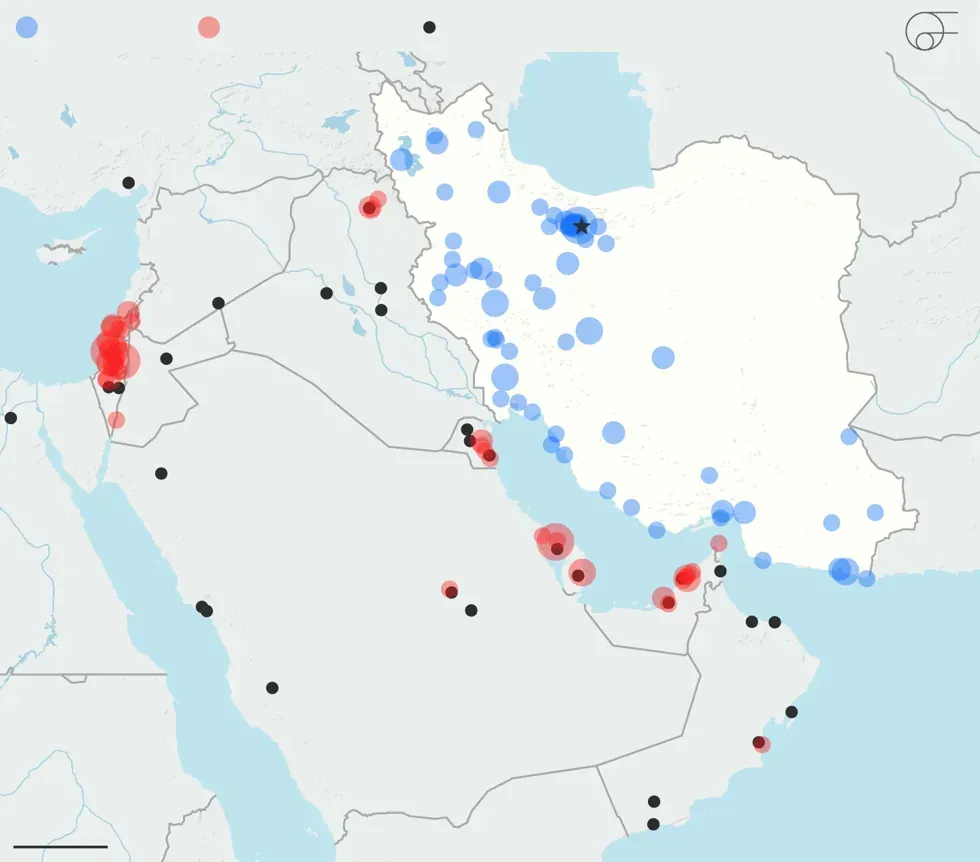
BEIRUT (JN) – Lebanon’s political leadership is mounting an unprecedented challenge to Hezbollah authority after a new wave of Israeli strikes on Beirut sharpened the country’s internal crisis and heightened fears of broader war.
The escalation began after Hezbollah launched missiles and drones toward northern Israel, prompting retaliatory airstrikes that struck Beirut’s southern suburbs and other areas across the country. According to reporting by The Associated Press, Lebanese officials have now publicly declared the group’s unilateral military actions illegal — a stance that signals a potential turning point in the state’s long-fractured authority structure.
At the center of the crisis lies a fundamental question: who controls Lebanon’s war powers.

Command Fractures Surface in Beirut
In an emergency Cabinet session, President Joseph Aoun criticized what he described as efforts to drag Lebanon into conflicts beyond its national interest. Prime Minister Nawaf Salam went further, declaring that decisions of war and peace must rest exclusively with the state.
The government ordered security agencies to prevent further missile launches and detain those responsible — the strongest language yet directed at Hezbollah’s armed wing.
For years, Hezbollah’s dual identity as both a political party and armed movement allowed it to operate within Lebanon’s system while maintaining an independent military structure. This week’s declaration disrupts that delicate balance.
The move also places Lebanon’s fragile institutions under immediate strain: enforcement could trigger confrontation at home even as Israeli airpower intensifies abroad.
Strategic Autonomy Shrinks Under Air Pressure
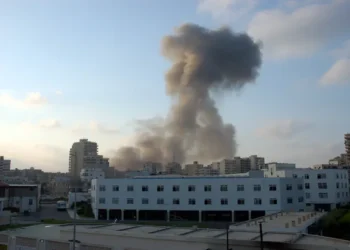
The Israeli military said it struck more than 70 Hezbollah-linked weapons facilities and command centers, including a building housing studios of the Hezbollah-aligned Al-Manar channel in Beirut’s southern suburbs. It also announced the killing of senior Hezbollah intelligence official Hussein Mokaled.


Israeli strikes extended beyond military sites. Branches of al-Qard al-Hasan, a microfinance institution Israel says helps fund Hezbollah’s military activities, were also targeted.
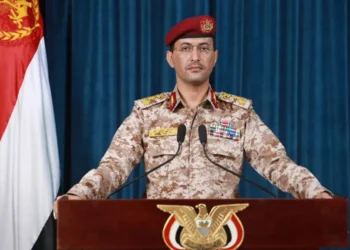
Israeli military spokesman Brig. Gen. Effie Defrin stated that “all options are on the table,” including a possible ground incursion, adding that more than 100,000 reservists have been mobilized since hostilities intensified.
The message was calibrated: Israeli operations are no longer limited deterrence strikes but appear designed to degrade Hezbollah’s operational infrastructure and political legitimacy simultaneously.
Civilian Flight Signals Institutional Stress
Lebanon’s Health Ministry reported at least 52 people killed and more than 150 wounded in overnight strikes. Schools were closed nationwide. Highways leading north clogged as residents fled southern towns and Beirut’s suburbs.
At least 171 shelters have opened across the country, housing nearly 29,000 displaced people, according to Social Affairs Minister Hanin al-Sayed.
Scenes from converted public schools underscore the widening gap between political declarations and humanitarian capacity. Families arrived carrying mattresses and plastic bags of belongings. Volunteers registered names in courtyards as classrooms filled beyond capacity.
This internal displacement compounds damage from the 2024 war, when more than one million people were uprooted and border villages were left in ruins. Many had only recently begun returning.
The renewed exodus adds pressure to already weakened state resources, testing whether Lebanon’s institutions can function amid both internal dissent and external bombardment.
Regional Alignment Deepens the Fault Lines
Hezbollah framed its missile launches as retaliation for Israeli actions and described confrontation as a legitimate right. The group said its operations were a response to aggression and part of a broader regional struggle.
Hezbollah’s intervention follows renewed regional hostilities linked to Iran and Israel. The current flare-up marks the first time in more than a year that Hezbollah formally claimed responsibility for cross-border fire since a U.S.-brokered ceasefire in late 2024.
The Israeli military has maintained near-daily strikes in Lebanon since that truce, arguing it seeks to prevent Hezbollah from rebuilding.
But Lebanon’s government now faces a different calculus: by labeling Hezbollah’s military activities illegal, it risks direct confrontation with a powerful domestic actor deeply embedded in political life.
Institutional Authority Tested
The Lebanese Cabinet’s declaration represents more than rhetorical distancing. If enforced, it would redefine the balance of power between state institutions and non-state armed actors.
Yet implementation remains uncertain. Hezbollah retains significant support within parts of Lebanon and maintains a parliamentary bloc alongside its armed wing. Any attempt to forcibly disarm the group could provoke internal instability.
Meanwhile, Israeli evacuation warnings have spread across roughly 50 communities in southern and eastern Lebanon, raising the prospect of further displacement and potential ground operations.
Lebanon now confronts parallel pressures: external military escalation and internal authority contestation. Whether the state can assert control without fracturing domestically will shape the next phase of the crisis.
For now, the government’s public rebuke signals a rare moment of institutional pushback. The durability of that stance — under sustained airstrikes and mounting humanitarian strain — remains the central question.