The killing of Iran’s Supreme Leader Ayatollah Ali Khamenei in coordinated U.S. and Israeli strikes has plunged the Islamic Republic into its most profound leadership crisis since 1989, as missile exchanges spread across the Middle East and global energy markets react sharply.
Iran confirmed that the 86-year-old cleric died after his compound was bombed early Saturday. The strikes, which also targeted senior military officials and key security installations, were followed by a wave of Iranian missile and drone attacks on Israel and U.S. military positions across the region.
The escalation has already resulted in casualties on multiple sides and raised urgent questions about who will assume authority in Tehran at a moment of open warfare.

Tehran Faces Succession Under Fire
With Khamenei’s death, Iran must appoint a new supreme leader for the first time in more than three decades. He had held the position since 1989, shaping the country’s political and military posture across successive regional confrontations.
Foreign Minister Abbas Araghchi said a new supreme leader could be selected within “one or two days.” In the interim, Iranian authorities have established a three-member leadership council to manage state affairs.
Iranian state media reported scattered public reactions, including small gatherings celebrating the news, though internet restrictions have complicated independent verification of events inside the country.
The leadership vacuum comes as Iran faces direct military confrontation with both Israel and the United States. Analysts say the speed and legitimacy of the succession process could determine whether Tehran projects stability or appears internally fractured during a period of sustained external pressure.
Retaliation Expands Across the Region
In response to the strikes, Iran launched ballistic missiles and drones at Israel, where authorities confirmed multiple fatalities. The Israeli military said most incoming projectiles were intercepted, though air raid sirens sent residents into shelters across major cities.
■ Related News


The United States confirmed that four service members were killed in attacks on American facilities — the first acknowledged U.S. military deaths since the escalation began. Iranian strikes also hit locations in Gulf countries, including the United Arab Emirates and Kuwait, disrupting air traffic at major airports.
Lebanon’s Hezbollah claimed responsibility for strikes on Israel for the first time in more than a year. Israel responded with additional operations, warning of continued action against Iranian-linked groups.
The widening scope of attacks suggests the confrontation is no longer confined to direct exchanges between Israel and Iran, but now risks drawing in multiple actors across the region.
Washington Signals Sustained Operations
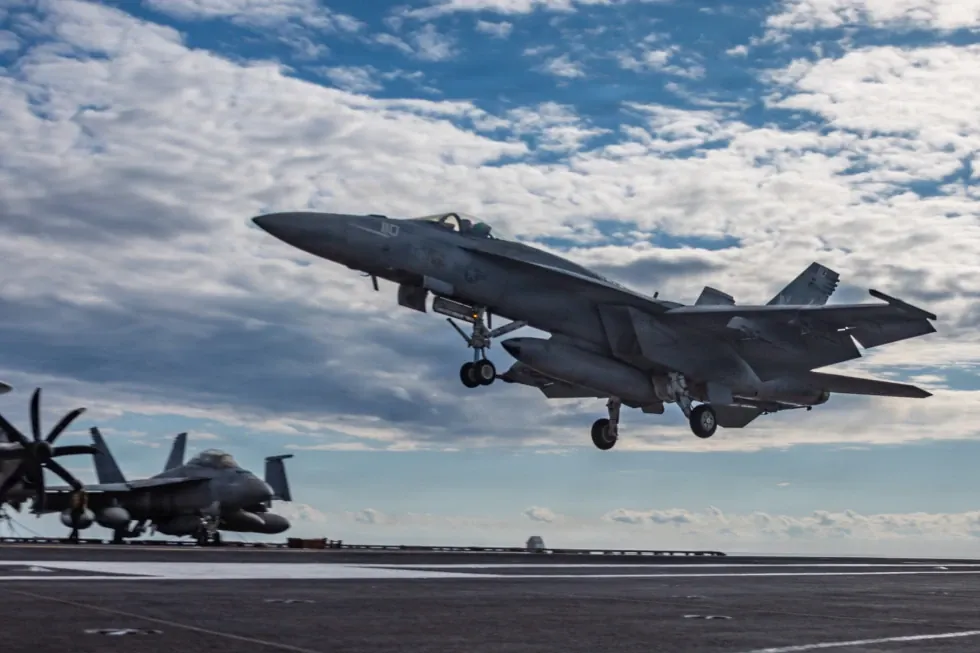
U.S. President Donald Trump said the “heavy and pinpoint bombing” of Iranian targets would continue through the week or longer. The Pentagon had built up one of its largest regional force presences in decades prior to the strikes.
U.S. officials have not publicly confirmed all of the targets cited by Iran, including claims that the Natanz nuclear enrichment site was struck. Israeli authorities have said they are targeting Iran’s “leadership and nuclear infrastructure,” without detailing specific sites.
The strikes occurred two days after the latest round of U.S.–Iran nuclear talks aimed at placing limits on Tehran’s atomic program. Washington has accused Iran of rebuilding its nuclear activities in recent months. Iranian officials deny enriching uranium since June but have restricted access for inspectors from the International Atomic Energy Agency.
Despite the military escalation, U.S. officials have indicated that diplomacy with Iran’s future leadership remains possible. Some members of Congress have questioned the legality of launching strikes without explicit congressional authorization.
Israel Claims Strategic Breakthrough
Israel has long viewed Iran’s nuclear and ballistic missile programs as existential threats. Prime Minister Benjamin Netanyahu, facing sustained international criticism over the war in Gaza, described the strikes as a major security achievement.
Israeli officials said at one point that roughly 100 fighter jets were operating simultaneously over Tehran. During last year’s conflict, Israeli leaders had discussed targeting Iran’s top leadership. That objective has now been realized.
However, Israeli authorities have acknowledged that risk persists from Iranian-aligned groups, including the Houthi movement in Yemen, which has previously targeted Red Sea shipping routes.
Energy Markets and Diplomatic Pressure
Global markets reacted quickly. Oil prices rose sharply when trading opened Sunday, reflecting concerns that supply from the Gulf could be disrupted. Particular attention is focused on the Strait of Hormuz, a critical maritime chokepoint for global oil shipments.
In response to market volatility, eight members of the OPEC+ alliance signaled plans to boost crude production.
Diplomatically, Gulf states have taken defensive measures while urging restraint. Saudi Arabia said it intercepted projectiles and summoned Iran’s ambassador. Senior diplomats from six Gulf nations affirmed what they described as their right to self-defense.
Meanwhile, the International Atomic Energy Agency’s Board of Governors convened to assess the potential impact of the strikes on Iran’s nuclear program, as inspectors seek clarity over site conditions.
An Uncertain Transition
The coming days will test whether Iran’s governing institutions can navigate a leadership transition during wartime. The selection of a new supreme leader will determine not only domestic political continuity but also the tone of any future negotiations or military strategy.
For now, missile exchanges continue, regional actors remain on alert, and oil markets are bracing for further shocks. The conflict has already surpassed the intensity of last year’s Israel–Iran confrontation and shows little sign of immediate containment.