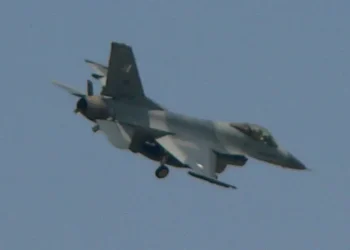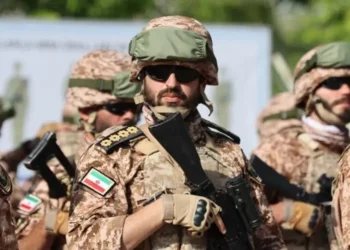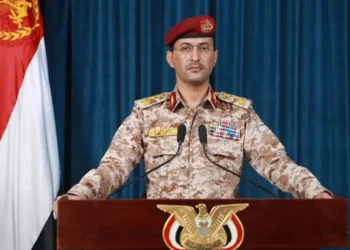
A series of U.S. and Israeli military strikes have killed Iran’s supreme leader and top commanders, prompting Tehran to retaliate across the Middle East. The conflict highlights long-standing tensions over Iran’s nuclear program, regional influence, and domestic instability. Analysts warn the crisis could reshape geopolitical dynamics across the Gulf and beyond.
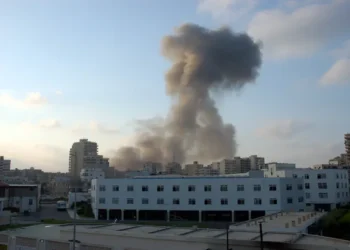
In March 2026, a joint U.S.-Israeli military campaign targeted key Iranian sites, including Tehran, resulting in the death of Ayatollah Ali Khamenei, Iran’s supreme leader for nearly four decades. The strikes also killed senior military officials and caused widespread civilian casualties. The operation marks a dramatic escalation in the already tense relationship between Iran, the United States, and Israel, following years of regional proxy conflicts, sanctions, and nuclear negotiations.
The attacks occurred amid a period of domestic unrest and economic hardship in Iran. Nationwide protests in early 2026 were fueled by rising inflation, unemployment, and public frustration over government crackdowns. International efforts to negotiate a nuclear agreement had recently reached a critical stage, with Iran agreeing to limit enriched uranium stockpiles. Despite this progress, the strikes demonstrate the fragility of diplomatic engagement when strategic mistrust and military considerations intersect.

Experts emphasize that the current crisis reflects a combination of historical grievances, strategic calculations, and internal political pressures in all three countries. The U.S. cited imminent threats to national security, particularly Iran’s nuclear ambitions and missile development. Israel framed its operations as preemptive measures to prevent Tehran from acquiring nuclear capabilities, while Iran’s retaliatory strikes underscore both a military doctrine of deterrence and a need to project strength domestically and regionally.
Causes
The escalation stems from several overlapping factors: strategic competition, domestic politics, and regional security dynamics. Iran has long sought to expand its influence in the Middle East, supporting allied militias in Lebanon, Iraq, Syria, and Yemen. Israel, perceiving Iran’s activities as existential threats, has historically carried out targeted strikes against Iranian proxies and infrastructure.
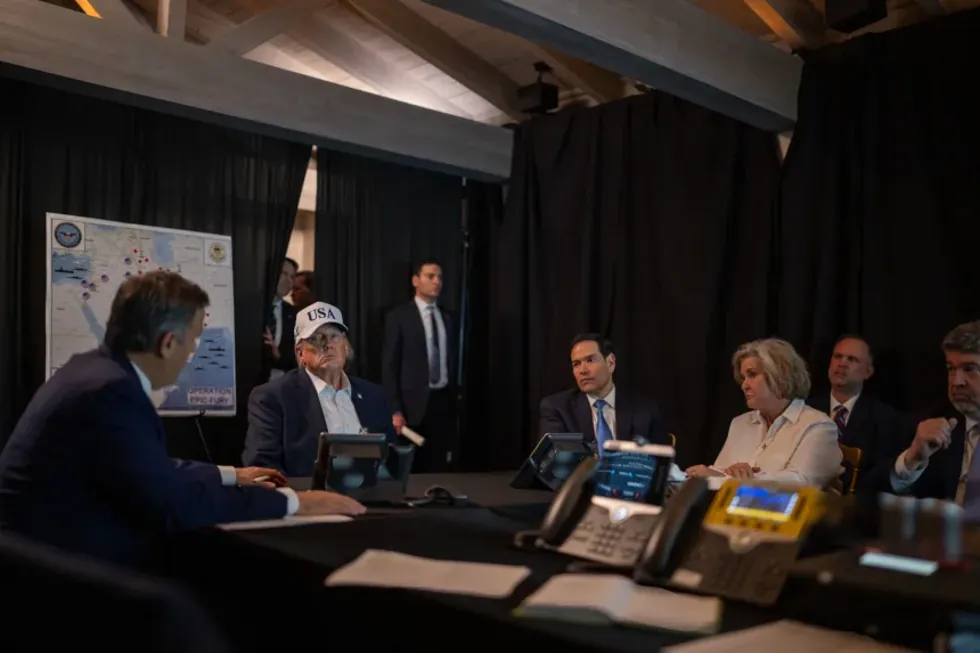
Economic pressures have also intensified the crisis. A severe economic downturn following U.S. sanctions, coupled with widespread protests, weakened Iran’s political stability. Analysts note that internal unrest can make regimes more aggressive externally, both to consolidate authority and to rally nationalistic sentiment. Meanwhile, U.S. policy under former President Donald Trump emphasized a zero-tolerance approach toward Iranian nuclear ambitions, including threats of military intervention even during ongoing negotiations.
Iran’s nuclear program remains central to the tensions. While the 2026 round of talks in Switzerland suggested potential progress toward limiting uranium enrichment, U.S. and Israeli officials cited continued development of nuclear-capable missile systems as justification for preemptive strikes. Independent assessments, including a 2025 Defense Intelligence Agency report, indicate that Iran could develop an intercontinental ballistic missile by 2035 if pursued, though intelligence on immediate threats remains contested.
Systems
The military and political systems in all three countries shaped the rapid escalation. In Iran, the supreme leader commands the Islamic Revolutionary Guard Corps (IRGC) and oversees strategic military decisions, while the civilian government manages diplomatic relations. The IRGC operates both as a conventional military force and as a network coordinating regional proxy operations, complicating threat assessment and response.

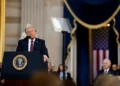

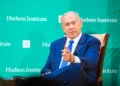
U.S. military strategy relies on rapid deployment of precision strikes and intelligence-driven targeting. Joint operations with Israel allow for synchronized attacks against shared perceived threats. Israel’s defense system integrates intelligence services, air force capabilities, and missile defense, enabling both offensive and reactive operations. These systems allow for rapid action but also raise risks of miscalculation, particularly when civilian areas are within range of military targets.
Diplomatic and mediation channels exist alongside military operations. Oman’s foreign ministry, for example, acted as a mediator during nuclear negotiations, demonstrating that diplomatic avenues persist even amid escalating violence. However, the simultaneous conduct of military strikes undermines the credibility of negotiation frameworks, illustrating the tension between military imperatives and diplomacy in high-stakes conflicts.
Historical Context
The current escalation is rooted in decades of regional rivalry. Iran’s revolutionary government has consistently positioned itself against Israel and U.S. influence in the Middle East since 1979. Israeli operations against Hezbollah in Lebanon, the destabilization of Bashar al-Assad’s regime in Syria, and repeated U.S. sanctions have reinforced mutual distrust.
Earlier conflicts, including a brief U.S.-Israel-Iran confrontation in the previous year, set the stage for the March 2026 strikes. Analysts note that leadership transitions, domestic politics, and election cycles, particularly in Israel, often influence decisions to resume military campaigns or intensify pressure on adversaries.
The nuclear dimension adds another historical layer. International concern over Iran’s potential acquisition of nuclear weapons has prompted multiple rounds of negotiation and sanctions since the early 2000s. Despite interim agreements, recurring disputes over uranium enrichment, verification, and regional arms development have perpetually reignited tensions.
Structural Failures
Several structural failures contributed to the crisis. Intelligence gaps and contested assessments of Iran’s missile and nuclear capabilities created uncertainty, allowing worst-case scenarios to drive policy decisions. Diplomatic frameworks proved fragile; even ongoing negotiations could not prevent military escalation once perceived imminent threats emerged.
Domestic governance challenges in Iran amplified the risks. Widespread economic hardship and civil unrest increased pressure on the leadership, while also constraining international mediation. In Israel and the U.S., political considerations, including election cycles and leadership agendas, influenced the timing and scope of military operations.
Regional security architectures also failed to prevent escalation. Gulf Cooperation Council (GCC) countries, hosting U.S. forces and bordering Iran, became immediate targets during retaliatory strikes. Existing defense frameworks, while capable of intercepting missiles, could not entirely prevent civilian casualties or infrastructural damage, illustrating limits in conventional deterrence systems.
Regional and Global Implications
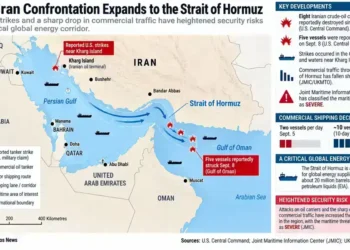
The immediate regional impact includes casualties, infrastructure damage, and heightened risk of further escalation. Iran’s retaliatory strikes affected multiple countries, including Bahrain, the United Arab Emirates, Jordan, Qatar, and Saudi Arabia, reflecting the transnational reach of modern conflicts. Shipping routes like the Strait of Hormuz, vital to global oil markets, faced disruptions, potentially impacting energy security worldwide.
Globally, the strikes intensify concerns over nuclear proliferation, escalation control, and international law. Civilian casualties, particularly in Tehran and Minab, highlight the humanitarian dimension of modern strategic conflicts. Diplomatic relationships, including U.S.-European coordination on Middle East policy, may be strained as countries navigate between crisis management and regional stability.
Analysts also warn that prolonged instability could embolden proxy actors, exacerbate refugee flows, and deepen sectarian divides. The conflict demonstrates how local leadership decisions intersect with global economic systems, energy security, and multilateral diplomacy, reinforcing the complex, interdependent nature of modern geopolitical crises.
Conclusion
The joint U.S.-Israeli strikes and Iran’s subsequent retaliation reflect a convergence of longstanding grievances, regional power struggles, and immediate strategic calculations. While Khamenei’s death marks a historical inflection point for Iran, the full consequences for governance, military strategy, and regional stability remain uncertain.
What is known is that the attacks have triggered unprecedented retaliatory measures, civilian casualties, and disruption across multiple Middle Eastern countries. Key questions persist regarding the sustainability of diplomatic frameworks, the potential for further escalation, and the long-term implications for nuclear proliferation.
The situation underscores the enduring complexity of Middle East geopolitics, where historical tensions, domestic pressures, and international security concerns intersect. The crisis is likely to remain a defining issue for regional stability and global strategic calculations in the months ahead.