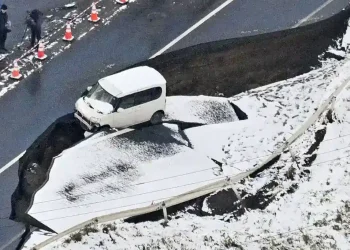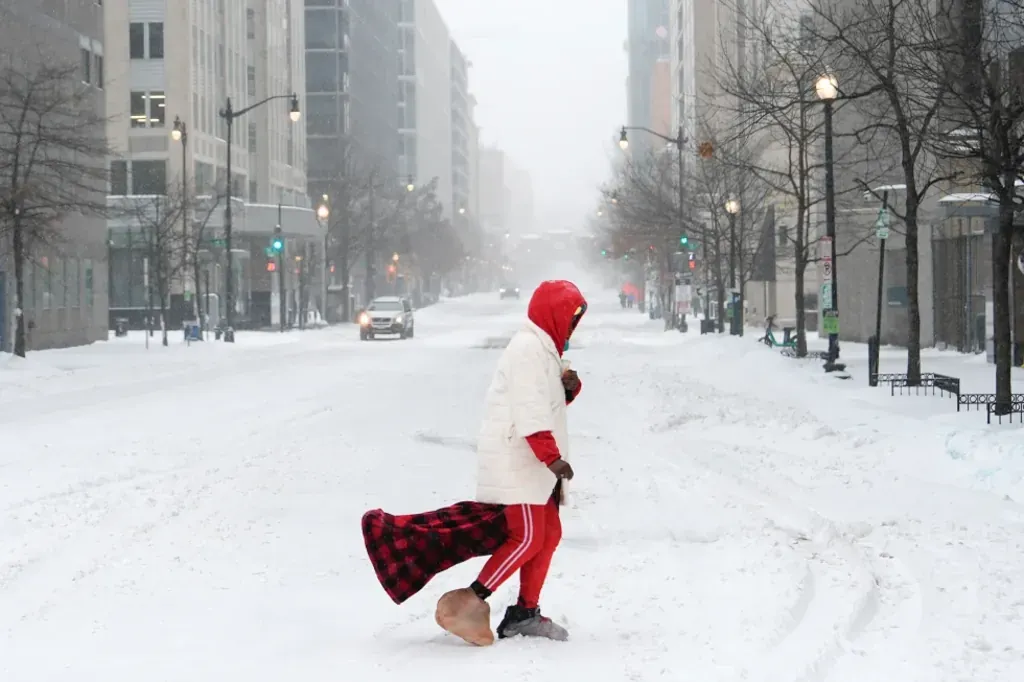
A sprawling winter storm swept across much of the United States over the weekend, delivering a dangerous mix of heavy snow, sleet, and freezing rain that paralyzed travel, damaged infrastructure, and left hundreds of thousands without electricity. The system stretched from the Southwest and Southern Plains to the Northeast, affecting an estimated 213 million people under some form of winter weather warning.
The storm, driven by a large and unusually wide weather pattern, brought life-threatening cold and prolonged icy conditions that forecasters warned could persist for days. Emergency declarations were approved in multiple states as federal and state authorities mobilized resources to respond to power outages, road closures, and weather-related emergencies.
A storm of rare scale and reach
According to the U.S. National Weather Service, the storm’s defining feature was its geographic breadth. Heavy snow fell from the Ohio Valley into the Northeast, while severe ice accumulation threatened states from the Lower Mississippi Valley through the Southeast and into parts of the Mid-Atlantic.
“It is a unique storm in the sense that it is so widespread,” National Weather Service meteorologist Allison Santorelli said. The system affected areas from New Mexico and Texas to New England, spanning roughly 2,000 miles.
Forecasters warned that freezing rain would continue into Monday in parts of the South and East, followed by an extended period of bitterly cold air. Subzero temperatures were expected to slow snow and ice melt, complicating power restoration and road clearing efforts.
Emergency measures and record cold
President Donald Trump approved emergency declarations for at least a dozen states by Saturday. The Federal Emergency Management Agency positioned rescue teams and supplies across several affected regions, according to Homeland Security Secretary Kristi Noem.
In northern New York near the Canadian border, temperatures plunged to historic lows. Watertown recorded minus 34 degrees Fahrenheit (minus 37 Celsius), while Copenhagen dropped to minus 49 Fahrenheit (minus 45 Celsius), Governor Kathy Hochul said. Officials urged residents to limit outdoor exposure and check on vulnerable neighbors.
The extreme cold intensified risks across the storm zone, increasing the likelihood of hypothermia and making recovery operations more hazardous for utility and emergency crews.
Ice cripples the South
Freezing rain posed the most serious threat across the Southeast, where thick ice coated trees, power lines, and roadways. In Mississippi, falling branches and snapped lines led to widespread outages and impassable roads.
Governor Tate Reeves described the event as the state’s worst ice storm since 1994. Mississippi deployed roughly 200,000 gallons of ice-melting chemicals, along with salt and sand, in its largest such operation on record. Reeves urged residents to avoid travel unless absolutely necessary and to check on friends and family.
In Corinth, a Caterpillar remanufacturing facility instructed employees to stay home as conditions deteriorated. Residents reported hearing trees crack and fall throughout the night as ice accumulated on limbs.
Similar conditions were reported in Tennessee, where residents in Nashville and surrounding communities worried about prolonged power outages as ice-laden branches continued to fall. Emergency officials warned that even short trips could become dangerous on untreated roads.
Snow shuts down travel corridors
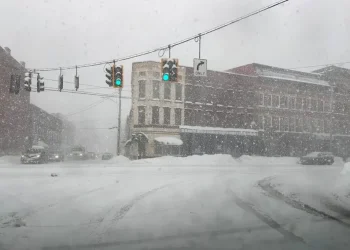
Farther north and west, deep snow blanketed a broad swath of the country. In some areas, accumulations exceeded one foot (30 centimeters) across a roughly 1,300-mile corridor from Arkansas to New England.
The snow and ice severely disrupted air travel. According to FlightAware, about 12,000 flights were canceled on Sunday, with nearly 20,000 more delayed. Major airports along the East Coast, including those serving New York, Philadelphia, Washington, Baltimore, and parts of North Carolina, were among the hardest hit.
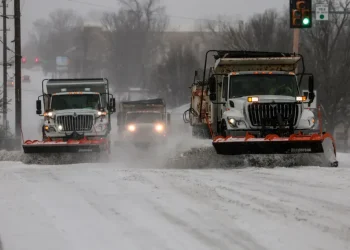
Road travel was also heavily affected, with state police and transportation agencies reporting numerous accidents and stranded vehicles. Emergency crews repeatedly urged drivers to stay off the roads to allow plows and treatment trucks to operate safely.
Power outages and mounting risks
Hundreds of thousands of customers across several states were without electricity as of Sunday, according to poweroutage.us. Tennessee and Mississippi reported some of the largest outage totals, with restoration efforts slowed by ongoing ice accumulation and unsafe working conditions.
In Oxford, Mississippi, utility crews were temporarily pulled off the roads overnight due to falling trees and life-threatening conditions. City officials shared images of heavily iced streets and damaged vegetation as authorities appealed for residents to remain indoors.
Emergency managers across the region warned that icy roads were not only endangering the public but also putting road treatment crews at risk, as some vehicles slid into trucks actively spreading salt and de-icing chemicals.
Bitter cold prolongs the crisis
Meteorologists warned that the storm’s dangers would not end once precipitation moved out. An Arctic air mass trailing the system was expected to bring prolonged, severe cold to much of the eastern two-thirds of the country.
“That means ice and snow won’t melt as fast,” Santorelli said, noting that frozen conditions could persist for days and delay power restoration.
In New York City, Mayor Zohran Mamdani said at least five people were found dead outdoors as temperatures dropped sharply, though causes of death were still under investigation. He urged residents to stay inside and avoid unnecessary travel during the cold snap.
In Louisiana, the state health department reported two hypothermia-related deaths in Caddo Parish, underscoring the storm’s human toll.
Communities adjust and recovery begins
Across the affected regions, school districts and universities announced closures or remote learning plans as hazardous conditions lingered. Local governments and emergency services emphasized that recovery would be gradual, particularly in areas with extensive ice damage.
Despite the disruption, some residents found brief moments of relief. In parts of New York City, where snow fell without the same level of ice damage seen farther south, residents gathered on temporarily closed streets to sled and enjoy the rare quiet.
Officials, however, cautioned that the broader impact of the storm would take time to fully assess. With infrastructure damaged, power systems strained, and temperatures remaining dangerously low, authorities continued to stress caution as the storm’s aftermath unfolded.
This article was rewritten by JournosNews.com based on verified reporting from trusted sources. The content has been independently reviewed, fact-checked, and edited for accuracy, neutrality, tone, and global readability in accordance with Google News and AdSense standards.
All opinions, quotes, or statements from contributors, experts, or sourced organizations do not necessarily reflect the views of JournosNews.com. JournosNews.com maintains full editorial independence from any external funders, sponsors, or organizations.
Stay informed with JournosNews.com — your trusted source for verified global reporting and in-depth analysis. Follow us on Google News, BlueSky, and X for real-time updates.