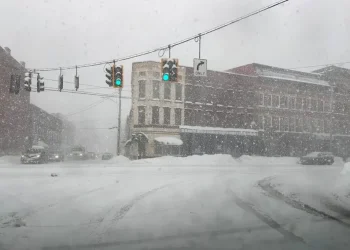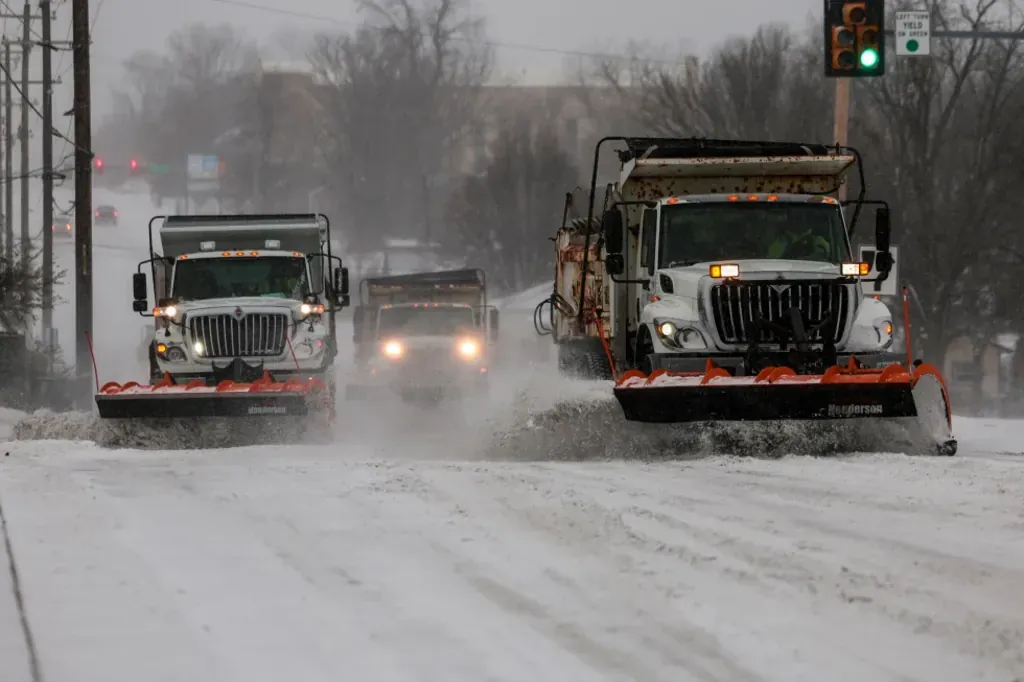
OKLAHOMA CITY (JN) – A sweeping winter storm has triggered widespread flight cancellations, power outages, and dangerous travel conditions across the United States, disrupting mobility for millions of travelers and placing emergency services on high alert. Aviation hubs, regional utilities, and state governments are bracing for prolonged impacts as snow, sleet, freezing rain, and extreme cold stretch from the southern Rockies to the Northeast.
Beyond the immediate travel disruptions, officials warn the storm’s combination of ice accumulation and sustained subfreezing temperatures could slow recovery efforts for days. Emergency declarations, road restrictions, and public safety advisories are now in place across multiple states as communities prepare for ongoing outages, hazardous roads, and extended cold exposure risks.
The storm system, described by forecasters as unusually expansive and intense, is affecting more than half of the U.S. population. Meteorologists caution that ice damage—often more destructive than heavy snowfall—could rival the impacts of hurricane-force weather in some regions.
Flight cancellations surge as airports suspend operations
Roughly 13,000 flights scheduled for Saturday and Sunday were canceled nationwide, according to FlightAware, marking one of the most severe aviation disruptions since the COVID-19 pandemic. Aviation analytics firm Cirium reported that Sunday’s cancellations were on track to become the highest single-day total in years.
Will Rogers International Airport in Oklahoma City canceled all Saturday departures and called off Sunday morning flights, with airport officials aiming to resume limited service later in the day. At Dallas–Fort Worth International Airport, one of the nation’s largest hubs, more than 700 departing flights were canceled Saturday, with a similar number of arrivals scrapped.
Air traffic disruptions also mounted at major airports in Chicago, Atlanta, Nashville, Charlotte, and Washington, D.C. By late Saturday, nearly all scheduled departures for Sunday from Ronald Reagan Washington National Airport had already been canceled, signaling prolonged instability in airline operations.
Meteorologists warned that ice accumulation on runways and aircraft, combined with ongoing snowfall and freezing rain, could keep airports grounded longer than typical winter disruptions.
Power outages spread across Texas and Louisiana
Power failures surged across the storm’s southern corridor, with approximately 120,000 outages reported Saturday, including around 50,000 each in Texas and Louisiana, according to PowerOutage.us.
In Shelby County, Texas, near the Louisiana border, ice-laden pine trees snapped under the weight, bringing down power lines and blocking roads. County officials reported that roughly one-third of the area’s 16,000 electric customers lost power.
Local emergency crews scrambled to clear debris and restore service. Officials described widespread downed limbs and hazardous road conditions as ice continued to accumulate.
In DeSoto Parish, Louisiana, falling trees damaged homes and vehicles, leaving more than half of local power customers without electricity. Authorities reported that saturated, ice-heavy tree limbs posed ongoing risks to infrastructure and public safety.
Emergency declarations and federal response expand
President Donald Trump approved emergency declarations for at least a dozen states, with more requests expected as the storm progresses. The Federal Emergency Management Agency (FEMA) has pre-positioned supplies, staff, and search-and-rescue teams across multiple regions.
Homeland Security Secretary Kristi Noem urged residents to limit travel and prioritize safety. State and local officials echoed the message, encouraging residents to remain indoors when possible and prepare for extended outages.
National Guard units were deployed in several states, including Georgia, where officials mobilized personnel to assist in storm response and road safety operations.
Georgia and the Southeast brace for historic ice
Georgia officials warned that northern parts of the state could experience the most significant ice storm in more than a decade. State meteorologist Will Lanxton cautioned that ice conditions pose greater risks than snow, increasing the likelihood of power line failures and falling trees.
The Georgia Department of Transportation deployed roughly 1,800 workers to treat highways with brine and anti-icing agents, working 12-hour shifts in an effort to keep roads passable.
Governor Brian Kemp authorized the deployment of additional National Guard members to northeastern Georgia, strengthening response efforts in areas expected to suffer the heaviest impacts.
Northeast prepares for heavy snow accumulation
After moving across the South, the storm is forecast to intensify over the Northeast, with snowfall totals potentially exceeding one foot in some areas. Local leaders urged residents to avoid unnecessary travel and remain indoors during peak storm conditions.
New Jersey Governor Mikie Sherrill imposed restrictions on commercial vehicle travel and reduced highway speed limits to 35 miles per hour, calling the storm one of the most significant in recent years.
In New York City, Mayor Zohran Mamdani urged residents to stay home, emphasizing public safety and the risks associated with icy roads and frigid temperatures.
Extreme cold grips the Midwest and North
Alongside snow and ice, dangerously low temperatures have swept across the Midwest and northern states. Wind chills dropped to as low as minus 40 degrees Fahrenheit (minus 40 Celsius), creating conditions where frostbite can occur within minutes.
Rhinelander, Wisconsin, recorded a temperature of minus 36 degrees Fahrenheit (minus 38 Celsius), its coldest reading in nearly 30 years. While the worst of the cold wave eased in Minneapolis, residents and protesters still faced subzero conditions outdoors.
Nonprofit organizations in Chicago and other cities increased outreach efforts to assist unhoused individuals, distributing cold-weather supplies and checking on vulnerable residents.
Schools, events, and public activities disrupted
The storm forced widespread cancellations of public events, school sessions, and cultural activities. Mardi Gras parades in Louisiana were postponed or canceled, while churches shifted Sunday services to online formats.
The Grand Ole Opry in Nashville proceeded with its scheduled radio broadcast but performed without a live audience due to hazardous travel conditions.
School districts in Philadelphia and Houston announced closures for Monday, and universities across the South—including the University of North Carolina at Chapel Hill and the University of Mississippi—canceled classes in anticipation of unsafe campus conditions.
Despite the disruptions, some residents found moments of levity, sledding on snow-covered hills in cities like Nashville as winter conditions transformed familiar urban landscapes.
Meteorologists call storm unusually broad and intense
Forecasters described the storm as notable for both its geographic reach and the sequence of severe weather expected to follow.
NOAA Weather Prediction Center meteorologist Josh Weiss said the system’s scale—spanning roughly 2,000 miles—combined snow, sleet, and freezing rain across an unusually wide area. He added that the subsequent wave of extreme cold could push temperatures to record lows in several regions.
Meteorologists cautioned that ice damage may take weeks to fully repair in some communities, particularly where power infrastructure and road networks have suffered significant strain.
This article was rewritten by JournosNews.com based on verified reporting from trusted sources. The content has been independently reviewed, fact-checked, and edited for accuracy, neutrality, tone, and global readability in accordance with Google News and AdSense standards.
All opinions, quotes, or statements from contributors, experts, or sourced organizations do not necessarily reflect the views of JournosNews.com. JournosNews.com maintains full editorial independence from any external funders, sponsors, or organizations.
Stay informed with JournosNews.com — your trusted source for verified global reporting and in-depth analysis. Follow us on Google News, BlueSky, and X for real-time updates.