For decades, certain albums have functioned as informal reference tools in the audiophile world — trusted recordings used to demonstrate clarity, dynamics, and soundstage. Their familiarity made them useful benchmarks across hi-fi shops, trade shows, and listening rooms worldwide.
But familiarity, many listeners now argue, has tipped into fatigue. Based on long-running discussions and informal surveys across audio forums and enthusiast communities, a growing number of audiophiles say the same albums appear so often in demonstrations that they no longer encourage listening — only testing. The music remains widely respected. The repetition is what has worn thin.
What follows is a consolidated list of recordings most frequently cited by audiophiles as “overused” demo material — not because they lack quality, but because their constant deployment has drained their sense of discovery.
The perennial demo staples
Pink Floyd’s Dark Side of the Moon remains one of the most cited examples. Its production innovations — from tape effects to wide stereo imaging — made it a natural reference for decades. Tracks like “Money” and “Time” are now so familiar in demo contexts that many listeners say they anticipate each sonic cue before it arrives.
Steely Dan’s Aja occupies similar territory. Its immaculate studio precision once defined high-fidelity production. Today, some listeners say its flawlessness has become distancing, more associated with frequency analysis than emotional engagement.
The Eagles’ Hotel California, particularly the title track in both studio and live forms, is often described as the safest possible demo choice — broadly acceptable, rarely inspiring. Its ubiquity has turned it into background music in high-end showrooms rather than an event.
Dire Straits’ Brothers in Arms helped define early digital recording. While its sonic clarity remains undeniable, younger listeners increasingly associate it with an earlier era of hi-fi culture rather than contemporary reference listening.
Jazz and vocal recordings under strain
Live jazz favorite Jazz at the Pawnshop is frequently cited as a recording admired more for ambient detail — glass clinks, room reverberation — than musical substance. Some jazz listeners note it is discussed more for its acoustics than its performances.
Miles Davis’ Kind of Blue draws particular discomfort. Universally regarded as a landmark album, it is nonetheless reduced in demos to brief excerpts for bass texture or cymbal decay. Many listeners argue its use as test material diminishes its artistic stature.
Diana Krall’s Live in Paris and Norah Jones’ Come Away With Me are also regularly mentioned as default choices intended to sound pleasant on any system. Their consistent presence in demos has led some to describe them as “safe” to the point of invisibility.
Eva Cassidy’s Songbird introduces a more sensitive critique. While her vocal recordings are prized for realism, some audiophiles express unease at how frequently her posthumous work is used to provoke emotional reactions during equipment demonstrations.
Audiophile favorites that became insiders’ loops
Patricia Barber’s Café Blue is often cited as emblematic of audiophile culture itself — admired inside high-end circles but rarely encountered elsewhere. Its repeated reissues and demo usage have made it shorthand for sonic evaluation rather than storytelling.
Alison Krauss & Union Station’s Live remains respected for its technical excellence, particularly its DSD recording quality. Still, some listeners say its precision has overshadowed the organic looseness associated with bluegrass performance.
Shelby Lynne’s Just a Little Lovin’ is frequently discussed in engineering terms, particularly its analog recording pedigree. Forum discussions often focus more on microphone placement and mastering formats than on Lynne’s interpretations.
Amber Rubarth’s Sessions from the 17th Ward is widely used for binaural demonstrations, especially with headphones. While its spatial realism still impresses newcomers, many listeners say its “wow factor” has overshadowed its musical longevity.
Modern recordings caught in the same cycle
Hans Zimmer’s Interstellar score — especially “Mountains” — became a modern subwoofer stress test almost overnight. Its low-frequency power remains effective, but constant repetition has reduced it to a single sonic gesture for many listeners.
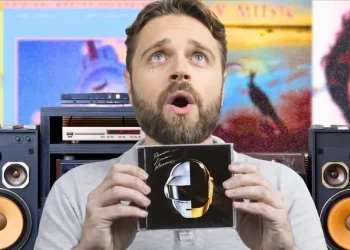
Daft Punk’s Random Access Memories initially felt like a contemporary reset for audiophile demos. Within a few years, tracks like “Giorgio by Moroder” were reportedly played so often that they followed the same path as earlier classics.
Fleetwood Mac’s Rumours and Donald Fagen’s The Nightfly reflect compounded exposure — long staples of radio and hi-fi alike. For some listeners, decades of repetition now outweigh their continued sonic strengths.
Approaching the saturation point
Sheffield Lab’s direct-to-disc release I’ve Got the Music in Me by Thelma Houston remains admired for its historical importance and recording purity. Its inclusion in the U.S. National Recording Registry has further cemented its legacy, leading some audiophiles to suggest it no longer needs to prove itself in demos.
Frank Zappa’s Joe’s Garage and Nils Lofgren’s Acoustic Live represent a newer wave of demo fatigue. Both are still respected, but listeners note that tracks like “Watermelon in Easter Hay” and “Keith Don’t Go” are appearing with increasing frequency — a familiar warning sign.
Listening versus testing
Across forums, a common theme emerges: these albums are not being rejected musically. Rather, many audiophiles argue that constant reuse has shifted attention away from listening toward verification. When a recording becomes predictable, it ceases to challenge both system and listener.
Several respondents emphasized that retirement does not mean abandonment. Stepping back, they argue, may be the best way to restore impact — and create space for new reference material that reflects how people listen today.
This article was rewritten by JournosNews.com based on verified reporting from trusted sources. The content has been independently reviewed, fact-checked, and edited for accuracy, neutrality, tone, and global readability in accordance with Google News and AdSense standards.
All opinions, quotes, or statements from contributors, experts, or sourced organizations do not necessarily reflect the views of JournosNews.com. JournosNews.com maintains full editorial independence from any external funders, sponsors, or organizations.
Stay informed with JournosNews.com — your trusted source for verified global reporting and in-depth analysis. Follow us on Google News, BlueSky, and X for real-time updates.