Audiophiles are known for patience. Minor flaws, quirks of taste, and even difficult setups are often tolerated in pursuit of better sound. What proves harder to forgive is equipment that promises far more than it delivers—especially when praise, price, or brand reputation sets expectations sky-high.
Based on large-scale polling and long-running discussion threads across established audio communities, this list reflects recurring frustrations rather than isolated complaints. The gear cited here continues to surface in “buyer’s remorse” conversations for the same reasons: design compromises, reliability issues, or performance that fails to match the hype.
Taken together, the results form a kind of informal “hall of shame”—not a verdict of universal failure, but a snapshot of where expectation and real-world listening most often diverge.
Bose 901 and Other Bose Speaker Systems
Bose has long positioned itself outside traditional audiophile culture, but few products have provoked as much debate as the Bose 901. Its reflected-sound design, which relies heavily on wall reflections rather than direct sound, was marketed as immersive and room-filling.
Critics argue the approach produces uneven frequency response and diffuse imaging rather than accurate reproduction. Owners also cite demanding room placement, high power requirements, and aging foam surrounds that frequently need replacement. For many listeners, the frustration stems less from outright failure than from the promise of innovation that never aligns with conventional hi-fi priorities.
Polk PSW10 Subwoofer
The Polk PSW10 remains one of the most frequently discussed entry-level subwoofers—and one of the most criticized. The central complaint is audible port noise when pushed beyond modest listening levels, creating a “chuffing” sound that replaces clean bass extension.
In smaller rooms at moderate volumes, some users report acceptable performance. Problems tend to emerge when the subwoofer is asked to deliver deeper or louder bass, where control quickly deteriorates. The disappointment is tied largely to limits that become apparent sooner than many buyers expect.
AudioQuest Diamond USB Cables
Few accessories divide the audio community more sharply than high-priced digital cables. AudioQuest’s Diamond USB cable, often priced in the four-figure range, is frequently cited as an emblem of expectation mismatch.
While the manufacturer promotes noise reduction and timing improvements, many engineers and listeners note that properly functioning digital systems already deliver error-corrected data, with modern DACs handling jitter internally. As a result, audible differences are difficult to demonstrate in typical setups, leaving many buyers questioning the value proposition rather than the cable’s build quality.
Infinity Qa Loudspeakers
The Infinity Qa occupies an unusual place on regret lists because it is not universally disliked. Instead, it is often described as divisive. Expectations were shaped by marketing that implied three-way-style midrange performance, despite the speaker’s design choices.
Some listeners report a disconnect between woofer and tweeter, particularly in vocal ranges, while others praise the speaker’s balance when paired carefully with the right electronics and room. The recurring criticism reflects how strongly expectations influence perception in high-fidelity listening.
Klipsch R-51PM Powered Speakers
Klipsch’s horn-loaded sound signature has always polarized listeners, and the R-51PM powered speakers exemplify that divide. Reviews frequently describe a very forward presentation, with emphasis in the upper midrange that enhances clarity but can feel aggressive to some ears.
The absence of tone controls limits the ability to adjust that balance, and opinions on the built-in phono stage are mixed. For buyers expecting a more neutral, flexible powered speaker, the disappointment often lies in limited adjustability rather than outright performance flaws.
NAD 4150 Tuner
The NAD 4150 was intended as a premium tuner but became known for reliability problems tied to defective chips in certain production runs. Owners reported scanning failures, unstable reception, and stations bleeding into one another.
Even after repairs or replacements, some units never achieved consistent performance. The model’s reputation suffered not because of sound quality, but because it failed to meet baseline expectations of stability from a brand associated with solid engineering.
Crosley Suitcase Turntables
Crosley’s suitcase turntables are frequently criticized not for their convenience features, but for fundamental playback concerns. Heavy tracking force, basic cartridges, and lightweight tonearms raise worries about distortion and long-term record wear.
Additional compromises—light platters, limited isolation, and inconsistent speed control—can result in audible noise and pitch instability. Bluetooth transmission, often using lossy codecs, further compounds dissatisfaction for listeners hoping vinyl playback will improve sound quality.
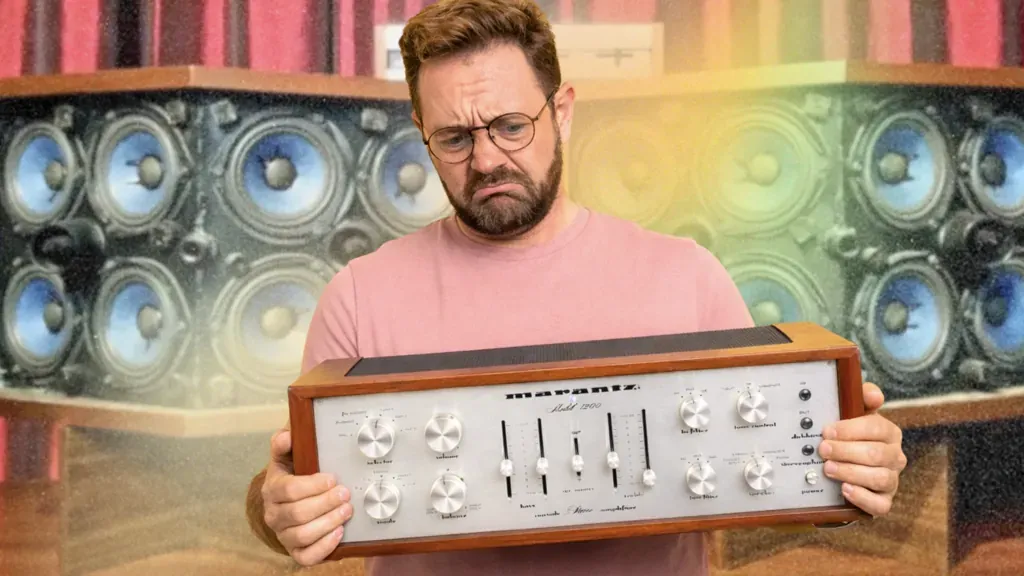
Marantz 1200 Integrated Amplifier
The Marantz 1200 is admired for its appearance and sound when functioning properly. The disappointment emerges with long-term ownership. Users commonly report relay failures, channel imbalance, and volume control issues that require skilled servicing.
Restoration can be complex, with certain repairs demanding closely matched components. For many owners, the frustration lies in the contrast between how rewarding the amplifier can sound and how demanding it can be to maintain.
Yamaha CR-1000 Receiver
The Yamaha CR-1000 is infamous among technicians for its service complexity. Accessing key internal boards requires extensive disassembly, making even routine repairs time-consuming. Slider controls, while visually distinctive, are prone to breakage, and replacement parts are scarce.
Later Yamaha models corrected many of these design choices, which has only intensified criticism of the CR-1000. Its reputation rests less on sound quality than on ownership challenges.
McIntosh MC-2100 Amplifier and C-28 Preamplifier
McIntosh’s rare appearances on regret lists stand out precisely because of the brand’s stature. Some buyers of the MC-2100 amplifier and C-28 preamplifier report disappointment with a presentation they perceive as softer and less detailed than modern high-end equipment.
Others describe the pairing as musical, warm, and easy to live with. The criticism reflects expectation mismatch rather than consensus failure, particularly as vintage pricing elevates hopes of “classic McIntosh” performance.
This article was rewritten by JournosNews.com based on verified reporting from trusted sources. The content has been independently reviewed, fact-checked, and edited for accuracy, neutrality, tone, and global readability in accordance with Google News and AdSense standards.
All opinions, quotes, or statements from contributors, experts, or sourced organizations do not necessarily reflect the views of JournosNews.com. JournosNews.com maintains full editorial independence from any external funders, sponsors, or organizations.
Stay informed with JournosNews.com — your trusted source for verified global reporting and in-depth analysis. Follow us on Google News, BlueSky, and X for real-time updates.