Four years after Russia’s full-scale invasion, Ukraine remains defiant despite mounting casualties and battlefield pressure. The war has evolved technologically and politically, yet Kyiv shows no sign of conceding core demands. The conflict endures because both sides believe they can still shape its outcome — and because for many Ukrainians, the stakes are existential.
Ukraine’s resilience has confounded repeated predictions of collapse. Since February 2022, when Russian forces launched a multi-front assault, Kyiv has absorbed territorial losses, endured sustained missile campaigns, and faced periodic uncertainty over Western military support. Yet the state continues to function, the armed forces continue to fight, and public opinion remains broadly aligned behind resistance.
The reasons are structural rather than rhetorical. Ukraine’s defiance is rooted in battlefield adaptation, national identity, political calculation, and assessments about Russia’s long-term intentions. Together, these factors help explain why the country does not view itself as close to defeat — even as the war grinds on.

The Transformation of the Battlefield
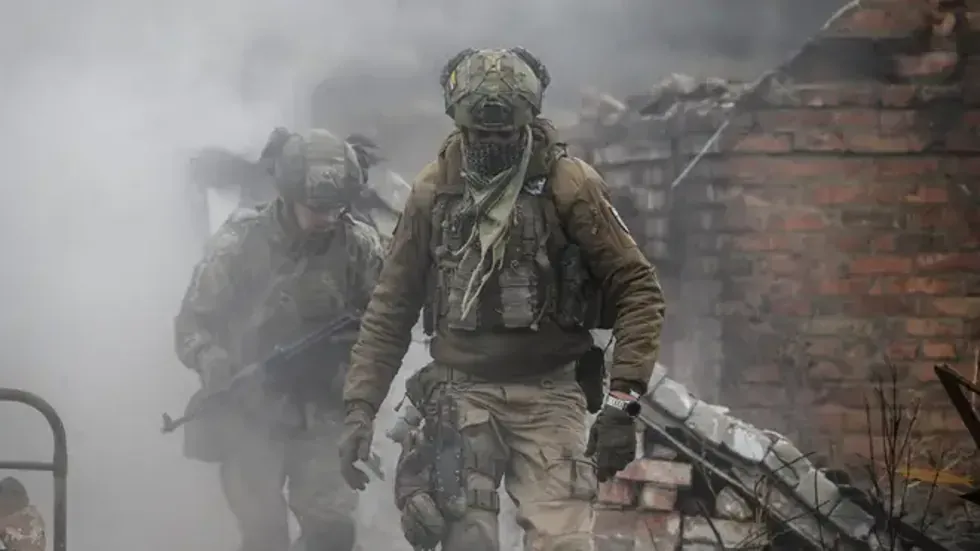
The war in eastern Ukraine has shifted from the early manoeuvre battles around Kyiv and Kharkiv to an attritional contest concentrated in regions such as Donetsk. The front line now stretches roughly 800 miles, but the concept of a narrow trench boundary has given way to a broad “kill zone” shaped by drones, artillery and electronic warfare.
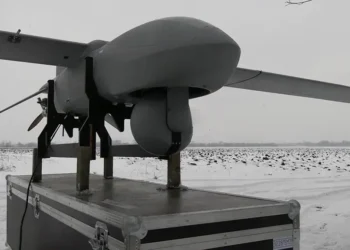
First-person-view (FPV) drones have become central weapons for both sides. Inexpensive relative to tanks and armoured vehicles, they can strike individual soldiers, vehicles or defensive positions with precision. According to widely reported military assessments, drone warfare has extended lethal reach deep behind traditional front lines, complicating logistics and evacuation routes.
This shift has required rapid adaptation. Ukraine has invested heavily in domestic drone production and battlefield software integration. Military officials in NATO states have acknowledged that the conflict has accelerated global reassessments of how future wars will be fought.
The technological adaptation carries strategic implications. While Russia retains larger manpower reserves and greater industrial capacity, Ukraine’s innovation has offset some asymmetries. The battlefield remains contested rather than decisively tilted.
Attrition Without Collapse
Russia has advanced slowly in parts of eastern Ukraine, particularly in Donetsk oblast. Towns such as Bakhmut and Avdiivka have been reduced to rubble over extended battles. Yet territorial gains have come at high cost, according to estimates from Western intelligence agencies and independent analysts.

Ukrainian officials report tens of thousands of military fatalities since 2022. Independent verification is difficult, and both sides tightly control casualty disclosures. What is clearer is that the war has become one of endurance.
For Ukraine, endurance depends on sustaining recruitment, maintaining foreign military assistance, and preserving civilian morale. Recruitment has proven difficult as the war stretches into its fifth year. Nonetheless, polling by Ukrainian research groups consistently shows majority support for continued resistance, even among populations fatigued by war.
Public sentiment reflects a widespread belief that Russian objectives extend beyond territorial control to limiting Ukraine’s sovereignty. That perception has hardened since the early weeks of the invasion, when Russian forces attempted to encircle Kyiv and overthrow the government.
Political Calculations in Kyiv
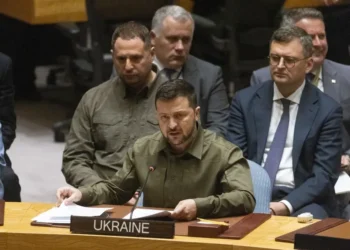
President Volodymyr Zelensky remains central to Ukraine’s political posture. His leadership during the initial invasion, including his decision to remain in Kyiv, became a symbol of resistance. Over time, domestic criticism has grown over corruption scandals, mobilization policies and wartime governance. Yet approval ratings, while fluctuating, remain comparatively high by international standards.
Zelensky has repeatedly rejected proposals that would formalize Russian control over additional Ukrainian territory. His position is grounded in two calculations.
First, conceding land not currently occupied could fracture domestic consensus and undermine the constitutional principle of territorial integrity. Second, Ukrainian officials argue that a ceasefire without durable security guarantees would allow Russia to regroup militarily.
These concerns are informed by experience since 2014, when Russia annexed Crimea and backed separatist forces in parts of Donetsk and Luhansk. The Minsk agreements that followed reduced but did not end hostilities. Full-scale invasion in 2022 convinced many Ukrainians that limited concessions had not ensured stability.
The International Dimension
Ukraine’s ability to continue fighting is closely tied to foreign support. The United States and European Union members have provided billions of dollars in military and financial assistance since 2022. Air defense systems, artillery ammunition and intelligence sharing have been particularly significant.
Political debates in Washington and European capitals periodically raise questions about sustainability. Yet NATO governments have also framed the war as central to European security architecture.
The alliance itself, formally known as the North Atlantic Treaty Organization, has undergone strategic reassessment since 2022. Finland has joined, Sweden has sought membership, and defense spending across Europe has increased. For many European governments, Ukraine’s resistance is linked to deterrence beyond its borders.
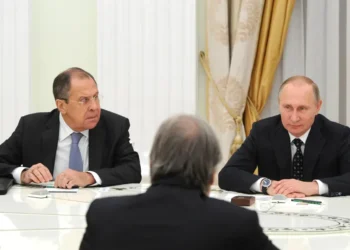
Diplomatic efforts to broker ceasefires have continued intermittently. However, fundamental disagreements persist. Russia seeks recognition of territorial claims and constraints on Ukraine’s Western alignment. Kyiv insists on sovereignty within internationally recognized borders and security guarantees against renewed aggression.
As long as these core positions remain unchanged, negotiations face structural obstacles.
Society Under Strain — Yet Functioning
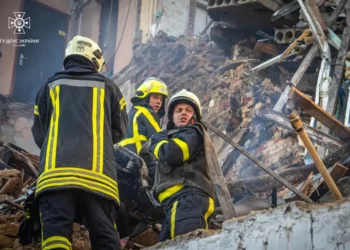
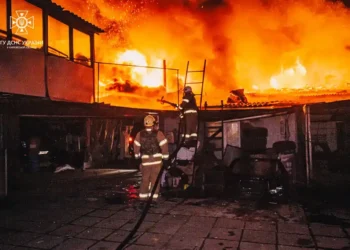
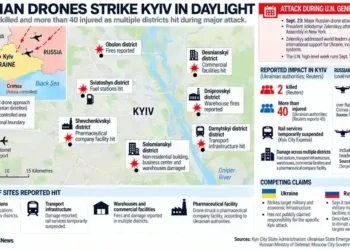
Despite repeated missile and drone strikes targeting energy infrastructure, Ukraine’s major cities continue to operate. Power outages have occurred, particularly during winter months, but emergency repairs and decentralized energy generation have mitigated prolonged blackouts.
Civil society networks that emerged in 2022 — from volunteer supply chains to humanitarian aid groups — remain active. International organizations including the United Nations and the World Food Programme continue to support displaced populations.
Millions of Ukrainians have been displaced internally or abroad. According to UN data, Europe has experienced its largest refugee flow since the Second World War. Yet large segments of the population have chosen to remain, contributing to what officials describe as a wartime economy.
This functioning state infrastructure reinforces perceptions that Ukraine is not on the verge of institutional collapse. The economy has contracted significantly since 2022 but has stabilized relative to the immediate post-invasion shock, supported by external financing and domestic adaptation.
Russia’s Strategic Posture
For Russia, the war is framed as a security imperative and a historical correction. President Vladimir Putin has argued that Ukraine’s Western alignment threatens Russian interests. Western governments reject that characterization, describing the invasion as a violation of international law.
Russian forces have adapted as well. After initial setbacks in 2022, Moscow mobilized additional troops, fortified defensive lines and expanded drone production. The war has become a contest of industrial output and manpower sustainability.
From Kyiv’s perspective, Russia’s continued mobilization and rhetoric reinforce the belief that compromise would not end the threat. Ukrainian officials often cite the scale of Russian military investment as evidence that Moscow intends a long confrontation rather than a limited territorial adjustment.
Identity and the Question of Survival
Beyond military and diplomatic calculations lies a deeper factor: national identity.
Ukraine’s independence since 1991 has involved balancing linguistic, regional and political differences. The invasion accelerated consolidation around a civic national identity centered on sovereignty. Surveys conducted since 2022 indicate rising support for Ukrainian language use and stronger identification with European institutions.
For many Ukrainians, the war is not solely about specific cities or regions but about the state’s right to exist independently. This framing shapes resistance to territorial concessions.
International law recognizes Ukraine’s borders as established after the Soviet Union’s dissolution. Kyiv argues that accepting enforced changes would normalize aggression. That argument resonates domestically and among Western supporters.
Limits and Uncertainties
None of these factors guarantee eventual victory. Ukraine faces manpower shortages, infrastructure damage and dependence on foreign aid. Russia retains greater population reserves and has demonstrated willingness to absorb prolonged economic sanctions.
The battlefield remains fluid. Advances in Donetsk and pressure on energy systems show Russia’s capacity to sustain offensive operations. At the same time, Ukraine continues long-range strikes and defensive fortification.
What distinguishes the current phase is not imminent resolution but entrenched positions. Neither side appears ready to accept terms that contradict its stated objectives.
Conclusion
Ukraine’s defiance four years into war reflects structural realities rather than rhetorical determination. Military adaptation, public opinion, political calculation and historical experience combine to sustain resistance despite attrition. The state continues to function, foreign support persists, and most citizens appear unconvinced that concessions would bring lasting peace. At the same time, casualties, recruitment challenges and economic strain underscore the war’s cost. What remains unresolved is whether endurance alone can shift strategic calculations in Moscow or Kyiv. Until those calculations change, the conflict is likely to continue shaping European security and global geopolitics.
Source: BBC – Bowen: Why Ukraine remains defiant and does not feel close to defeat