Stepping into a Turkish bath, or hamam, is an immersion in warmth, sound, and ritual. Light filters through small domed openings, tracing patterns across marble floors and walls, while the soft hiss of water and gentle dripping from taps creates a rhythm both calming and hypnotic. It is a space that deliberately slows the pace of everyday life, inviting participants into a sensory experience that is as social and cultural as it is hygienic.
Unlike a home bath or a private spa treatment, a hamam operates as a public space with long-standing traditions. “It is a social place and a unique environment for women to be social outside of their homes without needing permission,” says Ahmet İğdirligil, an architect and expert in the history of Turkish baths. Historically, women from wealthier families frequented hamams regularly, and some even maintained private facilities in their homes. Tools like the hamam tası — ornate water bowls — and finely finished towels called peştemal were personal possessions, reflecting both practicality and status.
These rituals were not merely aesthetic. Sophisticated norms governed cleanliness and bathing practices, tailored to occasions such as childbirth, menstruation, and religious observances. Today, in smaller towns and communities across Turkey, women continue to use the hamam as a space to step outside domestic routines or to socialize within established cultural contexts.

Design and Atmosphere
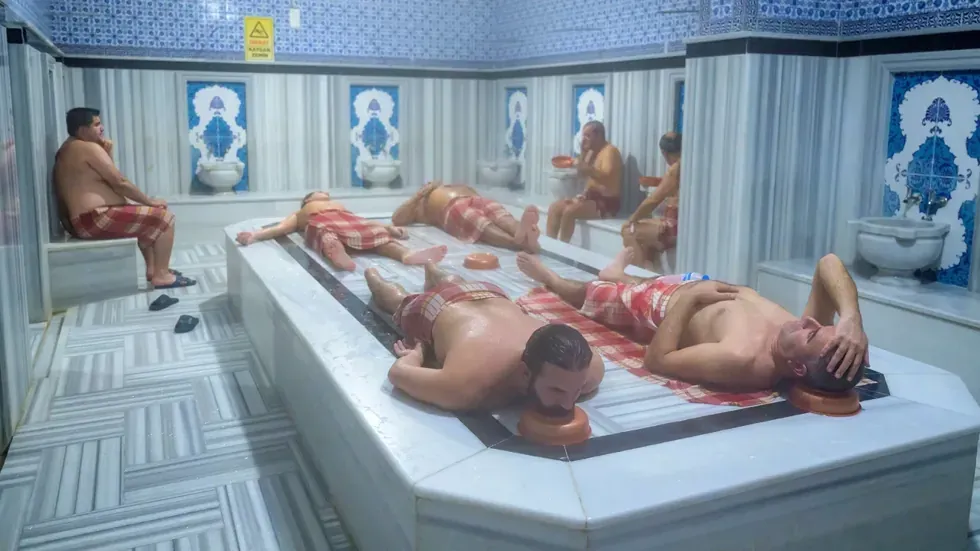
The architecture of a hamam is integral to its function. According to İğdirligil, most hamams comprise at least three main sections. The entrance area, typically warmed by a traditional wood burner called a soba, houses changing rooms and a lounge. From here, patrons move into a semi-warm intermediary space, with marble basins (kurna) and areas for personal grooming. The final, central section contains the göbek taşı, a raised marble platform where the core bathing rituals occur. Some facilities also include halvet rooms, smaller hot chambers for private use.
“The structure is very important because it guides the journey through the hamam,” İğdirligil explains. Domed ceilings, usually taller than the room’s width, allow for diffused light and improved ventilation, creating an effect often described as cosmic or womb-like. Cağaloğlu Hamam in Istanbul, built in 1741, exemplifies this design, with a bright marble interior that heightens the sensation of floating in warm, humid air.
Bathing Practices and Services
Hamams offer a range of services, including kese, a full-body exfoliation using a coarse glove, and Turkish köpük masaj, a gentle foam massage. Elif Kartal, operations manager at Zeyrek Çinili Hamam, notes that offerings vary slightly depending on a bath’s design or patron preferences. Of Istanbul’s 237 hamams, only around 60 remain active, with larger historic baths often maintaining separate facilities for men and women, such as the Ayasofya Hürrem Sultan Hamam, designed in 1556 to mirror men’s and women’s sections identically.
■ Related News




Preparation for a hamam visit includes practical considerations: patrons are advised to avoid waxing and heavy oils, eat lightly, and abstain from alcohol before entering. Disposable undergarments are typically provided, but swimwear or personal garments are permitted, with some adjustments to accommodate full-body exfoliation.
The Role of Attendants
Central to the experience are the bath attendants — natır for women, tellak for men — who guide patrons through the ritual. At Zeyrek Çinili Hamam, attendants first rinse visitors with warm water before leading them to the göbek taşı. The kese follows, removing dead skin across the entire body, sometimes including sensitive areas, with variations in pressure communicated through body language. Historically, pumice stones served the same function, often encased in decorative holders for higher-ranking women.
After exfoliation, the köpük masaj envelops the body in soft foam prepared from olive-oil-based soap. The combination of heat, moisture, and massage leaves the skin smooth and refreshed, a result of both exfoliation and hydration. “Pores open in the bath and cell renewal accelerates since the scrub also serves as a peeling,” says Elif Tamtartar, a natır with 25 years’ experience.
Cultural and Emotional Significance
Beyond hygiene, the hamam functions as a space for social connection and emotional relief. Tamtartar describes the experience as one that allows guests to release worries: “We approach them with a mother’s love. To us, they are our children. The energy of water, the bath, and the person unites.” Historically and today, the bath is a site where social, familial, and even ceremonial interactions intersect, reinforcing its role in Turkish culture as more than a cleansing ritual.
The sequence of preparation, scrubbing, foaming, and rinsing embodies a rhythmic, almost meditative quality. Patrons exit the bath gradually, pausing in the intermediate room for towels and tea, before returning to the cool changing area, marking a complete cycle from arrival to departure. This deliberate pacing underscores the hamam’s enduring appeal: it is not only about cleanliness but also about immersion in a carefully curated sensory and social environment.
Continuity in Modern Practice
While the number of operational hamams has declined over the centuries, the tradition persists in Istanbul and other cities, adapting to contemporary needs while maintaining core rituals. The emphasis on structure, ritual, and human touch reflects a centuries-old philosophy of wellness that extends beyond the physical into the social and psychological spheres. In essence, visiting a hamam is a return to an experience where time slows, senses are heightened, and communal heritage is lived.
The enduring relevance of the hamam demonstrates how architecture, ritual, and human care intersect to create a space that is at once practical, social, and restorative — a complex cultural institution surviving in a modernizing city.
Source: CNN – What really happens inside a Turkish bath