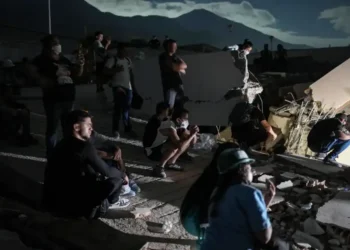
CAIRO (Journos News) – Iranians grieve defiantly after one of the deadliest crackdowns in the history of the Islamic Republic, as families mark 40 days since the peak of last month’s violence. Across cities and towns, memorial gatherings for those killed have evolved into renewed expressions of dissent, even as fear and uncertainty deepen.
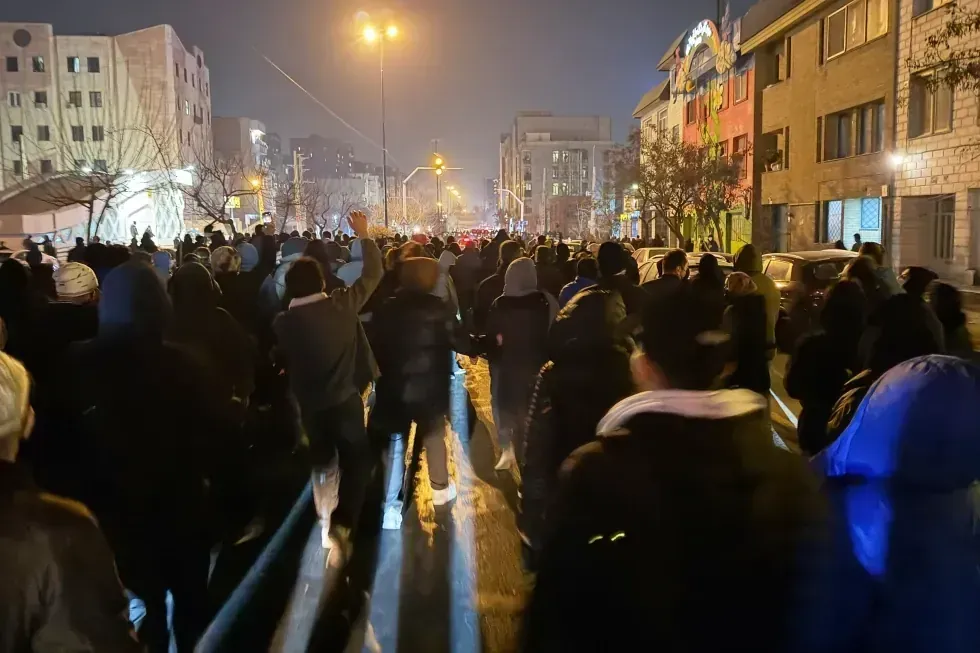
In recent nights in Tehran, residents have returned to a familiar ritual from past protest waves — shouting anti-government slogans from rooftops and balconies under cover of darkness. The calls echo through neighborhoods still shaken by the scale of the crackdown, reflecting both grief and unresolved anger.
According to accounts gathered by the Associated Press, thousands were killed and tens of thousands detained after nationwide protests were forcefully suppressed under Supreme Leader Ali Khamenei, who has ruled for more than three decades. Iran’s government has provided limited official figures and has characterized many protesters as “terrorists,” a description disputed by activists and families of the dead.

Commemorations turn into protests
This week marks 40 days since Jan. 8 and 9 — described by rights groups as the bloodiest days of the crackdown. In Iran, the 40th day after a death, known as the chehelom, is traditionally observed with family and community gatherings. Historically, these ceremonies have sometimes taken on political meaning during periods of unrest.
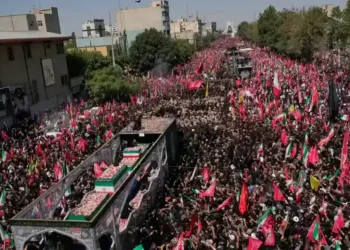
Videos circulating online and verified by the Associated Press show large crowds at cemeteries and public spaces across the country. In the western town of Abdanan, hundreds gathered at the chehelom for a 16-year-old killed in January. Footage showed mourners chanting against the leadership before security forces intervened with what appeared to be tear gas.
Similar scenes unfolded in the eastern city of Mashhad, where crowds attending another 40-day memorial were heard chanting, “For every person killed, a thousand more stand behind him.” The slogan echoes language used during the 1979 revolution, when 40-day mourning cycles helped sustain momentum against the shah.
During that period, memorials often transformed into demonstrations, prompting further clashes and additional casualties that were then commemorated in turn. The pattern appears to be resurfacing, though under far tighter security conditions.
Iran’s authorities have also organized official ceremonies for those killed, whom the Revolutionary Guard described as victims of foreign-backed armed groups that it said exploited legitimate grievances. Officials framed the commemorations as a reaffirmation of national unity.
■ Related News
Anger, fear and economic strain
Interviews with residents in Karaj, just west of Tehran, and other urban centers suggest a public mood shaped by a mixture of anger, exhaustion and economic hardship.
One resident who participated in January’s marches said several relatives and acquaintances were killed when security forces opened fire. “More than sad, people are angry,” he said, describing a sense of collective frustration.
The Human Rights Activists News Agency, an Iran-focused monitoring group, has reported more than 7,000 deaths and believes the toll may be higher. The Iranian government, in a statement issued Jan. 21, said 3,117 people were killed. The disparity reflects the difficulty of independently verifying casualty figures amid restricted access and communication controls.
Beyond the violence, economic pressures are compounding the sense of instability. Iran’s currency has sharply declined in value, pushing up the cost of food and other essentials. Residents describe basic purchases — including fruit — as increasingly unaffordable. With the Persian New Year approaching in March, some say markets that would normally be crowded remain subdued.
Cultural figures have also voiced grief. A prominent actor announced she would not accept new roles, citing the atmosphere of bloodshed. Alireza Ostad Haji, a referee on a popular Iranian television strongman competition, publicly resigned from athletic committees while mourning a former bodybuilding champion killed in the protests, saying he was “not a terrorist, he was a protester.”
Debate over alternatives and foreign pressure
The crackdown has prompted debate among protesters over strategy and leadership. Some demonstrators have voiced support for Reza Pahlavi, the exiled son of Iran’s last shah, who has called for sustained protests and urged stronger international pressure on Tehran. During January’s unrest, chants backing him were heard more frequently than in past protest waves.
The depth of domestic support for Pahlavi remains unclear. Iran’s opposition is fragmented, and independent polling is not available. Some Iranians interviewed said they do not support a return to monarchy but see few alternatives to the current leadership.
Adding to the uncertainty are heightened tensions with the United States. Washington has deployed warships and fighter aircraft to the region while continuing negotiations with Tehran over its nuclear program. Some protesters have expressed hope that outside pressure could weaken the government, though others fear that military escalation would bring wider war and more civilian casualties.
Several residents said the scale of state violence has deterred further street mobilization. “We cannot fight anymore with our fists against machine guns,” one protester said, reflecting a sentiment of fatigue shared by others.
Yet even as open demonstrations have diminished, the nightly rooftop chants and politically charged memorials suggest that dissent has not disappeared. For many families, mourning remains inseparable from demands for accountability.
Source: AP News – Iranians grieve defiantly for thousands killed in last month’s crackdown