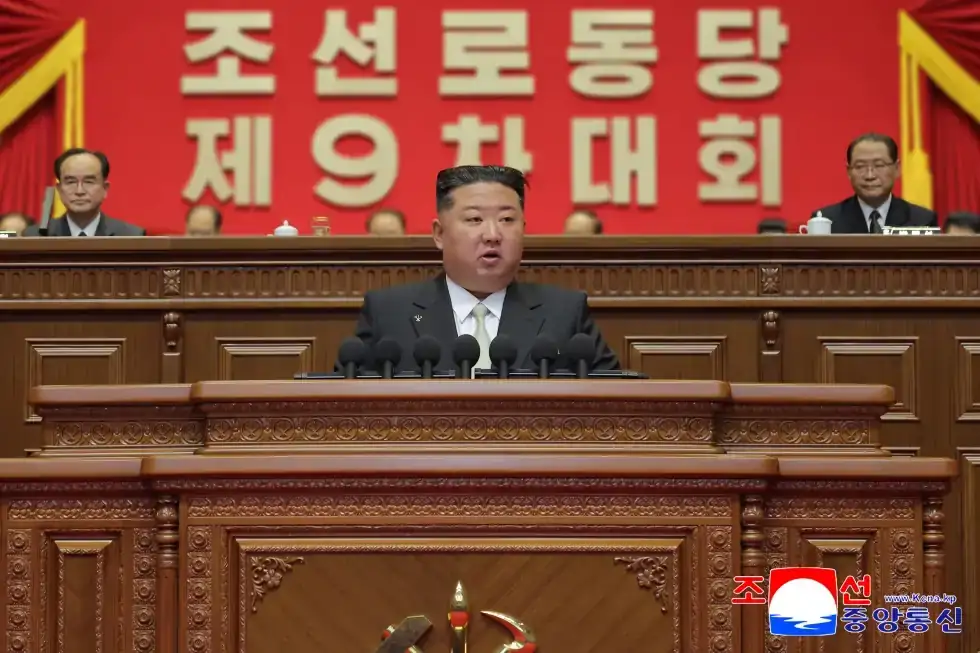
SEOUL, South Korea (Journos News) – North Korean leader Kim Jong Un used the opening of the country’s most significant political meeting to praise what he described as economic progress and a stronger regional position, setting the tone for decisions that could shape policy for the next five years. The gathering, the first of its kind since 2021, brings together thousands of senior officials in Pyongyang amid continued diplomatic deadlock with Washington and strained ties with Seoul.
The congress of the ruling Workers’ Party is expected to outline domestic priorities and reinforce the leadership’s long-term strategy. While North Korean state media emphasized economic themes in Kim’s opening remarks, it offered no immediate details on his approach to nuclear policy or relations with the United States and South Korea — issues that remain central to international scrutiny.
The event underscores how Kim continues to frame national development and political consolidation as intertwined goals, even as outside analysts question the durability of the country’s economic recovery.

Kim highlights economic resilience at party congress
According to the state-run Korean Central News Agency (KCNA), Kim told delegates that North Korea had achieved “significant progress” since the last party congress in 2021, which took place during the height of pandemic-related border closures. He described the country’s status as having strengthened “irreversibly” and said improved conditions would provide momentum for socialist construction.
“Our party is faced with heavy and urgent historic tasks of boosting economic construction and the people’s standard of living,” Kim said, according to KCNA, calling for transformation across state and social sectors.
North Korea’s economy remains difficult to assess due to limited transparency. However, foreign analysts have pointed to signs of gradual recovery, likely aided by the resumption of trade with China following pandemic restrictions and by expanded military cooperation with Russia.
Russia ties and regional alignment
Kim’s closer alignment with Moscow has become a defining feature of recent foreign policy. As Russia continues its war in Ukraine, Pyongyang has deepened military cooperation, supplying equipment and, according to South Korean and U.S. officials, thousands of troops. In return, analysts believe North Korea may be receiving economic assistance and military technologies, though specific arrangements have not been publicly confirmed.
Kim has also sought to strengthen ties with Beijing, North Korea’s primary economic partner. Last year, he traveled to China for a World War II commemorative event and held his first summit in six years with Chinese President Xi Jinping. Observers view these engagements as part of a broader effort to diversify diplomatic leverage amid stalled talks with Washington.
■ Related News

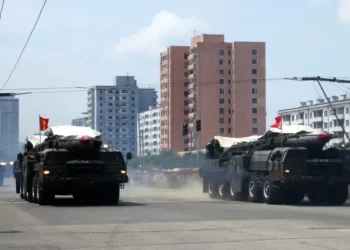
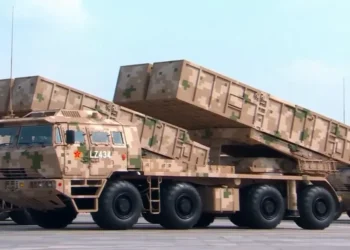
The congress in Pyongyang follows weeks of highly publicized visits by Kim to military sites and major industrial and housing projects. State media coverage highlighted missile capabilities and construction achievements, signaling the leadership’s intent to present both defense strength and development progress to domestic audiences.
Delegates and potential policy signals
Kim said approximately 5,000 delegates are participating in the congress, including 224 members of the party’s central leadership. South Korea’s Unification Ministry described the attendance level as comparable to the 2021 gathering and said it was closely monitoring the proceedings for any shift in policy direction.
Chang Yoon-jeong, spokesperson for the ministry, told reporters in Seoul that authorities were paying attention to possible statements affecting inter-Korean relations or broader foreign policy.
Analysts expect Kim to outline new economic targets and potentially reaffirm plans to expand the country’s nuclear-armed military. North Korea has tested a range of missile systems in recent years, including long-range ballistic missiles that it claims could reach the U.S. mainland, as well as shorter-range weapons designed to target U.S. allies in Asia.
Succession speculation and internal consolidation
South Korea’s National Intelligence Service recently told lawmakers it was watching for signs that Kim might use the congress to formalize the political positioning of his teenage daughter, widely believed to be named Kim Ju Ae. The move, if confirmed, would signal preparations for a fourth-generation succession within the ruling family, though no official announcement has been made.
Such speculation reflects the broader significance of party congresses in North Korea’s political system. These meetings serve not only to set economic and diplomatic direction but also to reinforce elite unity and clarify leadership hierarchies.
Diplomacy remains stalled
Diplomatic engagement between Pyongyang and Washington has been frozen since 2019, when talks between Kim and then-U.S. President Donald Trump collapsed over disagreements on sanctions relief and denuclearization steps. Since Trump began his second term, North Korea has rejected U.S. offers for dialogue, insisting that Washington abandon calls for denuclearization as a precondition for negotiations.
Inter-Korean relations have also deteriorated. Pyongyang has suspended most cooperation with Seoul and has increasingly framed South Korea as a hostile separate state rather than a partner for eventual reunification. Kim previously declared a “two-state” system on the Korean Peninsula, a shift that analysts say could be further institutionalized during the current congress.
The outcome of the meeting may therefore provide insight into how North Korea intends to balance economic messaging with its strategic military ambitions. While state media has so far emphasized development and internal transformation, the absence of detailed references to nuclear policy leaves open questions about how Pyongyang will position itself in the months ahead.
For now, the congress serves as a reminder that North Korea’s leadership continues to project confidence at home, even as its external relationships remain defined by sanctions, strategic competition and diplomatic stalemate.
Source: AP News – Kim lauds North Korea’s economy and regional standing as major party meeting opens