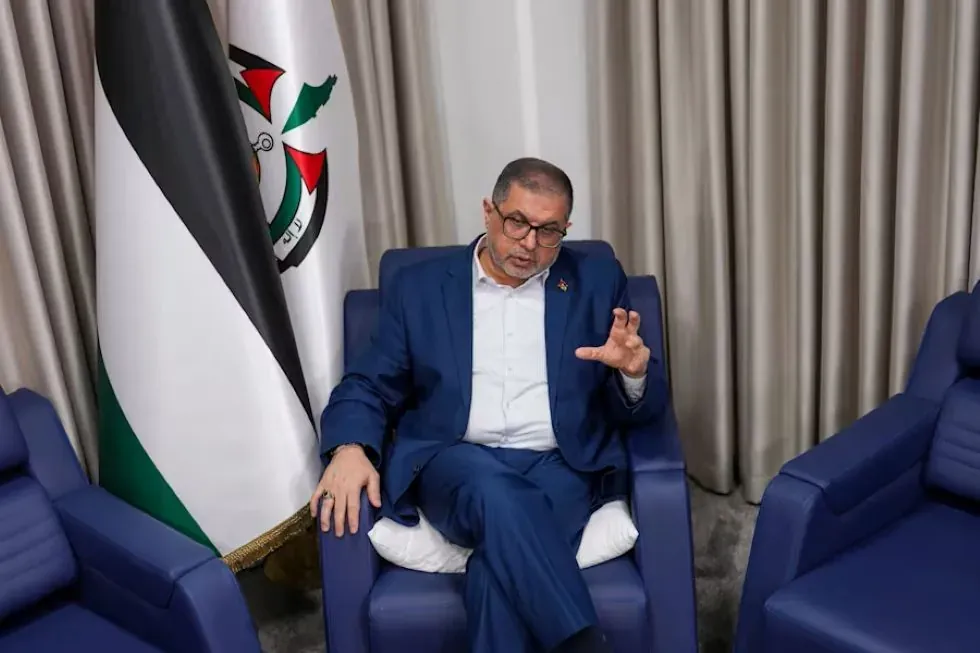
DOHA, Qatar (JN) – Hamas has indicated it is prepared to discuss freezing or storing its weapons as part of ongoing ceasefire arrangements with Israel, a senior official said, in remarks that could affect negotiations over the next phase of the fragile truce in Gaza.
The comments come as mediators work to move the agreement into a more complex stage that addresses Gaza’s postwar governance, security arrangements and the possible role of international forces. Disarmament has long been one of Israel’s central demands and one of the most contentious issues in talks.
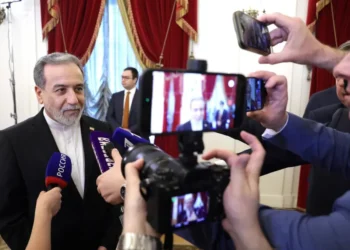
Speaking in Doha, where much of the group’s leadership is based, Bassem Naim, a member of Hamas’ political bureau, said the movement is “open” to a comprehensive approach that would prevent renewed fighting, while maintaining what it describes as its right to resist.

A pivotal moment in the Hamas ceasefire weapons freeze talks
The ceasefire halted a prolonged Israeli military campaign in Gaza launched after Hamas’ Oct. 7, 2023 attack on Israel. Since the truce took effect in October, both sides have carried out exchanges of Israeli hostages for Palestinian prisoners.
With only the remains of one Israeli hostage still believed to be held in Gaza, negotiators are preparing to begin the second phase of the agreement. That phase is expected to address far more complex questions, including governance of the devastated enclave, Israeli troop withdrawals and the future of Hamas’ armed wing.
Naim said Hamas is prepared to discuss “freezing or storing or laying down” its weapons during a ceasefire period, provided there are Palestinian guarantees that the arms would not be used. He suggested that a longer-term truce of five or 10 years could create space for broader political discussions, including the establishment of a Palestinian state.
He offered no detailed mechanism for how such a weapons arrangement would function in practice, and it remains unclear whether Israel would consider anything short of full disarmament acceptable.
Disarmament remains a central obstacle
Israeli officials have repeatedly said that dismantling Hamas’ military capabilities is essential to any lasting settlement. Hamas, whose ideology is rooted in armed resistance against Israel, has historically rejected calls to surrender its arsenal.



The ceasefire framework was based on a 20-point plan presented by U.S. President Donald Trump in October and adopted by the United Nations Security Council. It outlines broad steps but leaves significant details unresolved, including timelines and enforcement mechanisms.
Qatar, Egypt and Turkey are among the international guarantors supporting the agreement. Much of the mediation has taken place in Doha, reflecting Qatar’s longstanding role as a host for Hamas’ political leadership.
Naim said the plan requires further clarification, particularly regarding the mandate of a proposed international stabilization force. Several countries, including Indonesia, have expressed willingness to contribute troops, and U.S. officials have said they expect such a force to deploy early next year.
Hamas, however, has drawn a clear line. Naim said the group would accept a United Nations force positioned near Gaza’s borders to monitor compliance and report violations but would oppose any mandate authorizing operations inside Palestinian territory, especially related to disarmament.
Governance and internal Palestinian coordination
Beyond security arrangements, negotiators are working on the formation of a technocratic committee to manage Gaza’s daily affairs. Naim said Hamas and the rival Palestinian Authority have made progress on selecting leadership for the body.
Officials familiar with the talks have identified Palestinian Health Minister Majed Abu Ramadan as a candidate to head the committee, though Naim did not publicly confirm the name. The formation of a unified administrative structure is seen as a key step toward stabilizing Gaza after months of destruction.
Large areas of the territory remain heavily damaged, and reconstruction will require significant international funding. Questions remain over who will finance rebuilding efforts and how quickly they can begin.
Continued tensions during the first phase
Despite the truce, both sides have accused each other of violations. Israel says Hamas delayed hostage returns and alleges the continued presence of militants in Israeli-controlled parts of Gaza. Palestinian health officials report that more than 370 Palestinians have been killed in Israeli strikes since the ceasefire began, while Israel says its actions were responses to violations.
Israeli and Egyptian officials have said that around 200 Hamas militants remain underground in Israeli-held areas. Naim said Hamas was not aware of their presence when the ceasefire was signed and claimed communications with them had been cut.
He also accused Israel of failing to meet commitments related to humanitarian aid and the reopening of the Rafah border crossing with Egypt. Israel has said it is prepared to reopen Rafah for departures from Gaza, but Egypt and Palestinian officials argue that the crossing should operate in both directions and have expressed concern about potential displacement.
Humanitarian conditions remain acute. Aid agencies have warned that many residents lack adequate shelter, food and medical supplies, even as commercial goods trickle into markets accessible only to those with means.
Legacy of Oct. 7 and the war’s toll
The Oct. 7 attack killed more than 1,200 people in Israel and saw over 250 taken hostage, according to Israeli authorities. It marked the deadliest attack in Israel’s history and continues to shape public opinion and government policy.
Israel’s military campaign in Gaza has killed more than 70,000 Palestinians, according to local health officials. The Palestinian Health Ministry, which operates under Hamas’ administration in Gaza, does not distinguish between civilians and fighters but says roughly half of those killed were women and children.
Nearly the entire population of about 2 million people has been displaced at some point during the conflict. Entire neighborhoods have been reduced to rubble, and the long-term political future of Gaza remains uncertain.
Asked whether Hamas regrets the Oct. 7 attack, Naim described it as an act of defense in response to longstanding Israeli policies, rejecting the notion that the conflict began on that date. His remarks underscore the deep divisions that continue to complicate negotiations.
As the second phase of the ceasefire approaches, the question of whether Hamas is willing — and able — to transform its military posture may prove decisive. For now, the group’s offer to discuss freezing its weapons introduces a possible opening, but the gap between conditional storage and full disarmament remains wide.
Source: AP News – Hamas is ready to discuss freezing or storing its weapons, senior official says