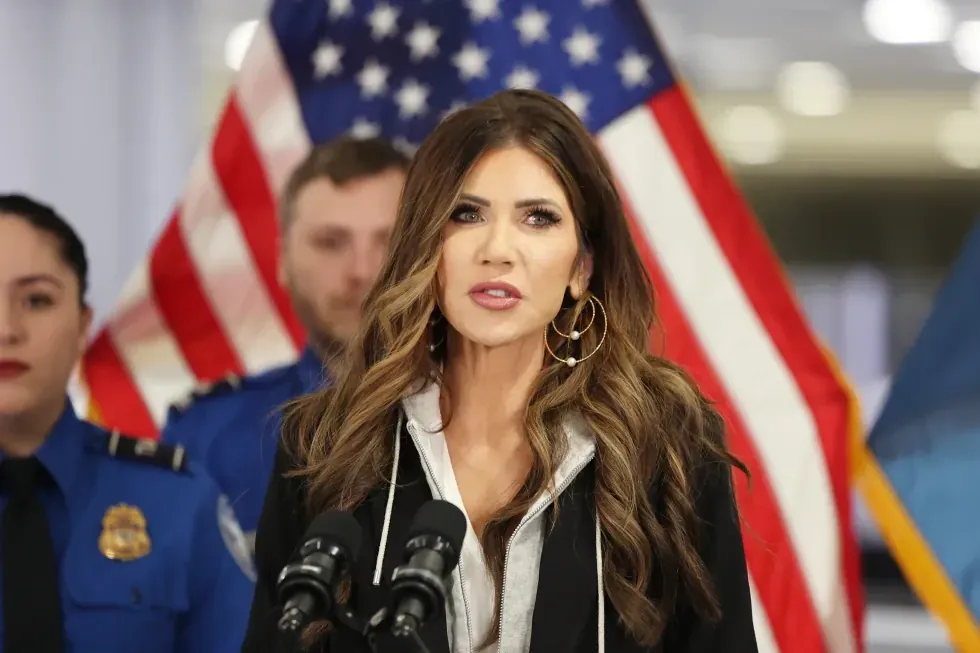
WASHINGTON (Journos News) – The Trump administration plans to expand its travel ban to cover more than 30 countries, according to Homeland Security Secretary Kristi Noem, marking a further tightening of immigration controls in the wake of a fatal shooting involving a U.S. National Guard member.
The proposed expansion builds on a June directive issued by President Donald Trump that barred entry to citizens from 12 countries and imposed restrictions on seven others. Administration officials have framed the move as part of a broader national security review, though they have not released a formal list of additional countries under consideration.
In an interview broadcast late Thursday on Fox News, Noem declined to confirm the precise number of countries that would be added but said it would be “over 30.” She said the president was continuing to assess which nations would fall under the expanded restrictions.

National security review under way
Speaking to Fox News host Laura Ingraham, Noem argued that countries lacking stable governments or reliable identity verification systems pose risks to U.S. border security.
“If they don’t have a stable government there, if they don’t have a country that can sustain itself and tell us who those individuals are and help us vet them, why should we allow people from that country to come here to the United States?” she said.
The Department of Homeland Security did not immediately respond to requests for details on when the revised policy might take effect or which countries would be included. Officials have said decisions will be based on each country’s capacity to share security information and maintain functioning civil documentation systems.
The June travel ban already applied to 19 countries, including Afghanistan, Somalia, Iran and Haiti. In the days following the Washington shooting, the administration tightened procedures affecting individuals from those nations, pausing asylum adjudications and immigration-related benefit processing in certain cases.
Shooting prompts policy acceleration
The latest measures follow the Thanksgiving week shooting of two National Guard members in Washington. Rahmanullah Lakanwal, who immigrated to the United States from Afghanistan after the U.S. military withdrawal, has been charged with first-degree murder. One of the victims, West Virginia National Guard Specialist Sarah Beckstrom, died from injuries sustained in the Nov. 26 attack. A second service member, Staff Sgt. Andrew Wolfe, was critically wounded. Lakanwal has pleaded not guilty.
■ Related News



While law enforcement authorities have not publicly linked the incident to broader immigration policy, the administration has cited the case as evidence that more rigorous screening procedures are necessary.
Over a period of just more than a week, federal agencies announced a series of related actions. The administration halted asylum decision-making for applicants from the 19 travel ban countries, paused certain immigration benefit processing for individuals already residing in the United States from those nations, and suspended visa issuance for Afghans who had assisted U.S. operations during the war.
On Thursday, U.S. Citizenship and Immigration Services said it would shorten the validity period of work permits for some applicants, including refugees and individuals granted asylum. The agency said the change would require more frequent reapplication and security reviews.
Critics warn of collective impact
Administration officials maintain that the expanded travel restrictions are targeted and based on national security assessments. They argue that countries unable or unwilling to share sufficient identity data or security information cannot meet U.S. vetting standards.
Immigration advocates and some lawmakers have criticized the approach, saying it places additional burdens on individuals who have already undergone extensive screening. They contend that suspending benefits and tightening entry restrictions amounts to collective punishment for actions not linked to the broader population.
The proposed expansion echoes travel restrictions introduced during Trump’s first term, which faced prolonged legal challenges before being upheld in revised form by the Supreme Court. The current administration has emphasized that its policy reviews are designed to withstand judicial scrutiny by relying on security-based criteria rather than nationality alone.
Ongoing evaluation
Noem indicated that the White House is continuing its evaluation and that further announcements could follow once the president finalizes the list of countries.
The scope and timing of the expanded ban remain unclear. As with previous travel directives, implementation could involve coordination among the Departments of Homeland Security, State and Justice, potentially affecting visa issuance, refugee admissions and border entry procedures.
For now, officials say the review is ongoing, with additional details expected once internal assessments are complete.
Source: AP News – Trump administration will expand travel ban to more than 30 countries, Noem says