At least 18 people have died after a migrant vessel capsized off the southern coast of Crete, prompting an extensive search-and-rescue operation that authorities say has now concluded. Greek officials reported that no further survivors or bodies are expected to be found, bringing a grim end to one of the region’s deadliest maritime incidents in recent months.
The disaster unfolded southeast of Crete, near Chrysi Island, in waters that have increasingly become a corridor for long-distance migrant journeys from North Africa. The sinking adds to a long list of maritime tragedies in the Mediterranean, which remains one of the world’s most dangerous migration routes despite years of intensified surveillance and international appeals for safer pathways.
Search Operations Conclude
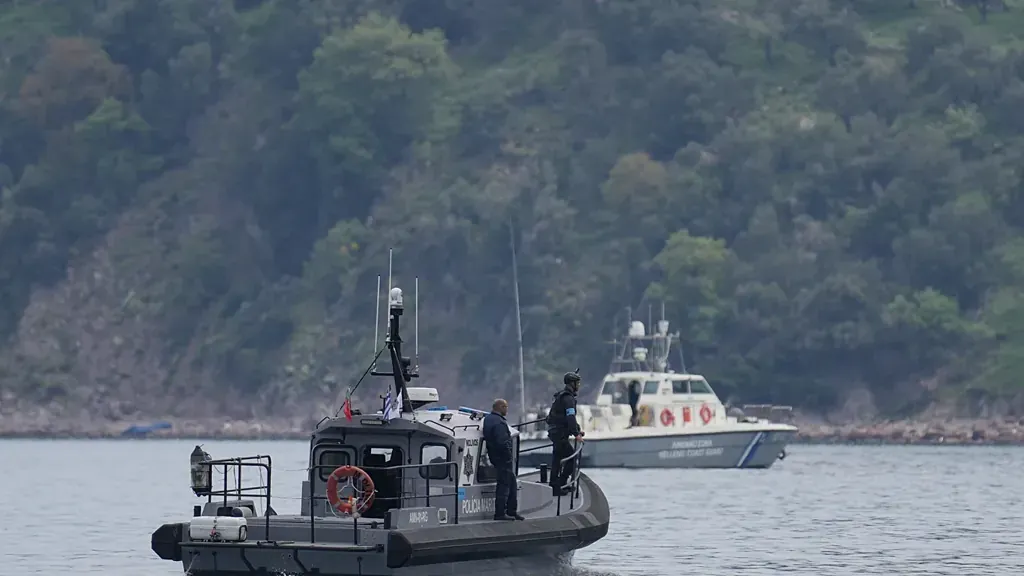
The alarm was first raised when a Turkish-flagged cargo ship spotted a half-submerged vessel roughly 26 nautical miles south of Chrysi Island. Greek authorities immediately launched a major search effort involving two Hellenic Coast Guard vessels, a Frontex boat, several nearby ships, a Super Puma rescue helicopter, and a Frontex surveillance aircraft.
Officials confirmed on Saturday that the search has now officially ended. No further evidence suggested additional passengers were missing, and the number of confirmed fatalities stands at 18. Authorities did not specify how many people had been on board, nor did they provide details about the nationalities of the victims.
The circumstances surrounding the capsizing remain unclear. Investigators are examining weather conditions, the structural condition of the boat, and whether smugglers may have overloaded the vessel—an all-too-common practice on migrant routes across the Mediterranean.
A Deadly Route Into Europe
Greece has long been a gateway into the European Union for migrants and asylum seekers escaping conflict, political instability, or economic hardship across the Middle East, Africa, and parts of Asia. While the number of attempted crossings from Turkey to Greek islands has declined sharply in recent years—partly due to increased patrols, EU-Turkey cooperation, and persistent allegations of illegal pushbacks—the central and eastern Mediterranean remain extremely active migration corridors.
The Aegean Sea, once the busiest route for irregular arrivals, has seen fewer departures compared with the surge witnessed during the 2015–2016 European migration crisis. However, overall Mediterranean crossings continue to fluctuate, often influenced by shifting political dynamics, security conditions, and smuggling networks.
Fatal maritime incidents continue at a worrying pace. Data from agencies such as the International Organization for Migration (IOM) consistently show the Mediterranean as one of the deadliest migration corridors in the world, with thousands of deaths recorded annually in some recent years. Volunteers and NGOs say many more shipwrecks likely go unreported in areas with limited surveillance.
Rising Arrivals From Libya to Crete
Greek officials have noted a recent uptick in boats arriving directly from Libya to Crete, marking a shift in smuggling patterns. Longer journeys across open water pose higher risks, especially in unstable sea conditions or when conducted in vessels not built for long-distance travel.
Authorities say improved monitoring near Turkey’s coast has pushed some smugglers to seek alternative routes, sending boats on longer journeys from North Africa toward Crete or mainland Greece. These routes expose migrants to prolonged exposure, unpredictable currents, and limited emergency assistance.
Local officials and humanitarian groups have warned that Crete’s southern coastline is ill-equipped for frequent large-scale rescue operations. Many of the boats that arrive—or are intercepted—carry migrants who have endured days at sea with minimal supplies.
Unanswered Questions About the Shipwreck
While Greek authorities confirmed the final death toll, key questions remain unanswered. It is still unclear:
-
How many migrants were aboard the vessel before it capsized.
-
Whether weather or structural failure contributed to the disaster.
-
If smugglers abandoned the passengers or attempted an escort vessel, as sometimes occurs along longer migration routes.
-
Whether distress signals were sent before the Turkish cargo ship located the wreck.
Authorities say a formal investigation is underway. Forensic teams are working to identify the victims, a process that often proves challenging when passengers travel without identification documents.
Europe’s Ongoing Migration Challenge
The incident comes at a time when European governments continue to debate tighter border controls, asylum reforms, and measures aimed at addressing the root causes of migration. Human rights groups argue that the absence of safe and legal pathways forces vulnerable people to turn to dangerous sea routes.
The European Union’s border agency, Frontex, has expanded operations in the Mediterranean but has also faced scrutiny over its conduct and cooperation with national coast guards. Investigations by international media and watchdog organizations have raised concerns about pushbacks, surveillance gaps, and coordination failures during rescue missions.
Meanwhile, Greece has maintained that its policies comply with international law and human rights standards, emphasizing that overstretched coastal units remain committed to saving lives. Officials point to the high number of rescues conducted each year as evidence of that commitment.
A Familiar Tragedy, Renewed Calls for Action
This latest shipwreck serves as another reminder of the ongoing humanitarian cost of migration across the Mediterranean. While the EU has poured resources into border enforcement and monitoring, fatalities persist, and smugglers continue exploiting people desperate to reach safety or opportunity.
Humanitarian organizations are renewing calls for increased search-and-rescue capacity, improved reception policies, and expanded resettlement pathways. They argue that without comprehensive reforms, tragedies like the one off Crete will continue to claim lives in one of the world’s most closely watched maritime regions.
For now, 18 families will await the identification of loved ones lost in a journey that promised hope but ended in devastation. And in coastal communities across Greece, authorities brace for what may be a challenging season as migration patterns evolve and pressure on long-distance sea routes intensifies.
This article was rewritten by JournosNews.com based on verified reporting from trusted sources. The content has been independently reviewed, fact-checked, and edited for accuracy, neutrality, tone, and global readability in accordance with Google News and AdSense standards.
All opinions, quotes, or statements from contributors, experts, or sourced organizations do not necessarily reflect the views of JournosNews.com. JournosNews.com maintains full editorial independence from any external funders, sponsors, or organizations.
Stay informed with JournosNews.com — your trusted source for verified global reporting and in-depth analysis. Follow us on Google News, BlueSky, and X for real-time updates.