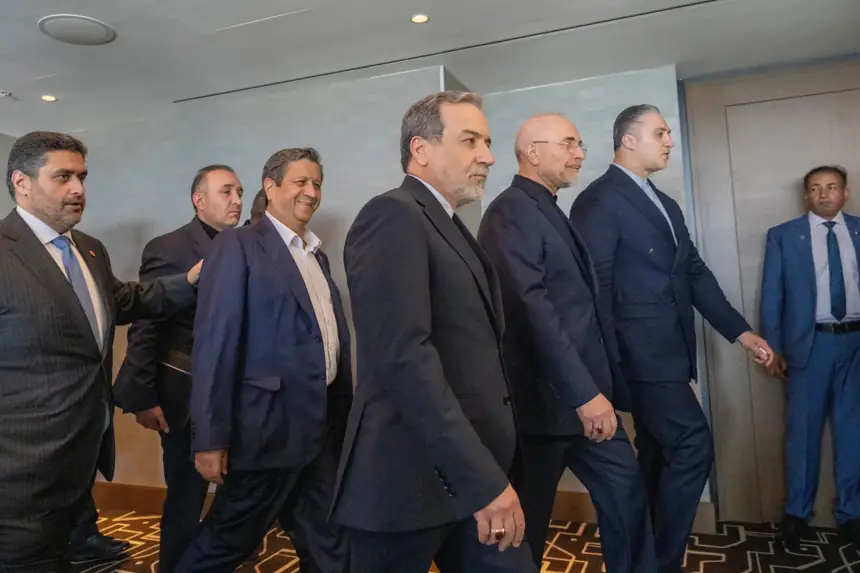
OBBÜRGEN, Switzerland – Negotiations between U.S. and Iranian officials in Switzerland have produced what U.S. Vice President JD Vance described as a promising foundation for a broader agreement aimed at ending months of conflict involving Iran, Israel, and regional armed groups.
Speaking after meetings in OBBÜRGEN, Switzerland, Vance said discussions had established a “good basis for a successful final agreement,” although key technical negotiations remain ongoing as diplomats work through complex security, economic, and political issues.
The talks come amid efforts to implement an interim agreement signed last week between the United States and Iran that established a 60-day period for negotiators to address unresolved disputes, including the future of Iran’s nuclear program and broader regional security concerns.

Strait of Hormuz Emerges as Key Negotiating Priority
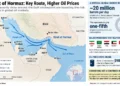
One of the central issues discussed was the future operation of the Strait of Hormuz, a strategically important shipping route through which a significant portion of global energy supplies transit.
U.S. officials said progress had been made toward establishing mechanisms intended to keep maritime traffic moving through the waterway.
President Donald Trump welcomed developments related to the strait, telling reporters at the White House that efforts to ensure continued navigation were progressing positively.
Iran closed the Strait of Hormuz following U.S. and Israeli military operations launched in late February, disrupting shipping and contributing to rising fuel prices globally. Although dozens of vessels have resumed transits under the interim arrangement, officials said portions of the main route remain mined and inaccessible.
Data from analytics firm Kpler showed that 71 confirmed vessel transits occurred over the weekend, compared with the pre-conflict average of roughly 100 to 130 daily crossings.
■ Related News
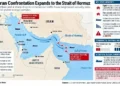


Ships have largely avoided the central channel, instead relying on alternative northern and southern routes through Iranian and Omani waters.
Lebanon Ceasefire Viewed as Early Test
Regional security issues were also prominent during the negotiations.
Iranian officials identified the conflict between Israel and Hezbollah in Lebanon as a critical component of any broader settlement. Following the outbreak of hostilities between the United States, Israel, and Iran earlier this year, fighting intensified along the Israel-Lebanon frontier after Hezbollah launched attacks into northern Israel and Israeli forces expanded military operations in southern Lebanon.
Iranian Foreign Minister Abbas Araghchi said significant progress had been made toward reducing tensions in Lebanon but described implementation of a ceasefire as the first major test of the diplomatic process.
As of Monday evening, a ceasefire between Israel and Hezbollah appeared to be holding.
Tilak Pokharel, spokesperson for the United Nations Interim Force in Lebanon (UNIFIL), said peacekeepers had not detected offensive actions by either side since the previous day. However, he noted that military activity and airspace violations continued in some areas.
The current pause represents the longest interruption in fighting since the latest Israel-Hezbollah conflict began in early March.
Economic Measures Under Discussion
Negotiators also explored potential economic incentives linked to sanctions relief.
Vance said the United States could consider unfreezing Iranian assets as part of future arrangements, with funds potentially directed toward purchases of American agricultural products including soybeans, corn, and wheat.
According to Vance, discussions involving senior U.S. negotiators and Qatari officials examined mechanisms that would allow Iranian funds to be used for approved commercial transactions as sanctions are gradually eased.
Iran has long sought access to billions of dollars in assets frozen under international sanctions, banking restrictions, and legal disputes. Iranian officials had not publicly commented on the proposal.
Separately, the U.S. Treasury Department announced a 60-day sanctions exemption covering Iranian oil exports as part of the interim agreement. The temporary license allows imports of Iranian oil into the United States, a trade largely absent for decades.
Technical Negotiations Continue
While high-level political discussions have concluded for now, technical teams remain engaged in detailed negotiations.
Mediators from Pakistan and Qatar issued a joint statement welcoming what they described as encouraging progress during the latest round of talks.
Vance emphasized that many of the most difficult issues still require further discussion. Senior envoys Jared Kushner and Steve Witkoff are leading much of the technical work aimed at transforming the interim framework into a more comprehensive agreement.
The negotiations were occasionally disrupted by public statements from political leaders. Iranian state media reported that talks were briefly paused following remarks by President Trump that Iranian officials considered offensive. Discussions later resumed.
Before the negotiations began, Iranian President Masoud Pezeshkian reiterated his country’s position on uranium enrichment, stating through state media that Iran would not abandon what it considers its right to pursue the activity.
Diplomatic Window Remains Open
Although negotiators reported progress, significant issues remain unresolved, including the future of Iran’s nuclear activities, sanctions relief, regional security arrangements, and the durability of ceasefires linked to the wider conflict.
Both sides have indicated that technical discussions will continue throughout the week as diplomats seek to build on the preliminary understandings reached in Switzerland.
For now, officials from the United States, Iran, and mediating countries say the focus remains on converting the current pause in hostilities into a broader and more durable regional settlement.
Tags: Iran, United States, Israel, Lebanon, Strait of Hormuz, JD Vance, Nuclear Talks, Diplomacy, Ceasefire, Regional Conflict, US-Iran Talks