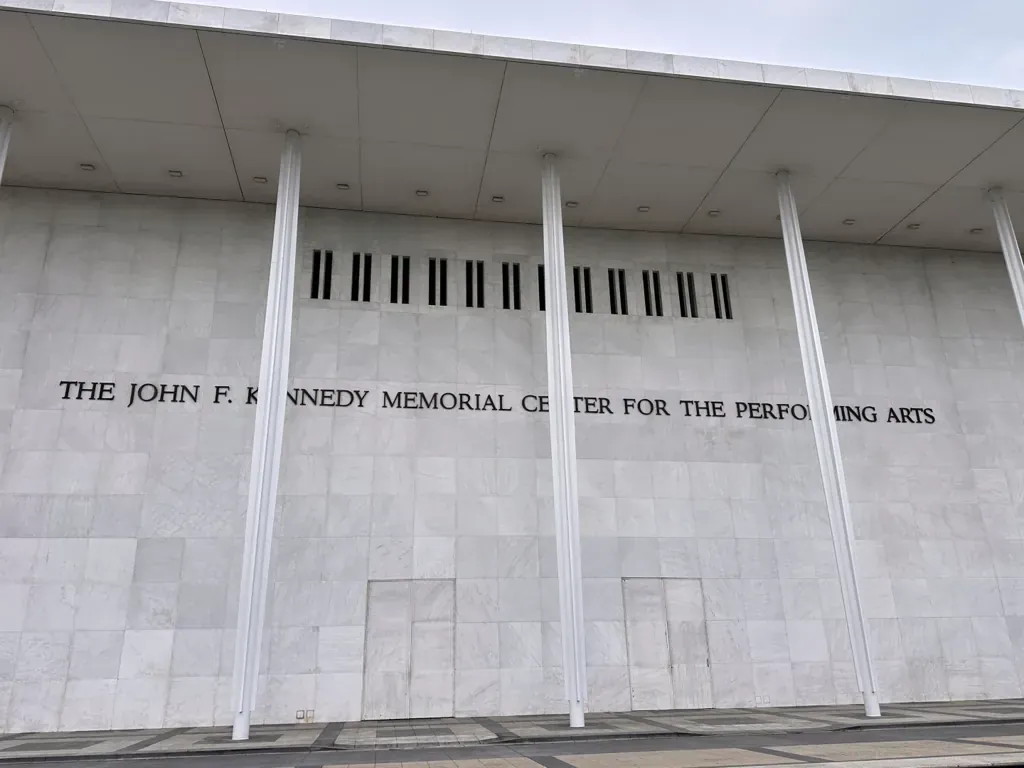
A board appointed by President Donald Trump has voted to rename Washington’s leading performing arts venue as the Trump Kennedy Center, triggering objections from Democrats and renewed debate over whether such a change can be made without congressional approval. The move, announced by the White House, immediately altered the center’s branding but faces questions over its legal standing and broader political implications.
A vote that reignites an old legal question
The White House said Thursday that the board of trustees of the John F. Kennedy Center for the Performing Arts had voted unanimously to adopt a new name: The Donald J. Trump and The John F. Kennedy Memorial Center for the Performing Arts. The decision was made by a board reshaped since Trump returned to office in January, following the replacement of members originally appointed by Democratic presidents.
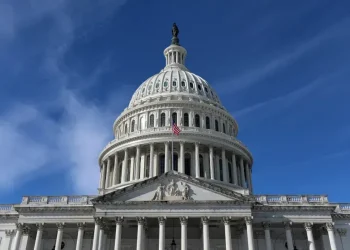
The Kennedy Center was established by Congress in 1958 and formally named after President John F. Kennedy in 1964, months after his assassination. Several legal historians and Democratic lawmakers argue that this history places ultimate authority over the institution’s name with Congress, not its board.
Donald A. Ritchie, who served as the U.S. Senate historian from 2009 to 2015, said that because Congress named the center, any permanent change would require lawmakers to amend the law. While alternative names can be used informally, he said, they would not carry legal force.
Despite those objections, the center’s website was updated shortly after the vote to reflect the new name, signaling the board’s intention to proceed without waiting for congressional action.
White House praise, Democratic objections
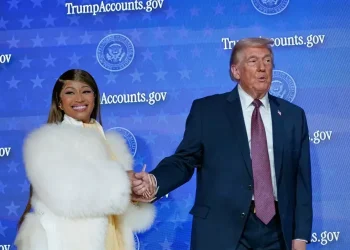
White House press secretary Karoline Leavitt announced the decision on social media, praising what she described as Trump’s “unbelievable work” at the center since returning to office. Trump, who now serves as chairman of the board, said he was surprised by the vote and honored by the outcome.
“The board is a very distinguished board, most distinguished people in the country,” Trump told reporters at the White House. “I was surprised by it and I was honored by it.”
Democrats responded swiftly, arguing that the board had exceeded its authority. House Democratic leader Hakeem Jeffries said only Congress has the power to rename the Kennedy Center, a position echoed by other lawmakers.
Jeffries serves on the board as an ex officio member because of his leadership role in Congress. Rep. Joyce Beatty of Ohio, another Democratic lawmaker with ex officio status, said she joined the meeting remotely and was muted when she attempted to raise concerns about the vote.
“This is just another attempt to evade the law and not let the people have a say,” Beatty said.
Roma Daravi, a spokesperson for the center, disputed that characterization, saying all board members were invited to attend in person and that non-voting members were granted the privilege of listening in on the meeting.
Legal authority to rename the Kennedy Center
The question of who has the final say over the Kennedy Center’s name remains unresolved. While the board oversees operations and programming, the institution’s original naming was enshrined in federal law. Legal experts say that distinction could prove decisive if the issue is challenged in court or taken up formally by Congress.
A Republican-backed bill introduced in July by Rep. Bob Order of Missouri would designate the center as the Donald J. Trump Center for the Performing Arts if passed and signed into law. The legislation has not advanced, and the House Transportation Committee has yet to consider it.
Until such a bill is enacted, Democrats argue that any board-approved name change is symbolic rather than binding. Republicans counter that the board has broad discretion over the center’s identity and branding, particularly under its current leadership.
Reaction from the Kennedy family
The decision also drew criticism from members of the Kennedy family, who have long viewed the center as a living memorial to the late president’s support for the arts.
Maria Shriver, a niece of John F. Kennedy, said it was “beyond comprehension” that Trump would seek to add his name to the memorial. In a social media post, she described the move as unacceptable and questioned whether other Kennedy-linked sites could be next.
Her brother, Tim Shriver, called the renaming an “insult to a great president” in a separate post. Other members of the extended family have not commented publicly, though Robert F. Kennedy Jr., a cousin of the Shrivers, serves in Trump’s Cabinet as secretary of health and human services.
Part of a broader cultural strategy
The Kennedy Center has become a focal point in Trump’s broader criticism of what he calls “woke” or anti-American culture. During his first term, Trump showed limited interest in the institution and did not attend the annual Kennedy Center Honors.
That approach has changed markedly since January. Trump has replaced board members, assumed the chairmanship, and pledged to overhaul both the center’s programming and its physical condition. He has criticized past artistic choices as overly liberal and said the building itself was in need of significant upgrades.
A Republican-controlled Congress approved more than $250 million in funding for renovations, including new seating, updated interiors, and other improvements. Trump has highlighted those investments as evidence of his commitment to revitalizing the center.
Mixed response from artists and audiences
Trump has increased his personal presence at the venue, attending opening night of “Les Misérables” and hosting the most recent Kennedy Center Honors ceremony, which is scheduled to air later this month on CBS and Paramount+.
At the same time, the center has faced resistance from parts of the artistic community. Several touring productions, including “Hamilton,” have canceled planned runs. Some performers, among them actor Issa Rae and musician Rhiannon Giddens, have withdrawn from scheduled appearances.
High-profile consultants such as musician Ben Folds and opera singer Renée Fleming have resigned their advisory roles. Observers have also reported empty seats at National Symphony Orchestra performances, and subscription sales are said to have declined, though the center has not released detailed figures.
Political lines harden
Republican lawmakers largely praised the board’s decision. Senator Lindsey Graham of South Carolina described the renaming as a “well-deserved honor,” citing Trump’s involvement in refurbishing the institution.
Democrats, by contrast, say the episode underscores concerns about politicizing a national cultural landmark. Several non-voting Democratic board members have said the vote was illegal and warned that the dispute could escalate if the administration continues to treat the change as final.
For now, the renamed branding stands, even as questions linger over its permanence. Whether Congress chooses to intervene may determine if the Trump Kennedy Center becomes an enduring title or a contested footnote in the institution’s history.
This article was rewritten by JournosNews.com based on verified reporting from trusted sources. The content has been independently reviewed, fact-checked, and edited for accuracy, neutrality, tone, and global readability in accordance with Google News and AdSense standards.
All opinions, quotes, or statements from contributors, experts, or sourced organizations do not necessarily reflect the views of JournosNews.com. JournosNews.com maintains full editorial independence from any external funders, sponsors, or organizations.
Stay informed with JournosNews.com — your trusted source for verified global reporting and in-depth analysis. Follow us on Google News, BlueSky, and X for real-time updates.