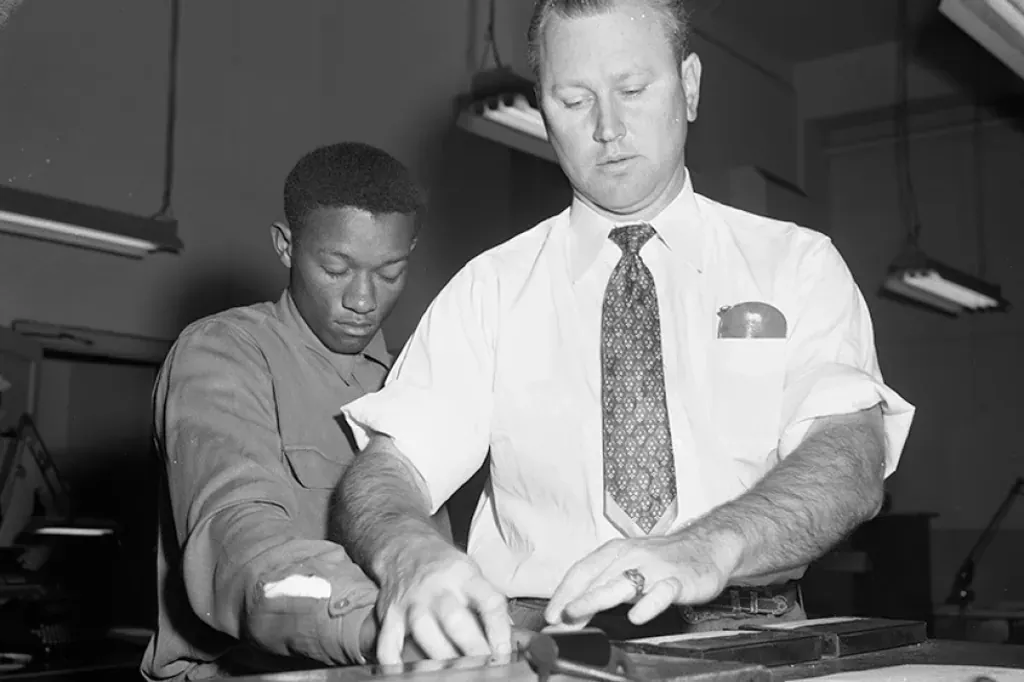
HOUSTON (JN) – Nearly seven decades after Texas executed a 19-year-old Black man for a crime he did not commit, Dallas County officials have formally declared him innocent, concluding that his conviction was driven by racial prejudice, coerced testimony, and deeply flawed police work.
The posthumous exoneration of Tommy Lee Walker, executed in 1956 for the rape and murder of a white woman, marks one of the most significant acknowledgments of historical injustice by local authorities in recent years. Prosecutors said the case reflected systemic failures that were common during the Jim Crow era but incompatible with modern standards of justice.
County commissioners unanimously approved a symbolic resolution this week recognizing Walker’s wrongful conviction and execution, calling the case a “profound miscarriage of justice.”
Case rooted in racial panic and unreliable evidence
Walker was executed in the electric chair in May 1956 after being convicted of killing 31-year-old Venice Parker, a Dallas store clerk who was attacked while walking home on Sept. 30, 1953.
At the time, Dallas was gripped by racial fear following reports of a “Peeping Tom” believed to be a Black man. According to the Dallas County Criminal District Attorney’s Office, that atmosphere shaped both the investigation and the prosecution’s narrative, leading authorities to focus aggressively on Black suspects with little supporting evidence.
An extensive review conducted by the district attorney’s office, in collaboration with the Innocence Project and Northeastern University School of Law’s Civil Rights and Restorative Justice Project, found that the state relied on false claims and improper testimony to secure Walker’s conviction.
Alleged victim identification contradicted by witnesses
Central to the prosecution’s case was a claim by a Dallas police officer that Parker had identified her attacker as a Black man before dying.
However, prosecutors now say that assertion was unsupported and contradicted by multiple witnesses. According to Dallas County District Attorney John Creuzot, those present after the attack stated that Parker was gravely injured and unable to speak.
“She did nothing outside of convulse and hemorrhage exorbitant amounts of blood,” Creuzot told county commissioners during the meeting to consider Walker’s exoneration.
That false identification became a cornerstone of the state’s case despite the absence of corroborating evidence.
Coercive interrogation and forced confession
Walker was arrested four months after the killing, following the detention of hundreds of Black men during the investigation. He was interrogated by Will Fritz, a Dallas police captain whom prosecutors now say had been a member of the Ku Klux Klan.
Creuzot said Walker was subjected to threatening and coercive tactics that ultimately produced a confession. Walker later testified that he admitted to the crime out of fear for his life.
Modern prosecutors concluded that the confession was unreliable and should never have been admitted at trial.
Alibi testimony dismissed by all-white jury
At trial in 1954, Walker’s defense presented 10 witnesses who testified that he was at a local hospital at the time of the murder, where his girlfriend was giving birth to their son, Edward Lee Smith.
Despite the volume and consistency of that testimony, Walker was convicted by an all-white jury. The Innocence Project said the alibi evidence “carried little weight in Jim Crow Dallas,” where racial bias routinely shaped courtroom outcomes.
“The prosecution in this case presented misleading and inadmissible evidence,” Creuzot said. “While it has undeniable legal errors, it was riddled with racial injustice during a time when prejudice and bigotry were woven throughout every aspect of society.”
Journalist’s long investigation brought case back to light
Creuzot credited journalist Mary Mapes with reopening the case after she began investigating Walker’s conviction more than a decade ago.
“He paid with his life for a crime he could not have committed,” Mapes told commissioners, describing the case as one of the clearest examples of racial injustice in Texas’ capital punishment history.
Her reporting ultimately helped trigger the formal review that led to Walker’s exoneration.
Emotional reconciliation between families
The commissioners’ meeting included emotional testimony from Walker’s son, Edward Lee Smith, now 72, who described the lifelong impact of his father’s execution.
“I’m 72 years old and I still miss my daddy,” Smith said through tears, recalling how his mother told him that Walker had been sent to the electric chair for a crime he did not commit.
In a powerful moment, Smith embraced Joseph Parker, the victim’s son. Both men expressed sorrow for each other’s losses, acknowledging the pain carried by both families for decades.
“I’m so sorry for what happened,” Parker told Smith.
“And I’m sorry for your loss,” Smith replied.
Resolution recognizes historical injustice
At the conclusion of the meeting, Dallas County commissioners unanimously approved a resolution formally declaring Walker innocent and acknowledging that his execution represented a profound failure of the justice system.
Parker said he hopes the decision will serve as a warning and a lesson.
“If nothing else comes from this situation, it’s that we learn to try not to make the same mistake again,” he said. “The mistake being the injustice — the taking of an innocent life.”
This article was rewritten by JournosNews.com based on verified reporting from trusted sources. The content has been independently reviewed, fact-checked, and edited for accuracy, neutrality, tone, and global readability in accordance with Google News and AdSense standards.
All opinions, quotes, or statements from contributors, experts, or sourced organizations do not necessarily reflect the views of JournosNews.com. JournosNews.com maintains full editorial independence from any external funders, sponsors, or organizations.
Stay informed with JournosNews.com — your trusted source for verified global reporting and in-depth analysis. Follow us on Google News, BlueSky, and X for real-time updates.