A newly released video filmed from an immigration officer’s perspective has brought renewed attention to the fatal shooting of a Minnesota woman during a federal enforcement operation, prompting fresh questions about accountability, use-of-force standards, and investigative authority. The footage has emerged as federal officials defend the officer’s actions and local prosecutors seek additional evidence from the public.
Video from officer’s viewpoint surfaces
The 47-second recording, published by Minnesota-based outlet Alpha News and later reposted by the U.S. Department of Homeland Security (DHS), shows the final moments before Renee Good was shot and killed during an encounter with Immigration and Customs Enforcement (ICE) officers in Minneapolis.
The video appears to be recorded by ICE officer Jonathan Ross as he approaches Good’s vehicle, which is stopped in the middle of a roadway with sirens sounding nearby. Good is seated in the driver’s seat, one hand on the steering wheel and the other resting outside the open window.

Good’s wife, Becca Good, is also visible in the footage, standing outside the passenger side and recording the interaction on her phone. Verbal exchanges are heard as additional officers converge on the vehicle.
Moments later, an officer shouts for Good to exit the car. The SUV reverses briefly, then turns forward. Ross fires multiple shots as the vehicle moves away. The camera shakes and briefly points skyward before returning to show the SUV veering down the street and colliding with parked vehicles.
A crash is audible at the end of the recording.
Focus shifts from bystander video to official conduct
Until the release of the officer-recorded footage, public reaction had centered largely on cellphone videos captured by witnesses at the scene. The new video has intensified debate over the officer’s actions, the sequence of commands, and whether lethal force was justified.
The Trump administration has defended the shooting, maintaining that the officer acted in self-defense and to protect fellow agents. DHS officials have repeatedly characterized Good’s vehicle as a threat.
Local officials and civil rights advocates have disputed that account, arguing that the footage raises more questions than it answers about escalation and decision-making during the encounter.
Questions over recording practices and body cameras
Federal agencies encourage officers to document encounters where enforcement actions may be disrupted. However, policing experts have cautioned that filming with a handheld device can complicate volatile situations by occupying an officer’s hands and narrowing situational awareness.
Under ICE policy, officers are expected to activate body-worn cameras at the start of enforcement actions and keep them recording throughout interactions. Such footage is required to be preserved for review in serious incidents, including deaths and use-of-force cases.
DHS has not responded publicly to questions about whether Ross or other officers at the scene were wearing body cameras during the encounter with Good.
Prosecutor seeks public assistance, challenges federal limits
Hennepin County Attorney Mary Moriarty said Friday that her office is asking the public to submit any video or evidence related to the shooting. Her office plans to post an online submission portal, even as legal uncertainty remains over how such evidence may be used.
Moriarty expressed concern over the Trump administration’s decision to bar state and local authorities from participating in the federal investigation, which is being led by the FBI.
“We do have jurisdiction to make this decision with what happened in this case,” Moriarty said at a news conference. “It does not matter that it was a federal law enforcement agent.”
She also rejected claims by Vice President JD Vance that the officer involved has complete legal immunity, stating that federal status alone does not preclude local prosecutorial review.
Family statement and community response
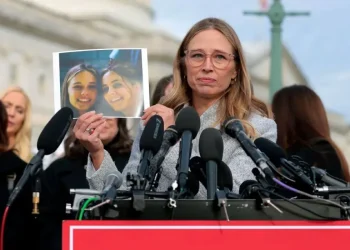
In a statement to Minnesota Public Radio, Becca Good described her wife as a person whose “kindness radiated out of her.”
“On Wednesday, January 7th, we stopped to support our neighbors. We had whistles. They had guns,” she said, referring to the day of the shooting.
She added that she is now raising their son alone and intends to continue teaching him, as Renee believed, “that there are people building a better world for him.”
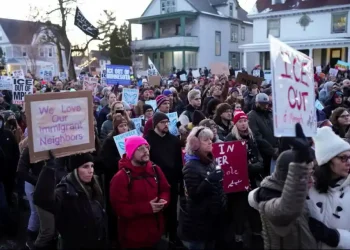
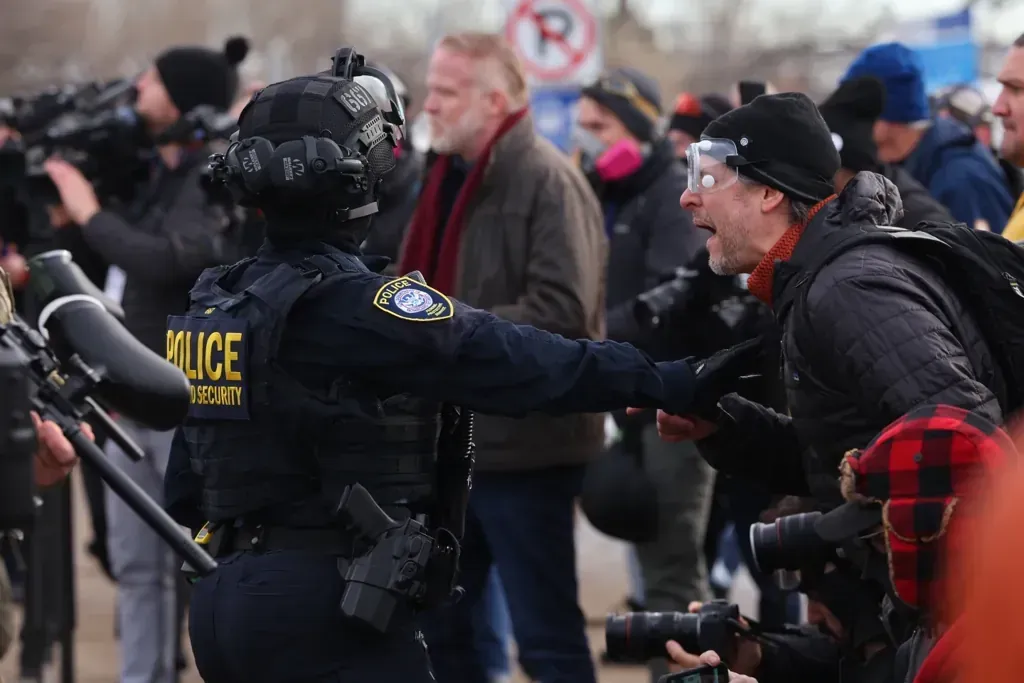
The killing has sparked widespread protests in Minneapolis, a city still shaped by the 2020 police killing of George Floyd. Hundreds of demonstrators gathered near the shooting site in the days that followed, chanting slogans calling for ICE to leave the city.
The local school district canceled in-person classes for the remainder of the week as a precaution, offering online instruction through mid-February. Protests have also targeted a federal facility serving as a hub for immigration operations in the Twin Cities.
Separate shooting in Portland draws parallel scrutiny
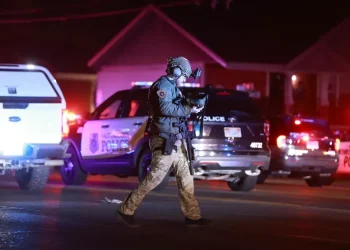
The Minnesota case came a day before a separate federal shooting in Portland, Oregon, where a Border Patrol officer shot and wounded two people in a vehicle outside a hospital.
DHS identified the individuals as Venezuelan nationals Luis David Nico Moncada and Yorlenys Betzabeth Zambrano-Contreras. Both were reported to be in stable condition after surgery, with Nico Moncada taken into FBI custody.
DHS said the officer fired after the driver attempted to use the vehicle as a weapon. Portland Police Chief Bob Day confirmed the individuals had “some nexus” to Tren de Aragua, a Venezuelan gang, but said they were not suspects in a prior shooting investigation.
Day added that any gang affiliation did not automatically justify the use of deadly force. The Oregon Department of Justice said it would investigate the incident.
Part of a broader immigration crackdown
Good’s killing occurred on the second day of a major immigration enforcement operation in Minneapolis and St. Paul. DHS has described the effort as the largest immigration crackdown to date, involving more than 2,000 officers.
Homeland Security Secretary Kristi Noem said more than 1,500 arrests have been made. Documents obtained by the Associated Press show that officers were redeployed to Minnesota from enforcement operations in Louisiana, marking a shift in federal priorities.
At least five deaths have now been linked to immigration sweeps since President Donald Trump returned to office, according to AP reporting. Advocacy groups, including Indivisible, have announced plans for coordinated protests nationwide.
Officer background and unanswered questions
Federal officials have not publicly named the officer who fired the fatal shots. DHS has acknowledged that Ross, an Iraq War veteran with nearly two decades of service in the Border Patrol and ICE, was involved.
Court records show Ross was injured last year during an unrelated immigration arrest in Bloomington, Minnesota, when his arm became trapped in a vehicle window as a driver fled. A jury later convicted that driver of assault.
Attempts by the Associated Press to reach Ross for comment were unsuccessful.
As investigators continue to review footage from multiple angles, the newly released video has ensured that scrutiny of federal immigration enforcement — and the boundaries of lawful force — will remain at the center of national debate.
This article was rewritten by JournosNews.com based on verified reporting from trusted sources. The content has been independently reviewed, fact-checked, and edited for accuracy, neutrality, tone, and global readability in accordance with Google News and AdSense standards.
All opinions, quotes, or statements from contributors, experts, or sourced organizations do not necessarily reflect the views of JournosNews.com. JournosNews.com maintains full editorial independence from any external funders, sponsors, or organizations.
Stay informed with JournosNews.com — your trusted source for verified global reporting and in-depth analysis. Follow us on Google News, BlueSky, and X for real-time updates.