Australia, Bondi Beach, Sydney (Journos News) – For decades, Bondi Beach stood as a place of safety for Jewish families who rebuilt their lives in Australia after fleeing persecution abroad. That sense of refuge was shattered last weekend, when a mass shooting killed 15 people in what authorities say was a targeted antisemitic attack. As funerals continue and investigations deepen, Australia faces urgent questions about hate, security, and social cohesion.
A place of refuge turned into a crime scene
Bondi Beach has long shaped Australia’s global image. It represents openness, ease, and distance from the world’s conflicts. For many Jewish Australians, it also symbolized something deeply personal — a place to live openly and without fear.
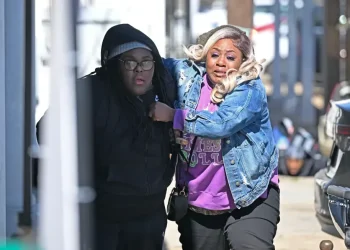
That confidence collapsed on Sunday. Two gunmen opened fire near Bondi Pavilion, killing 15 people. Police later confirmed the attackers used six licensed firearms. The shooting marked Australia’s deadliest mass attack since the 1996 Port Arthur massacre in Tasmania.
Mourners gathered quickly at the scene. Flowers, candles, and handwritten messages now line the lawn overlooking the beach. Many said the attack felt deliberate, not random.
“They wanted to kill Jews,” said Carole, a Bondi resident who asked that her surname not be published. Standing near the memorial, she said fear now shapes daily life. “All we want is to live in peace, work hard, and belong. Australia has let us down.”
Grief spreads through a close-knit community
Funerals took place across Sydney and Melbourne throughout the week. Many services were livestreamed for relatives and Jewish communities overseas. Among the victims was Matilda, a 10-year-old girl remembered for her energy and kindness. Toys and drawings of bees appeared at the memorial, reflecting her middle name and personality.
Australia is home to one of the world’s largest per-capita populations of Holocaust survivors outside Israel. Most live in Sydney and Melbourne. Bondi, in particular, has hosted generations of Jewish families who believed Australia’s isolation and strict gun laws offered protection.
“This country has changed,” said Dorienne Light, who wore an Israeli flag while paying her respects. “I used to feel proud of where we lived. Now we have to fight to reclaim that sense of safety.”
Anger directed at political leadership
As grief deepened, anger followed. Community leaders and mourners accused political leaders of failing to confront antisemitism before it escalated.
Former federal treasurer Josh Frydenberg, whose mother arrived in Australia as a Holocaust refugee, spoke at the memorial. “Our government has allowed Australia to be radicalized on its watch,” he said.
Police later revealed they had found two improvised explosive devices inside a vehicle near the attack site. Officers disarmed them before detonation. Homemade ISIS flags were also discovered, prompting a full terrorism investigation.
Authorities identified one attacker as Sajid Akram, a 50-year-old Indian national who arrived in Australia in 1998 on a student visa that later became a partner visa. Police shot him dead at the scene.
Terror charges and international links
Akram’s son, Naveed, an Australian citizen, now faces 59 charges. These include 15 counts of murder, 40 counts of attempted murder, and a terrorism offence. Investigators say the pair recently traveled to Mindanao in the southern Philippines, a region with a history of ISIS-aligned activity.
Prime Minister Anthony Albanese acknowledged failures in hindsight but urged the public to focus on reform. “Anyone in this position would regret not doing more,” he said. “Now we must move forward.”
The government announced new hate crime measures, including an aggravated hate speech offence. It also expanded powers allowing the home affairs minister to cancel visas held by extremist preachers.
Home Affairs Minister Tony Burke said existing laws had set the threshold too high. “Those thresholds are changing,” he said.
Jewish businesses retreat from public life
Long before Sunday’s attack, many Jewish Australians said antisemitism had already intensified. Several Jewish-owned businesses reported years of harassment.
Avner’s bakery in Surry Hills stayed closed this week. A sign on the door read: “The world has changed. Our world has changed.” The owners said repeated abuse and vandalism forced the closure for safety reasons.
Another business, Lox in a Box, reported coordinated one-star reviews after the attack. The owners said the response was painful but unsurprising.
Community members say many families now quietly discuss contingency plans. Some have moved to Israel. Others consider the United States, where larger Jewish populations offer a sense of collective security.
Protests, war, and rising tensions
Antisemitic incidents in Australia have surged since the October 7, 2023 Hamas attack on Israel and the war in Gaza that followed, according to community groups. The conflict has fueled large-scale protests nationwide.
In August 2025, about 90,000 people marched across Sydney Harbour Bridge in support of Palestinian statehood. A court allowed the protest to proceed after police raised safety concerns.
While organizers said the demonstrations targeted Israeli government policy, some Jewish Australians fear heated rhetoric has spilled into hostility toward local communities.
New South Wales Premier Chris Minns announced plans to restrict protests near terror-related events. He cited rising intimidation and violence. Pro-Palestinian groups rejected any link between protests and the Bondi attack, calling such claims misleading.
Confronting hate and tightening gun laws
Experts say extremism rarely develops overnight. Matt Quinn, founder of deradicalization group Exit Australia, said changing hardened beliefs can take years and requires early intervention.
The Bondi attack also upended assumptions about Australia’s gun safety. Federal and state governments announced the largest gun buy-back program since 1996. New South Wales pledged the toughest firearm restrictions in the country.
Solidarity amid sorrow
Despite fear and anger, gestures of unity have emerged. Messages of support now cover Jewish shopfronts. Donations have flowed to victims’ families.
One moment drew national attention. Ahmed al Ahmed, a Muslim father, tackled one of the alleged gunmen during the attack and seized his weapon. Community leaders praised his actions. The Australian National Imams Council said the violence targeted all Australians and rejected extremism in all forms.
As the week ended, Bondi’s shoreline slowly returned to routine. Swimmers entered the water at dawn. Surf lifesavers held a remembrance ceremony on the sand.
Flags will fly at half-mast nationwide on Sunday. Lights will shine atop Bondi Pavilion in recognition of Hanukkah, the festival of light families had been celebrating when the attack unfolded.
Each day, Rabbi Yossi Friedman has read aloud the names of those killed. He pauses to share a brief tribute for each victim.
“That is what happens when hate goes unchecked,” he said. “We will respond with light. And we will show this country that we stand united against hate.”
This article was rewritten by JournosNews.com based on verified reporting from trusted sources. The content has been independently reviewed, fact-checked, and edited for accuracy, neutrality, tone, and global readability in accordance with Google News and AdSense standards.
All opinions, quotes, or statements from contributors, experts, or sourced organizations do not necessarily reflect the views of JournosNews.com. JournosNews.com maintains full editorial independence from any external funders, sponsors, or organizations.
Stay informed with JournosNews.com — your trusted source for verified global reporting and in-depth analysis. Follow us on Google News, BlueSky, and X for real-time updates.