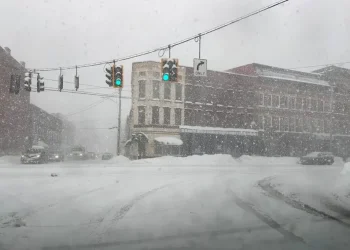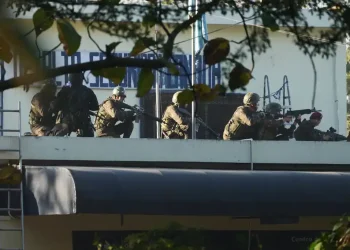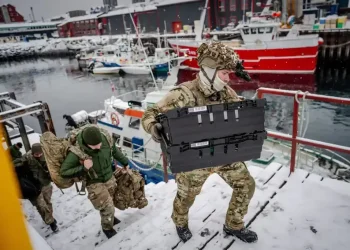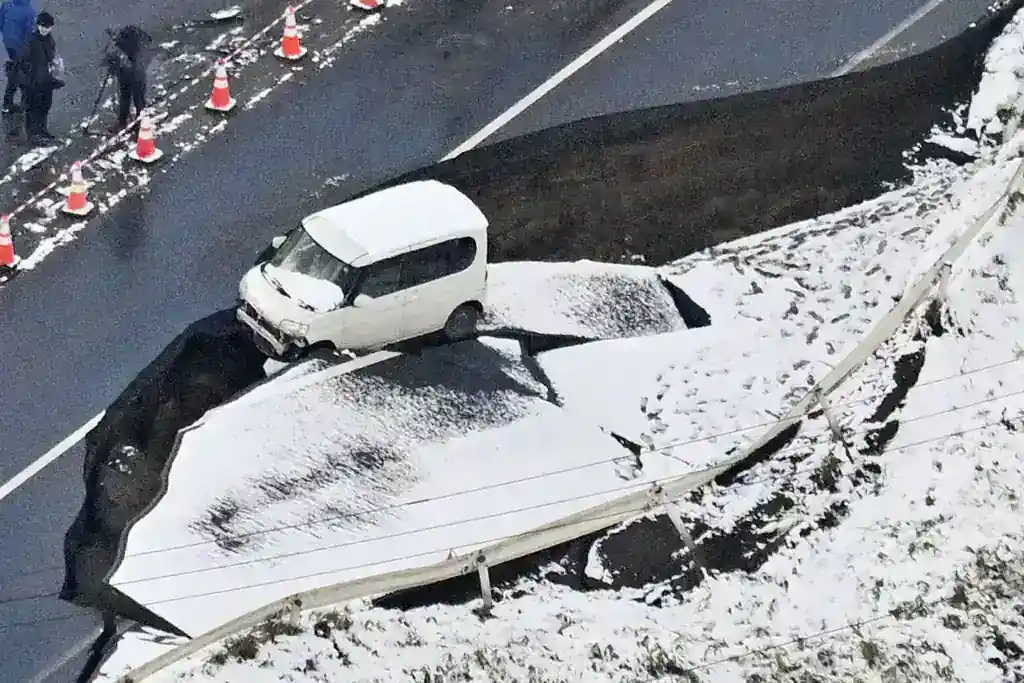
Japan is assessing damage and monitoring unstable seismic conditions after a 7.5-magnitude earthquake struck off Aomori late Monday, injuring dozens and prompting tsunami advisories along the northeastern coast.
Japan began damage surveys on Tuesday after the strong late-night quake rattled several prefectures and briefly disrupted transport, power and coastal operations. Officials warned that aftershocks could continue for days and urged residents along the Pacific coast to stay alert.
The 7.5-magnitude earthquake struck at about 11:15 p.m. in the Pacific Ocean, around 80 kilometres off Aomori, according to the Japan Meteorological Agency (JMA). The U.S. Geological Survey measured it at 7.6 and reported a depth of roughly 44 kilometres. The quake was felt widely across northern Honshu and parts of Hokkaido, shaking buildings and triggering precautionary evacuations in low-lying areas.
The Fire and Disaster Management Agency said the quake injured at least 34 people, including one person seriously. Broadcasters said most injuries came from falling objects, a common hazard during strong tremors in Japan’s densely populated regions.
Government Mobilisation and Early Response
Prime Minister Sanae Takaichi said the government activated an emergency task force shortly after the quake to coordinate assessments and ensure a quick response. “We are putting people’s lives first and doing everything we can,” she told reporters. During a parliamentary session on Tuesday, she reaffirmed the government’s commitment to provide support and advised residents to prioritise their own safety.
Japan has one of the world’s most advanced earthquake-response systems, built over decades of major seismic events. Even so, officials warned that aftershocks could remain strong enough to affect already weakened structures.
Chief Cabinet Secretary Minoru Kihara said early-morning checks found about 800 households without electricity and several rail lines temporarily halted. Shinkansen bullet trains stopped overnight in parts of the region but resumed operations later in the morning. Tohoku Electric said most outages were resolved by sunrise.
Tsunami Waves Along the Coast
The JMA confirmed tsunami waves of up to 70 centimetres reached Kuji port in Iwate prefecture. Smaller waves of around 50 centimetres were recorded in several other coastal communities. NHK reported minor damage to oyster farming rafts, which are vital to the local economy.
Authorities lifted tsunami advisories at around 6:30 a.m., allowing residents to return home. However, they warned that strong aftershocks could still generate additional waves, a pattern seen during past offshore earthquakes.
Japan’s northeast coast remains highly sensitive to tsunami risks, especially since the 2011 magnitude-9.0 disaster that caused widespread destruction and triggered the Fukushima Daiichi nuclear crisis. Monday’s quake struck north of that region, drawing renewed attention to long-standing seismic vulnerabilities.
Transport Disruptions and Public Impact
In Hokkaido, about 200 passengers were stranded overnight at New Chitose Airport after pieces of a domestic terminal ceiling cracked and fell. The airport operator said part of the building remained closed on Tuesday, though flights continued with adjustments.
Roughly 480 residents sought temporary shelter at Hachinohe Air Base in Aomori, according to Defence Minister Shinjiro Koizumi. The ministry deployed 18 helicopters to survey coastal and inland areas for structural damage, landslides and blocked transport routes.
Airports, rail operators and local bus services carried out standard earthquake inspections, pausing operations until safety checks were completed. The transport ministry said that while some rural lines remained suspended, most major routes across Honshu were running again by midday.
Nuclear Facilities Under Review
The Nuclear Regulation Authority said about 450 litres of water spilled from a spent-fuel cooling system at the Rokkasho reprocessing plant in Aomori. Regulators said the water level remained normal and confirmed there was no safety risk. Other nuclear plants and storage facilities in the affected region reported no abnormalities.
Japan’s nuclear sector faces strict oversight after the 2011 Fukushima disaster. Operators conduct detailed inspections after even moderate earthquakes, and additional checks will continue this week.
Heightened Seismic Risk and Public Warnings
The JMA warned that stronger aftershocks could strike in the coming days. The agency said statistical models show a slight increase in the likelihood of a magnitude-8-class earthquake along a broad stretch of the northeastern coast, from Chiba to Hokkaido. Officials emphasised that this is not a prediction but a long-term probability assessment.
The JMA also advised 182 municipalities to review evacuation plans, update communication systems and ensure shelters remain accessible. “You need to prepare, assuming that a disaster like that could happen again,” said JMA official Satoshi Harada.
Japan sits on the Pacific “Ring of Fire,” a seismic zone responsible for nearly 90% of the world’s earthquakes. As tectonic conditions shift, the country continually updates its risk assessments.
Aftershocks and Ongoing Monitoring
Several strong aftershocks followed Monday’s main quake, including a magnitude 6.6 and a 5.1 recorded early Tuesday by the U.S. Geological Survey. The JMA said smaller tremors were likely to continue for several days.
Emergency teams and local governments spent Tuesday reviewing infrastructure, surveying affected areas and supporting displaced or injured residents. Early assessments indicated limited structural damage, but officials said full evaluations could take several days, especially in rural communities.
This article was rewritten by JournosNews.com based on verified reporting from trusted sources. The content has been independently reviewed, fact-checked, and edited for accuracy, neutrality, tone, and global readability in accordance with Google News and AdSense standards.
All opinions, quotes, or statements from contributors, experts, or sourced organizations do not necessarily reflect the views of JournosNews.com. JournosNews.com maintains full editorial independence from any external funders, sponsors, or organizations.
Stay informed with JournosNews.com — your trusted source for verified global reporting and in-depth analysis. Follow us on Google News, BlueSky, and X for real-time updates.