European Union governments have agreed to immobilise indefinitely up to €210 billion ($230 billion) in Russian central bank assets frozen inside the bloc since Moscow launched its full-scale invasion of Ukraine in February 2022. The decision is intended to underpin a proposed loan package for Kyiv at a time when international financial support is under strain.
Most of the frozen funds are held at Belgium-based clearing house Euroclear. EU leaders are expected to seek political agreement at a summit next week on using the assets as collateral for large-scale loans aimed at supporting Ukraine’s military and economic needs.
After nearly four years of war, Ukraine faces a growing financing gap. Kyiv estimates it will require about €135.7 billion over the next two years to sustain public services, economic stability, and defence spending. European governments have pledged to cover roughly two-thirds of that amount, but officials acknowledge that existing funding mechanisms are increasingly stretched.
Russia has condemned the move, accusing the EU of unlawful expropriation. On Friday, the Russian central bank said it had filed a lawsuit against Euroclear in a Moscow court, a step Brussels said it had anticipated.
Frozen Assets and the ‘Reparations Loan’ Concept
Russian assets across the EU were frozen within days of the invasion in 2022. Around €185 billion of the total is held by Euroclear, primarily in the form of cash that has accumulated as previously held securities matured.
EU institutions and the Ukrainian government argue that the funds should ultimately be used to repair damage caused by Russia’s invasion. Brussels has framed the proposal as a form of “reparations loan,” using Russian assets as backing rather than directly confiscating them.
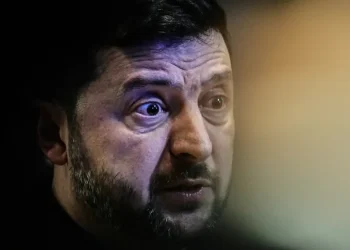
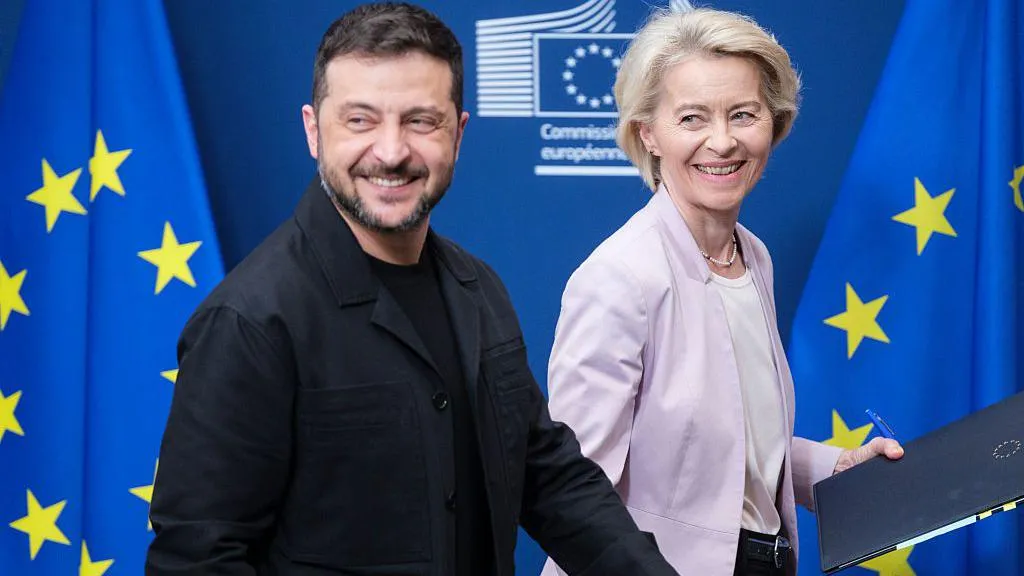
Ukrainian President Volodymyr Zelensky has repeatedly said it is justified for frozen Russian funds to be used to rebuild Ukraine. German Chancellor Friedrich Merz has also argued that the assets could help ensure Ukraine’s long-term security by strengthening its ability to defend itself.
So far, the EU has limited itself to transferring the interest earned on the frozen assets, a step widely viewed as legally safer because the principal remains untouched. In 2024, those so-called windfall profits amounted to about €3.7 billion, which was channelled to Ukraine.
However, officials say this approach is no longer sufficient. International military aid declined sharply in 2025, and Europe has struggled to compensate for the near-withdrawal of U.S. funding after Washington scaled back its support under President Donald Trump.
Competing Proposals Inside the EU
Two main EU proposals are under discussion to raise roughly €90 billion for Ukraine, covering around two-thirds of its estimated needs.
The first would involve borrowing on capital markets, with the EU budget acting as a guarantee. Belgium supports this option, but it would require unanimous approval by EU leaders. That threshold is seen as difficult to reach, given opposition from Hungary and Slovakia to financing Ukraine’s military effort.
The alternative is to issue loans to Ukraine backed by Russian assets already immobilised in the EU. Much of that money, originally held in securities, has now converted into cash. While the funds remain Russian sovereign property, they are held within the EU financial system, largely at Euroclear and the European Central Bank.
The European Commission says it has addressed Belgium’s concerns by proposing extensive guarantees. Under the plan, Belgium would be protected against losses related to the full €210 billion in frozen Russian assets. If Euroclear were to suffer losses on its own holdings inside Russia, those would be offset against assets belonging to Russia’s own clearing institutions that are frozen in the EU.
Any rulings by Russian courts against Belgium would not be recognised within the bloc, the Commission has said.
Indefinite Freeze Removes Repeated Political Risk
A key development came with agreement by EU ambassadors to immobilise Russian central bank assets indefinitely. Until now, the freeze had to be renewed unanimously every six months, exposing Belgium to recurring political and legal uncertainty.
The ambassadors invoked an emergency provision under Article 122 of the EU treaties, allowing the assets to remain frozen as long as there is an “immediate threat to the economic interests of the Union” or until Russia pays full war reparations to Ukraine.
Swedish Finance Minister Elisabeth Svantesson described the move as an important step toward sustaining EU support for Ukraine and safeguarding European democratic values.
EU officials say the change reduces the risk that a single country could block future renewals, offering greater predictability to markets and governments alike.
Belgium’s Legal and Financial Concerns
Despite the new safeguards, Belgium has not yet given full backing to the loan plan. Prime Minister Bart De Wever has said Brussels supports Ukraine but remains concerned about potential legal exposure if the arrangement were challenged or failed.
Belgium fears being left responsible for compensating Euroclear if Russia retaliates financially or legally. Euroclear itself has warned that using frozen assets could destabilise the international financial system. The firm also has an estimated €16–17 billion immobilised inside Russia.
Belgian officials have insisted on what De Wever has called “rational, reasonable, and justified conditions” before accepting the plan. He has not ruled out legal action if Belgium faces significant risk.
Legal experts in Belgium share those concerns. Veerle Colaert, a professor of financial law at KU Leuven University, noted that Belgium’s economy is relatively small compared with the sums involved.
“Belgian GDP is about €565 billion,” she said. “If Belgium had to shoulder a €185 billion bill, the consequences would be enormous.”
She also warned that requiring Euroclear to extend a large loan could conflict with EU banking rules designed to limit concentration risk and protect financial stability.
Growing Pressure as Time Runs Short
Several EU member states, particularly those closest to Russia, have urged swift action. Countries including Poland, Finland, and the Baltic states argue that the frozen assets plan is the most realistic way to secure long-term funding for Ukraine.
German conservative lawmaker Norbert Röttgen said failure to reach agreement would leave Europe with few alternatives. “If we fail, I don’t know what we’ll do afterwards,” he said.
Complicating matters further are concerns about the United States’ position. European officials worry Washington could seek a different use for Russia’s frozen assets as part of its own peace or reconstruction initiatives.
An early draft of a U.S. proposal reportedly envisaged using $100 billion of frozen Russian funds under American control for reconstruction, with profits split between the U.S. and its partners, and the remainder channelled into joint investment projects involving Russia.
EU officials say the decision to freeze assets indefinitely makes it harder for any external actor to redirect the funds without broad European consent.
Hungarian Prime Minister Viktor Orbán, one of the strongest critics of the plan, has accused EU leaders of overstepping legal boundaries and undermining the rule of law.
As leaders prepare for next week’s summit, the balance between legal caution, financial necessity, and political urgency remains unresolved. For Ukraine, and for Europe’s credibility as a long-term backer, the outcome could prove decisive.
This article was rewritten by JournosNews.com based on verified reporting from trusted sources. The content has been independently reviewed, fact-checked, and edited for accuracy, neutrality, tone, and global readability in accordance with Google News and AdSense standards.
All opinions, quotes, or statements from contributors, experts, or sourced organizations do not necessarily reflect the views of JournosNews.com. JournosNews.com maintains full editorial independence from any external funders, sponsors, or organizations.
Stay informed with JournosNews.com — your trusted source for verified global reporting and in-depth analysis. Follow us on Google News, BlueSky, and X for real-time updates.