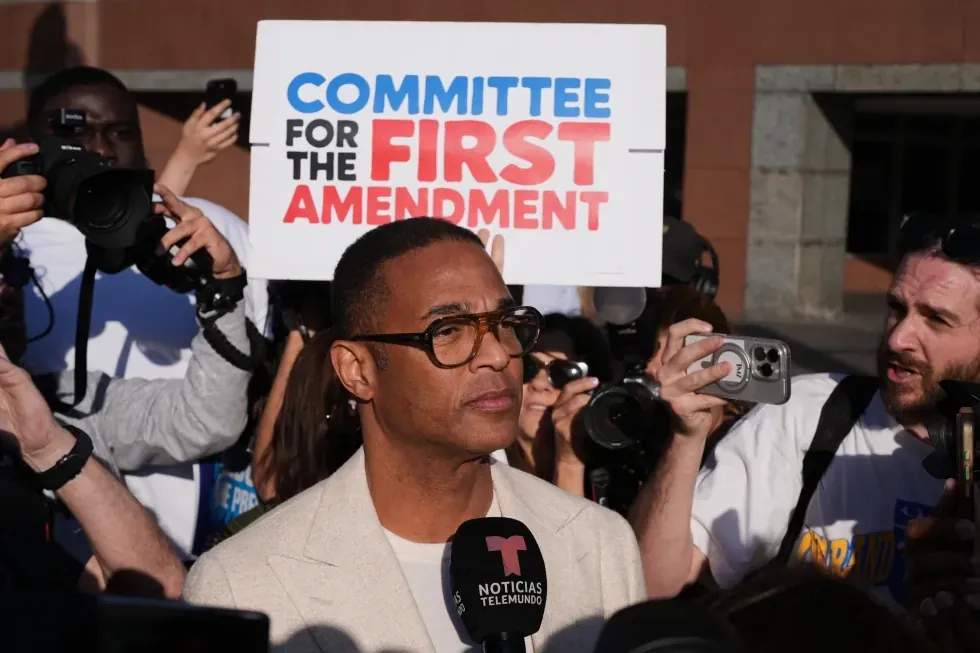
LOS ANGELES (JN) – Federal prosecutors have charged journalist Don Lemon with civil rights offenses linked to his coverage of a protest that disrupted a church service in Minnesota. The case has drawn national attention because it involves a journalist documenting a politically sensitive event.
Authorities arrested Lemon in Los Angeles before releasing him without bond. Meanwhile, the case will proceed in federal court in Minnesota, where the protest took place.
The charges stem from a January demonstration at Cities Church in St. Paul. Protesters opposed U.S. Immigration and Customs Enforcement policies and targeted a congregation led by a pastor who also serves as a senior ICE official. Prosecutors claim Lemon moved beyond reporting and took part in the protest. Lemon and his lawyers strongly dispute that allegation.
As a result, the case has intensified debate over press freedom. Media advocates warn it could reshape how journalists cover protests and public disruptions.
Arrests and charges tied to January church protest
A federal grand jury in Minnesota indicted Lemon and eight others on charges that include conspiracy and interference with the First Amendment rights of worshippers. Prosecutors allege the group intentionally disrupted a church service on Jan. 18.
According to the indictment, demonstrators shouted slogans, blew whistles, and surrounded the pastor as he prepared to begin his sermon. Officials say the disruption interfered with the congregation’s ability to worship.
Law enforcement arrested Lemon overnight in Los Angeles. He later appeared in federal court there on Friday. Prosecutors asked for a $100,000 bond, arguing that Lemon knowingly joined the protest action. However, the judge rejected that request and released Lemon without requiring bail. The court also allowed him to travel internationally while the case remains pending.
Meanwhile, authorities arrested two other defendants in Minnesota, including independent journalist Georgia Fort. All defendants have entered not guilty pleas.
Lemon denies activism and challenges prosecution
After his court appearance, Lemon addressed reporters and rejected the government’s claims. He said the charges would not deter his work.
“I will not be silenced,” Lemon said. “I have spent my entire career covering the news.”
Lemon’s legal team insists he attended the protest solely as a journalist. His attorneys say he had no role in organizing or directing the demonstration. They also argue that the prosecution threatens constitutionally protected newsgathering.
“Don has been a journalist for 30 years,” attorney Abbe Lowell said in a statement. “His work in Minneapolis was consistent with what he has always done.”
Lemon left CNN in 2023 after a turbulent period as a morning show host. Since then, he has operated independently, producing online content and livestreaming news events.
What prosecutors allege in the indictment
Prosecutors say some defendants planned the protest in advance and coordinated online. According to the indictment, Lemon livestreamed preparations and referred to the effort as a “resistance” operation.
The charging document also claims Lemon took steps to avoid revealing details of the plan during pre-protest briefings. Prosecutors allege he reassured organizers that he would not disclose sensitive information.
Inside the church, authorities say Lemon questioned the pastor in a way that amplified the protest’s message. Prosecutors further allege that congregants perceived the disruption as threatening. However, officials have not alleged physical violence.
Government response and political reaction
Attorney General Pam Bondi publicly highlighted the arrests and framed them as a defense of religious freedom.
“Under President Trump’s leadership, people have the right to worship freely and safely,” Bondi said in a video posted online. She added that the administration would act against those who violate that right.
The Justice Department opened its investigation after demonstrators chanted slogans such as “ICE out” during the service. Protesters also referenced the death of Renee Good, a Minneapolis woman fatally shot by an ICE officer in 2024.
Cities Church is affiliated with the Southern Baptist Convention. One of its pastors, David Easterwood, leads ICE’s St. Paul field office.
Press freedom advocates raise concerns
Media organizations and civil rights groups criticized the charges. Many warned the case could discourage journalists from covering protests and civil unrest.
The National Association of Black Journalists said it was “outraged and deeply alarmed.” The group described the prosecution as an attempt to criminalize routine reporting.
Jane Kirtley, a media law expert at the University of Minnesota, said the federal statutes cited were not designed to target journalists.
“These laws were not meant to apply to reporters gathering news,” Kirtley said. She warned the case could deter scrutiny of government power.
Several activists also noted that multiple defendants are prominent Black journalists or civil rights figures. They raised concerns about disproportionate impact.
Related arrests and broader implications
Independent journalist Georgia Fort livestreamed the moments before her arrest. She told viewers that federal agents were at her door and that her First Amendment rights were under threat.
A judge later released Fort and two other defendants on bond. The court rejected the Justice Department’s request to keep them in custody.
Trahern Crews, a leader of Black Lives Matter Minnesota, is also among the defendants. He described the case as part of a broader historical pattern.
“People who stand up for justice get attacked,” Crews told The Associated Press. “We were practicing our First Amendment rights.”
Church leaders, however, praised the arrests. Cities Church lead pastor Jonathan Parnell said the Justice Department acted appropriately to protect worshippers.
Editorial context: journalism and protest boundaries
The Lemon case sits at the intersection of protest law, press freedom, and civil rights enforcement. Federal prosecutions involving journalists remain rare and closely examined.
Legal experts say the outcome could influence how reporters assess risk when covering disruptive demonstrations. That includes events involving civil disobedience or restricted spaces.
For now, the case continues in Minnesota. Courts there will decide where the legal line falls between documenting a protest and becoming part of it.
This article was rewritten by JournosNews.com based on verified reporting from trusted sources. The content has been independently reviewed, fact-checked, and edited for accuracy, neutrality, tone, and global readability in accordance with Google News and AdSense standards.
All opinions, quotes, or statements from contributors, experts, or sourced organizations do not necessarily reflect the views of JournosNews.com. JournosNews.com maintains full editorial independence from any external funders, sponsors, or organizations.
Stay informed with JournosNews.com — your trusted source for verified global reporting and in-depth analysis. Follow us on Google News, BlueSky, and X for real-time updates.