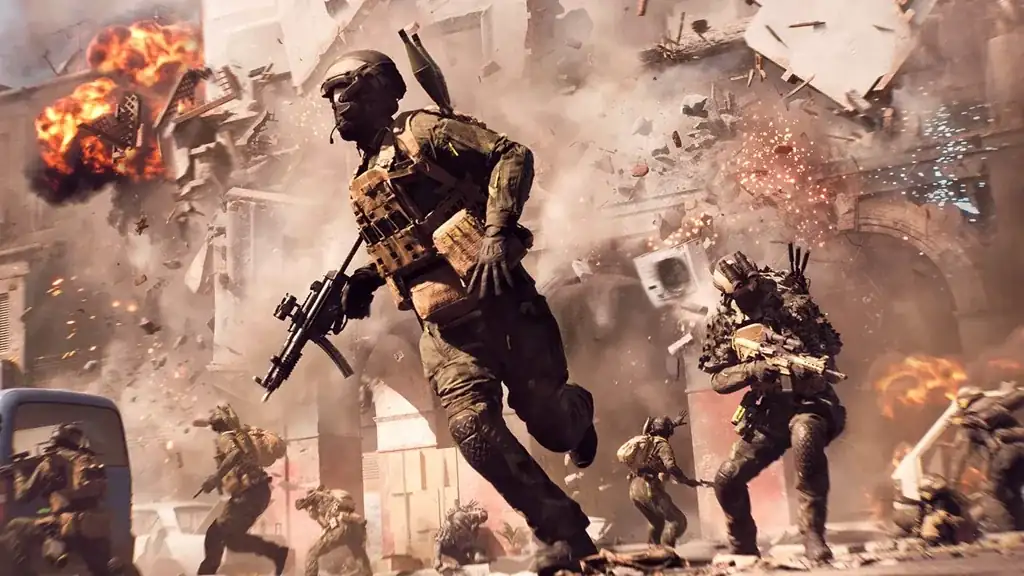
The latest installment in the long-running Battlefield series pushes its multiplayer formula further, blending infantry skirmishes, vehicle warfare, and high-skill aerial combat into a unified battlefield. The result is a shooter that thrives on large-scale chaos, environmental destruction, and tactical shifts that force players to adapt constantly. While the game’s structure remains familiar, its refined gameplay layers underscore why the franchise continues to command a dedicated community.
Battlefield 6 (2025) returns to the fundamentals that defined earlier entries but updates them with more reactive environments and smoother class dynamics. The experience is not without friction — especially with slow unlock progression and a few maps skewed toward snipers — yet the game’s strongest moments show how well its redesigned systems can align.
Infantry Combat Defines the Core of Battlefield 2025 Gameplay
Infantry combat remains the backbone of the game, offering consistently tight gunplay and high-tempo engagements. Weapons have a crisp audio profile, from the hollow ring of spent casings to the deep thud of heavy rifles, especially noticeable on high-quality sound systems.

Accuracy is tuned to reward skill without overwhelming new players. Bullet travel and drop matter but remain manageable. Modest recoil on most rifles makes the game more inviting to a broad player base, while still giving experienced marksmen room to excel.
The class system, a defining element of the franchise, offers four archetypes with distinct functions. The Assault Class supports aggressive pushes, while the Medic stabilizes teams by reviving downed players and managing attrition during long matches. Engineers retain the all-important role of repairing vehicles, reminding players why specialization still matters, even as modern design trends blur class boundaries.
Yet not every update lands cleanly. Loadouts are fully flexible, allowing any class to equip any weapon. Although this freedom has benefits, it softens traditional class identity. Bonuses tied to class-appropriate weapons exist, but they are modest, and players often prioritize favorite guns over class-aligned gear. The result is a system that feels open but occasionally lacks the tactical clarity older Battlefield titles embraced.
Unlock progression is another sticking point. Delayed access to class-specific challenges — which do not open until level 20 — means meaningful customization takes a long time to reach. Essential tools like the Deploy Beacon arrive late, slowing the early game experience and sometimes narrowing tactical options.
Vehicles Expand Strategy and Define the Mid-Layer of Combat
Battlefield 2025 gameplay reaches its peak when vehicles enter the fray.
Tanks, armored cars, and mechanized units reshape combat instantly. A single tank rolling through an urban street can break defensive lines, scatter infantry, and turn entire structures into debris. The game leans heavily into this power fantasy, providing destructive capabilities that alter the landscape in real time.
Strategically, vehicles introduce constant decision points. Defenders must choose between calling in counter-vehicles, shifting to Engineer class, or adopting anti-armor tactics. Tanks themselves demand skill and awareness. A talented commander knows when to deploy countermeasures, push forward, or retreat for repairs. This nuance separates casual play from more competitive matches.
This mid-combat layer not only diversifies gameplay but also ensures matches feel dynamic rather than repetitive. As vehicle battles unfold alongside infantry clashes, the battlefield transforms into shifting pockets of control and vulnerability.
The Skies Bring High-Skill Depth and High Reward
Aviation remains one of Battlefield’s signature elements, and this edition offers some of its most polished air combat to date. Jets and helicopters inspire both spectacle and dread, enabling dogfights that unfold above sprawling ground battles.
Using aircraft effectively demands mastery of complex controls and an understanding of their distinct handling. Players able to navigate these systems enjoy some of the most satisfying combat in the game — strafing enemy ground forces, timing bombing runs, or winning duels with rival pilots.
Yet a major limitation stands out: the absence of a flight training mode. With no dedicated practice environment, new pilots are forced to learn in live matches, often leading to frustration. A robust firing range exists for ground weapons, making the lack of air-combat training feel like a missed opportunity.
Modes Offer Scale, Variety, and Familiar Battlefield Identity
Classic modes return and remain a highlight. Team Deathmatch offers quick warm-ups, but the heart of the game lies in large-scale objectives.
Breakthrough and Conquest deliver the franchise’s signature spectacle: 64-player battles fought across broad frontlines, mixing intense close-quarters firefights with long-range engagements and vehicle skirmishes. Breakthrough’s push-and-defend structure emphasizes momentum, while Conquest offers open-ended territory control.
Smaller modes like Rush deliver faster, close-focused sessions, appealing to players looking for shorter, high-intensity rounds. The new Escalation mode stands out by progressively shrinking control points, forcing players into increasingly frenetic encounters as the match evolves.
Maps Showcase Destruction, Scale, and a Few Pain Points
Nine launch maps provide varied terrain, from tight urban districts to wide-open deserts. Saints Quarter excels at close-range firefights, while Empire State offers rooftop sniping positions and layered streets ideal for ambushes.
Dynamic destruction remains one of the game’s strongest visual and tactical features. Buildings collapse, vehicles explode, and cover evaporates under sustained fire, ensuring no two matches feel identical.
But not all maps fare equally. Liberation Peak has already drawn criticism for its sniper-heavy design, and Mirak Valley suffers from exposed frontline pushes in Breakthrough mode. New Sobek City shines with destructible structures and diverse terrain but can be overwhelmed by anti-vehicle mines.
Despite unevenness, the overall map roster reinforces the game’s focus on scale, strategy, and environmental interaction.
A Cohesive, Chaos-Driven Shooter Experience
At its best, Battlefield 2025 gameplay delivers moments that few shooters can replicate. A tank smashing through a wall, jets diving overhead, infantry weaving through collapsing structures — these sequences create a sense of war-zone drama unique to the franchise.
Even with progression frustrations and map imbalances, the combination of layered combat, high-fidelity destruction, and broad tactical freedom secures its place among the leading multiplayer shooters this year.
This article was rewritten by JournosNews.com based on verified reporting from trusted sources. The content has been independently reviewed, fact-checked, and edited for accuracy, neutrality, tone, and global readability in accordance with Google News and AdSense standards.
All opinions, quotes, or statements from contributors, experts, or sourced organizations do not necessarily reflect the views of JournosNews.com. JournosNews.com maintains full editorial independence from any external funders, sponsors, or organizations.
Stay informed with JournosNews.com — your trusted source for verified global reporting and in-depth analysis. Follow us on Google News, BlueSky, and X for real-time updates.