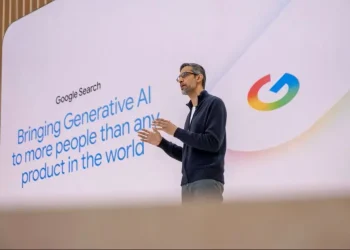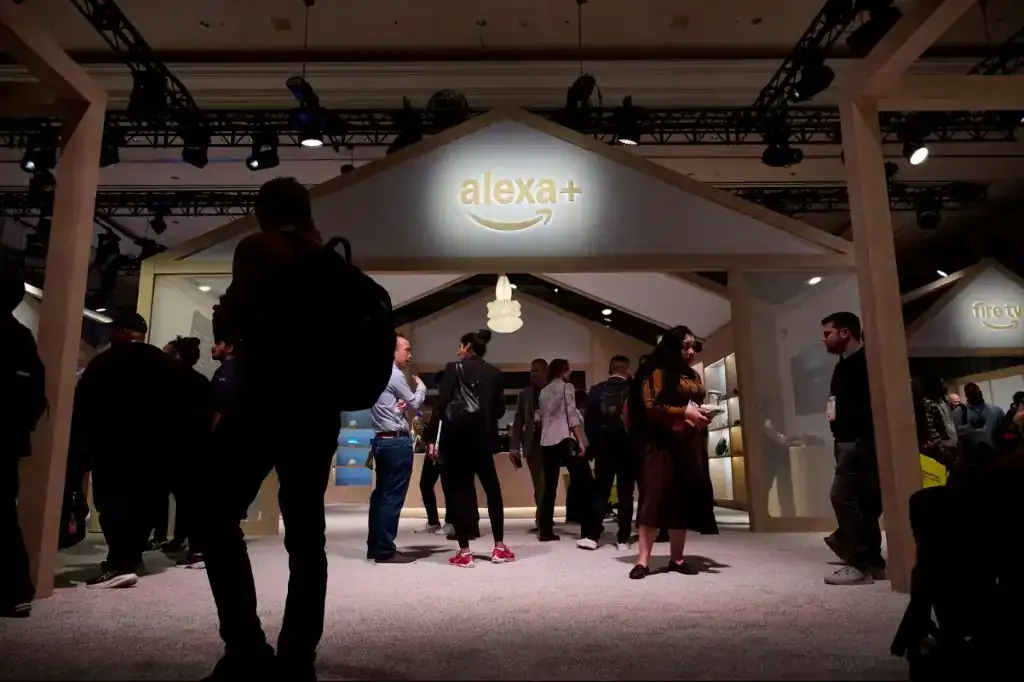
Amazon is betting that a more memory-driven, context-aware version of Alexa can help it regain momentum in an AI landscape reshaped by ChatGPT and Google’s Gemini. Executives say the strategy is less about building the most powerful AI model and more about turning Alexa into a persistent digital companion that understands users across devices and situations.
The vision for Alexa’s next phase was outlined by senior Amazon executives in interviews with CNN during the Consumer Electronics Show (CES) in Las Vegas last week. At the center of the plan is a reimagined assistant designed to remember preferences, past interactions, and daily routines in a way that feels closer to a personal relationship than a command-based tool.
Amazon’s challenge is significant. Alexa was once synonymous with mainstream voice assistants after its 2014 debut, but the rapid rise of generative AI since late 2022 left the company playing catch-up as competitors captured public attention.

Rebuilding momentum after ChatGPT
Alexa’s early success helped normalize voice-controlled technology in millions of homes, allowing users to manage smart devices, play music, and access information with simple spoken commands. Over time, however, enthusiasm cooled as the assistant’s capabilities plateaued and conversational AI elsewhere advanced quickly.
The release of OpenAI’s ChatGPT in 2022 marked a turning point, pushing artificial intelligence into everyday conversation and resetting user expectations. Amazon acknowledged in 2023 that it needed a more conversational and capable Alexa, but the updated assistant did not arrive until the launch of Alexa+ in 2025.
For Amazon, the stakes extend beyond Alexa itself. Artificial intelligence is widely viewed within the technology industry as the next major computing platform. The company has previously conceded ground in mobile computing to Apple and Google, and executives have framed Alexa’s reinvention as an effort to avoid repeating that history.
“There are tens of millions of people that want to turn on their coffee makers in the morning using Alexa, and that’s rad,” Amazon devices and services chief Panos Panay told CNN. “But that’s not what changes the world. What does, though, is that context between these devices.”
A focus on context, not model supremacy
Unlike OpenAI or Google, Amazon says it is not trying to win an arms race over who has the most advanced underlying AI model. Instead, the company is positioning Alexa+ as an applied AI product that draws strength from Amazon’s ecosystem of devices and services.
That approach is visible in Amazon’s newly launched Alexa website, which allows early-access users to chat with Alexa+ through a web interface and continue the same conversations across Echo devices and the Alexa mobile app. The experience mirrors recent efforts by AI companies such as OpenAI and Perplexity to make their assistants central gateways to information and tasks online.
Amazon argues that its advantage lies in continuity. Alexa is already embedded in homes, cars, and personal devices, giving it opportunities to connect conversations to real-world actions without requiring users to start from scratch each time.
Apple is pursuing a similar philosophy with its next-generation Siri, which the company has said will rely partly on Google’s Gemini models and cloud infrastructure. That version of Siri was announced in 2024 but has not yet launched, underscoring how difficult it has been for major technology companies to adapt legacy assistants to the generative AI era.
Examples of a more personal assistant
Panay says Alexa+ is designed to bridge conversation and execution by remembering past interactions and acting on them later, sometimes without additional prompts.
In one example he shared with CNN, Panay told Alexa he needed a new harness for his dog while out on a walk. By the time he returned home, product options were already displayed on his Echo Show device, allowing him to review and act on the suggestion without repeating the request.
In another scenario, Panay described a family debate over where to eat dinner. He asked Alexa to recall the top five restaurants they had considered the last time they searched for a place to eat. The assistant identified which of those restaurants they had already visited, suggested similar alternatives, and offered to book a reservation.
These demonstrations highlight Amazon’s emphasis on memory and continuity, two areas that are becoming increasingly competitive across the AI industry.
Competition is moving in the same direction
Amazon’s strategy is not unique. Both Google and OpenAI have been expanding their assistants’ ability to retain context from previous conversations and perform tasks on users’ behalf. Google has said Gemini can help find event tickets, book restaurant reservations, and contact stores to check inventory, while ChatGPT has also introduced memory features for ongoing personalization.
Panay argues that Alexa’s differentiation lies in how deeply that memory is tied to physical devices and everyday routines. By combining what users say with what they do across Amazon hardware and services, the company believes Alexa can become more personal than chat-based AI tools accessed primarily through screens.
He also pointed to early engagement data as a sign of progress. According to Amazon, users of Alexa+ are having roughly twice as many conversations with the assistant compared with the previous version, suggesting that people are testing its expanded capabilities more frequently.
A long-term bet on trust and familiarity
Amazon’s leadership frames Alexa’s evolution as a gradual shift rather than a dramatic reinvention. The goal is to make the assistant feel increasingly helpful over time as it learns more about users, rather than dazzling them with one-off demonstrations.
“When you start getting the feedback, you start hearing it’s pleasant,” Panay said. “She knows so much. The more she knows about me, the better.”
Whether that approach is enough to set Alexa apart in a crowded AI market remains an open question. Rivals are moving quickly, and user expectations continue to rise. Still, Amazon is betting that familiarity, trust, and a growing memory of everyday life can give Alexa a renewed role in the age of generative AI.
This article was rewritten by JournosNews.com based on verified reporting from trusted sources. The content has been independently reviewed, fact-checked, and edited for accuracy, neutrality, tone, and global readability in accordance with Google News and AdSense standards.
All opinions, quotes, or statements from contributors, experts, or sourced organizations do not necessarily reflect the views of JournosNews.com. JournosNews.com maintains full editorial independence from any external funders, sponsors, or organizations.
Stay informed with JournosNews.com — your trusted source for verified global reporting and in-depth analysis. Follow us on Google News, BlueSky, and X for real-time updates.