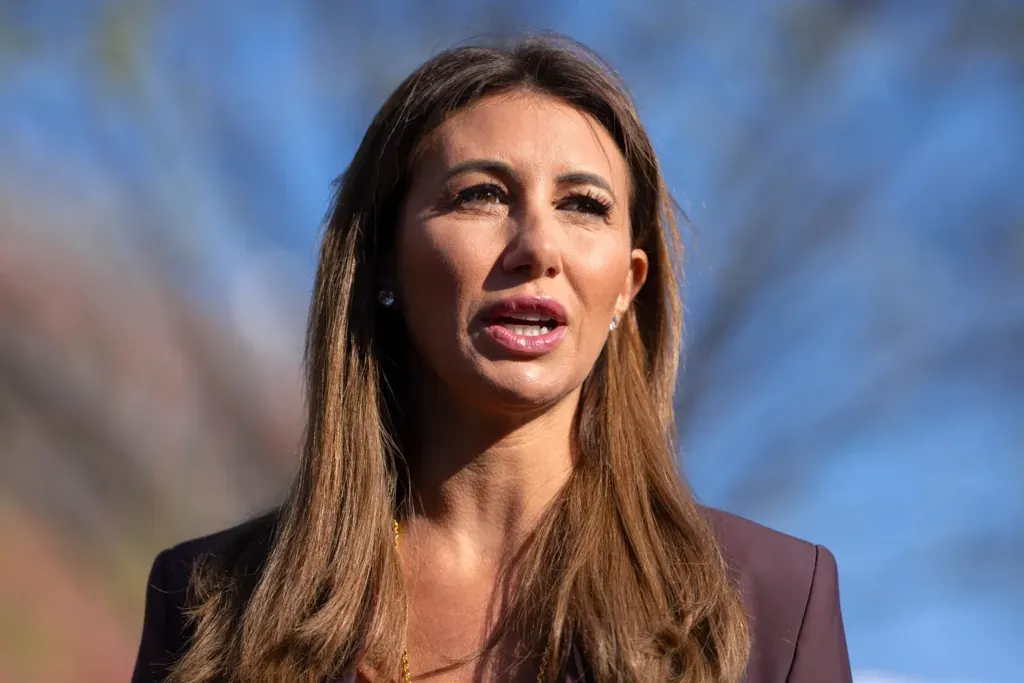
Alina Habba, President Donald Trump’s former personal attorney, stepped down as acting U.S. attorney for New Jersey after an appeals court ruled she served in violation of federal law. Her departure adds to a growing legal dispute over temporary Justice Department appointments.
Alina Habba, President Donald Trump’s former lawyer and one of the administration’s most visible legal defenders, resigned on Monday as the acting U.S. attorney for New Jersey after a federal appeals court concluded she had served in the role unlawfully. The decision deepened an ongoing confrontation between the Trump administration and the courts over the limits of temporary federal appointments.
Habba confirmed her resignation in a statement posted on social media, calling the ruling political but saying she stepped aside “to protect the stability and integrity” of the U.S. Attorney’s Office. She stressed, however, that her compliance should not be interpreted as retreat, noting that the Justice Department would continue appealing the court’s decision. “This decision will not weaken the Justice Department and it will not weaken me,” she said.
Her departure is the latest in a string of legal challenges targeting several acting U.S. attorneys appointed by the Trump administration. Courts across the country have questioned whether those prosecutors remained in temporary positions beyond the limits set by federal law, creating conflicts that in some districts have influenced ongoing cases.
A Temporary Appointment Under Fire
The administration appointed Habba, 41, to the New Jersey acting U.S. attorney post in March for what was intended to be a short-term assignment. The role carries significant influence, overseeing federal criminal and civil enforcement in one of the nation’s most active jurisdictions. Despite the post’s prominence, Habba had no prosecutorial background, having previously served as a law firm partner and as one of Trump’s most outspoken legal advocates on television.
Her nomination faced resistance from New Jersey’s two Democratic senators, who signaled they would block any formal Senate confirmation. The state’s “blue-slip” tradition, a long-standing Senate practice allowing home-state senators to approve or reject judicial and prosecutorial nominees, has historically allowed lawmakers to halt appointments when they object to a candidate’s credentials or political posture.
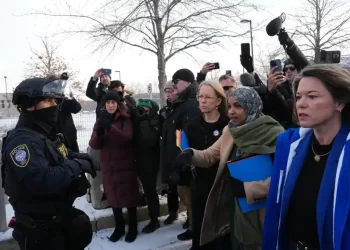
During her tenure, Habba pursued several politically sensitive cases. She brought a trespassing charge—later dropped—against Newark’s Democratic mayor following his visit to an immigration detention facility. She also charged Democratic Representative LaMonica McIver with assaulting a federal agent during the same incident, an allegation McIver has denied. That case remains pending.
Trump Calls Resignation a ‘Sad Situation’
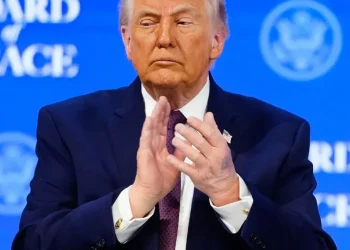
Trump criticized the circumstances surrounding Habba’s resignation during remarks at the White House, reprising long-standing objections to the Senate’s tradition of withholding action on nominees opposed by home-state senators.
“It’s a horrible thing,” he said. “It makes it impossible to appoint a judge or a U.S. attorney. I guess I just have to keep appointing people for three months and then just appoint another one, another one. It’s a very sad situation. We’re losing a lot of great people.”
The conflict escalated after Habba’s interim term expired in July. A panel of federal judges subsequently appointed one of her deputies as acting U.S. attorney, but Attorney General Pam Bondi quickly dismissed the replacement and denounced the court’s intervention as politically motivated.
A lower court later ruled that Habba’s continued service violated federal appointment laws, sparking months of uncertainty inside New Jersey’s federal justice system. Prosecutors, defense attorneys and court officials reported confusion over which cases could proceed, and which decisions might be subject to challenge if a prosecutor lacked legal authority at the time they acted.
Appeals Court Demands Clarity
Earlier this month, a federal appeals court in Philadelphia affirmed the lower court’s ruling, finding that Habba was not lawfully serving in the position. The panel wrote that “the citizens of New Jersey and the loyal employees in the U.S. Attorney’s Office deserve some clarity and stability,” urging the administration to abide by the statutory limits placed on temporary appointments.
Habba’s removal added to a growing list of Trump-era appointments under judicial scrutiny. Courts in Virginia, Nevada, Los Angeles and northern New York have recently issued rulings questioning whether other acting U.S. attorneys exceeded their legal terms. The consequences have, in some cases, been significant. In Virginia, a judge dismissed criminal charges against former FBI Director James Comey and New York Attorney General Letitia James because the interim prosecutor who approved the cases, Lindsey Halligan, was deemed unlawfully appointed.
Judges in Nevada and Southern California also disqualified acting U.S. attorneys Sigal Chattah and Bill Essayli in September and October, ruling that both remained in temporary roles longer than federal law allows.
Justice Department Signals Continued Resistance
Bondi, who has defended the administration’s use of acting appointments, said Habba would return to the job if the Justice Department wins its appeal. “These judges should not be able to countermand the President’s choice of attorneys entrusted with carrying out the executive branch’s core responsibility of prosecuting crime,” she said.
The legal debates have revived long-standing tensions over the scope of presidential power to appoint temporary federal officials without Senate confirmation. Federal law allows limited interim appointments to prevent disruptions in core government functions, but courts have increasingly pressed the administration to follow time limits strictly.
On Thursday, a federal judge in New York heard arguments from state Attorney General Letitia James alleging that the administration manipulated those same provisions to install John Sarcone as acting U.S. attorney for northern New York. The outcome could further shape the boundaries of presidential authority in DOJ staffing decisions.
A Broader Clash Over Separation of Powers
The wave of rulings underscores a growing national confrontation between the executive branch and the judiciary over how much flexibility presidents should have in placing politically aligned attorneys in high-profile law enforcement roles—especially when Senate confirmation appears unlikely.
Legal scholars say such disputes are not new, but the volume of contested appointments this year has raised concerns about stability within the federal justice system. Acting officials can launch investigations, pursue criminal cases and set enforcement strategies, but their authority becomes vulnerable if courts later find that they were improperly installed.
For New Jersey, Habba’s resignation brings temporary closure to a months-long standoff, though the Justice Department’s continued appeals signal that the issue is far from settled. For the broader justice system, the case highlights a recurring challenge for administrations—balancing political priorities with statutory limits and constitutional checks.
This article was rewritten by JournosNews.com based on verified reporting from trusted sources. The content has been independently reviewed, fact-checked, and edited for accuracy, neutrality, tone, and global readability in accordance with Google News and AdSense standards.
All opinions, quotes, or statements from contributors, experts, or sourced organizations do not necessarily reflect the views of JournosNews.com. JournosNews.com maintains full editorial independence from any external funders, sponsors, or organizations.
Stay informed with JournosNews.com — your trusted source for verified global reporting and in-depth analysis. Follow us on Google News, BlueSky, and X for real-time updates.