The $1 Million Mystery: Can You Crack the Code of This Ancient Script?
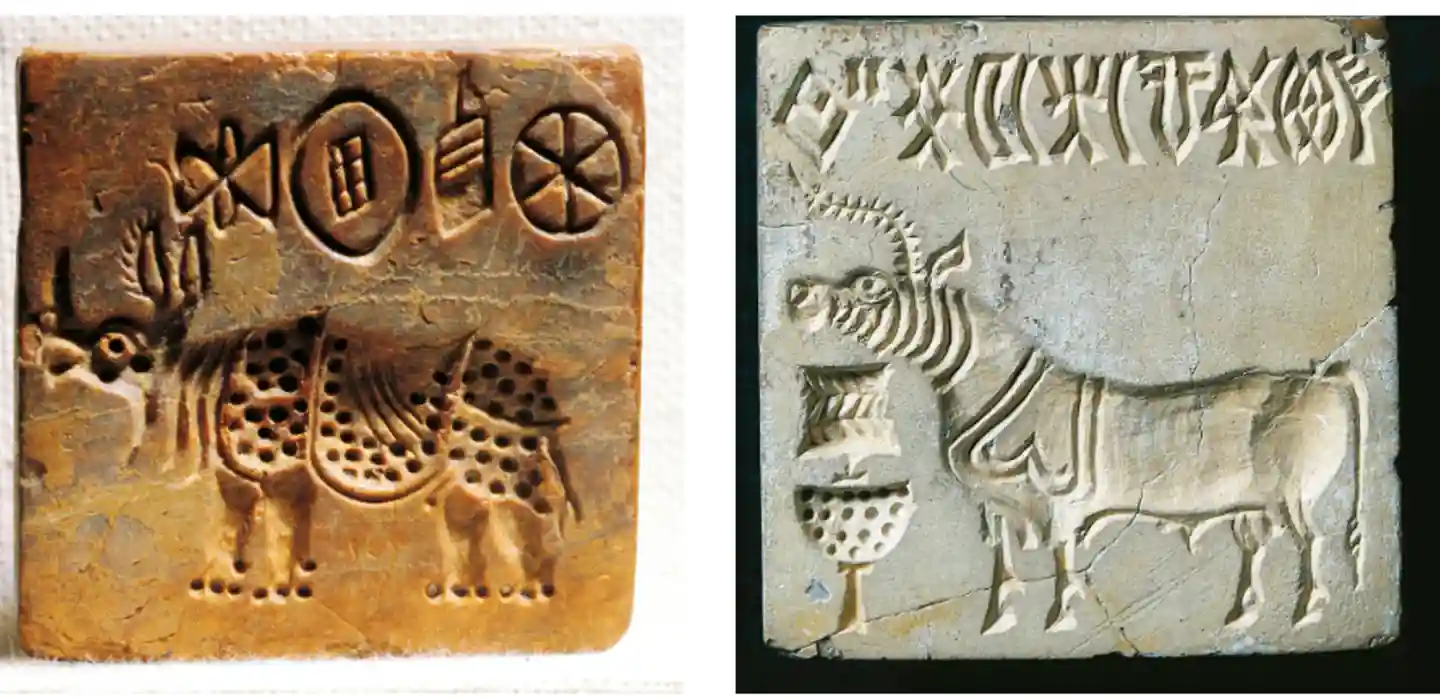
For centuries, an ancient script from the Indus Valley Civilization has baffled scholars. A fish under a roof, a headless stick figure, a series of lines resembling a rake—these mysterious symbols are remnants of a sophisticated Bronze Age civilization. But what do they mean?
Despite decades of research, no one has been able to fully decipher the script. Now, in a bid to finally unlock its secrets, an Indian state leader has put up a $1 million reward for anyone who can crack the code.
Could this be the key to understanding one of the world’s most advanced ancient cultures?

A Lost Civilization Waiting to Be Understood
The Indus Valley Civilization (3300–1300 BCE) was one of the world’s earliest urban societies, spanning present-day Pakistan and northern India. It was as advanced as ancient Egypt and Mesopotamia, boasting planned cities, sophisticated drainage systems, standardized weights and measures, and extensive trade networks.
Archaeologists believe millions of people lived in its cities, engaging in long-distance trade with regions like the Persian Gulf and the Middle East. They built colonies, crafted exquisite jewelry, and navigated the seas—yet, so much about them remains unknown.
Deciphering their script could reveal crucial details about their society, beliefs, and even their descendants. But there’s a catch—it’s been an unsolvable puzzle for nearly 150 years.
Why Is the Script So Hard to Decipher?
Unlike Egyptian hieroglyphs, which were cracked using the Rosetta Stone, the Indus script presents unique challenges:
Limited Inscriptions – Only about 4,000 artifacts contain the script, compared to millions of words in ancient Egyptian texts.
Short Texts – Most inscriptions are found on tiny stone seals, often containing just four to five symbols.
No Bilingual Text – There’s no “Rosetta Stone” equivalent that provides translations in another known language.
Unknown Language – We don’t even know which language the script represents—if it’s a language at all.
These hurdles have led to heated debates and even death threats among scholars, as different groups seek to claim the Indus civilization as part of their own heritage.
Who Were the Indus People? The Debate Rages On
One of the biggest reasons this script is so controversial is that it could settle a political and historical debate—who were the Indus people, and where did they go?
There are two major theories:
The Indo-European Theory – Some argue that the script is linked to Sanskrit, suggesting that Aryan migrants did not introduce the Indo-European languages to India, but rather that these languages originated in the Indus Valley and spread outward.
The Dravidian Theory – Others believe the script is connected to the Dravidian language family (spoken in southern India today. This suggests Dravidian speakers once occupied the Indus region before later migration patterns shifted the population.
This debate isn’t just academic—it’s highly political, as different groups seek to connect their cultural identity to one of history’s greatest civilizations.
How Are Researchers Trying to Solve It?
Despite decades of failed attempts, scholars and technology enthusiasts are still searching for answers.
Linguistic Analysis – Some experts, like Asko Parpola, study the patterns and meanings of individual symbols, comparing them to ancient languages.
AI & Computer Models – Others, like Rajesh P. N. Rao and Nisha Yadav, use artificial intelligence to find patterns within the script. By training computer models to predict missing symbols, they aim to understand how the script functions.
Trade & Symbolism – Some researchers analyze Indus seals found far from the civilization’s core, in places like West Asia, suggesting that the script evolved for different uses—similar to how the Latin alphabet was adapted for multiple languages.
The $1 Million Challenge: Who Will Solve It?
M. K. Stalin, the chief minister of Tamil Nadu, is offering a $1 million reward to anyone who can fully decipher the script. Since the announcement, experts like Rao say they’ve been flooded with messages from amateur codebreakers around the world—some even working on it with their families.
But cracking this code won’t be easy. It will likely require global cooperation, new archaeological discoveries, and cutting-edge technology.
Still, researchers remain hopeful.
“If we decipher the script, it will open a window into the lives and ideology of Indus people.” – Nisha Yadav
“That keeps me glued to the problem rather than anything else.”
Could AI, new archaeological finds, or even a determined amateur finally unlock this 4,000-year-old mystery?
Only time will tell.
Source