LEIPZIG, Germany — Scientists have identified a molecular receptor that appears to help regulate the balance between bone formation and bone breakdown, raising the possibility of a new approach to treating osteoporosis and other conditions involving weakened bones.
Researchers at Leipzig University found that activating the receptor, known as GPR133 or ADGRD1, increased bone formation and reduced bone-resorbing activity in laboratory studies. An experimental compound called AP503, which activates the receptor, also increased bone strength in healthy mice and improved osteoporosis-like bone loss in a mouse model.
The findings point to GPR133 as a potential therapeutic target, but the research has not yet established whether AP503 is safe or effective in humans. The current evidence comes from cellular experiments and animal studies.

GPR133 helps control bone remodeling
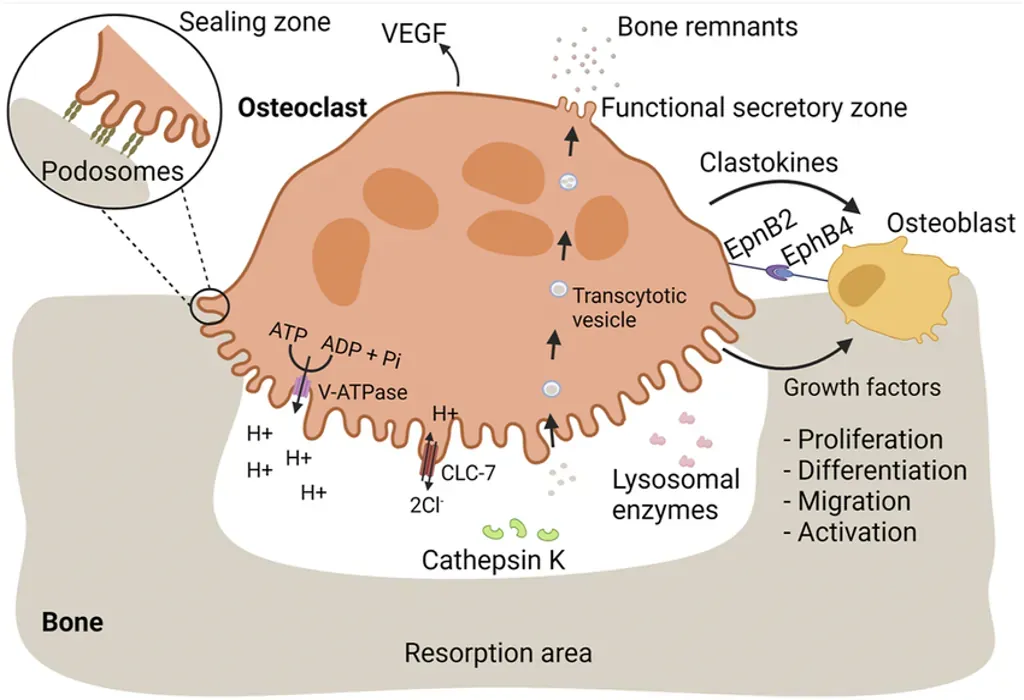
Healthy bone is continually remodeled through the opposing actions of two major cell types.
Osteoblasts build new bone, while osteoclasts break down older bone. Osteoporosis can develop when bone resorption outpaces formation, progressively reducing bone density and increasing the risk of fractures.
The Leipzig researchers found that mice lacking GPR133 had reduced cortical bone mass and changes in the internal structure of their bones. The researchers linked the loss of the receptor to impaired osteoblast function and increased osteoclast activity.
The receptor appears to respond partly to mechanical forces acting on bone. Its activation can stimulate a signaling pathway involving cyclic AMP and beta-catenin, helping promote the differentiation and activity of bone-forming cells.
That makes GPR133 different from a simple bone-building signal: it appears to integrate mechanical and cellular signals that influence how bone responds to its environment.




Experimental compound increased bone strength
The researchers tested AP503, a small-molecule agonist designed to activate GPR133.
In mice, repeated administration of the compound increased bone volume, the number and thickness of trabeculae and the number of bone-forming cells. Researchers also observed fewer osteoclasts and higher bone-formation rates. Mechanical testing showed that treated bones were more resistant to stress.
The compound also produced benefits in an ovariectomized mouse model, which is commonly used to study bone loss associated with reduced estrogen levels after menopause.
Researchers reported that AP503 alleviated osteoporosis-like changes in those animals, suggesting that activation of GPR133 could potentially address both reduced bone formation and excessive bone breakdown.
The research could have implications beyond bone
The interest in GPR133 extends beyond osteoporosis.
Previous work involving the receptor and AP503 has linked its activation to skeletal-muscle strength. Leipzig University said the combination of potential effects on muscle and bone could be relevant to age-related decline, in which loss of muscle and bone frequently occur together.
Researchers are continuing to investigate how GPR133 operates in different tissues and whether AP503 or related compounds could eventually be developed for medical use.
The compound remains experimental, however. AP503 is currently a research chemical and has not been established as a treatment for osteoporosis in people. Human clinical trials would be needed to determine its safety, appropriate dosing and effectiveness.
The findings nevertheless provide a potential new direction for osteoporosis research by targeting a receptor that appears capable of influencing both sides of the bone-remodeling process.
Reporting Credit: Leipzig University — research findings and development of the GPR133/AP503 bone study; Signal Transduction and Targeted Therapy — peer-reviewed research on GPR133/ADGRD1 and bone formation.