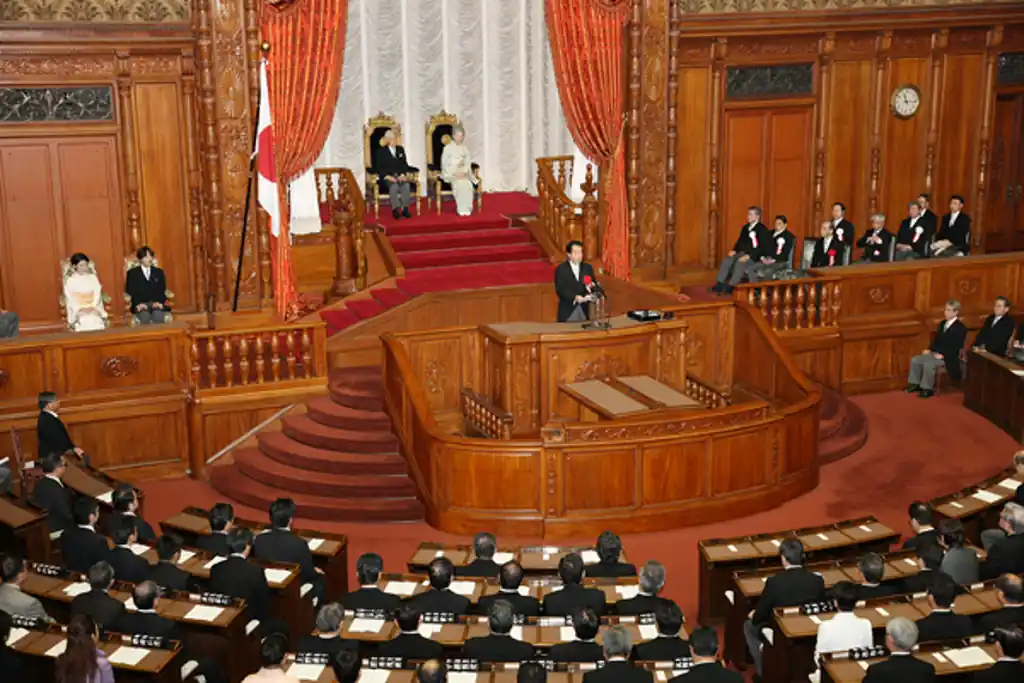
TOKYO, Japan – Japan’s parliament approved legislation Friday aimed at strengthening the country’s shrinking imperial family while preserving the centuries-old principle that only men descended through the paternal line may inherit the Chrysanthemum Throne.
The law expands the pool of working members of the imperial household by allowing certain descendants of former imperial branches to return through adoption and permitting princesses to retain imperial status after marrying commoners. However, it leaves Japan’s succession rules unchanged, renewing debate over the future of the world’s oldest hereditary monarchy.
The reforms stop short of addressing the question that has dominated debate for years—whether women should be allowed to inherit the throne.

Male Succession Remains
Under the Imperial House Law, only male descendants in the paternal line may inherit the throne.
The current order of succession places Crown Prince Fumihito, Emperor Naruhito’s younger brother, first in line, followed by Fumihito’s 19-year-old son, Prince Hisahito. Third in line is Prince Hitachi, the emperor’s 90-year-old uncle.
Prince Hisahito, born in 2006, is the first male child born into the imperial family in four decades.
Only five of the imperial family’s 16 adult members are men. Meanwhile, Prince Hisahito is the household’s only child, raising concerns about the monarchy’s long-term future.
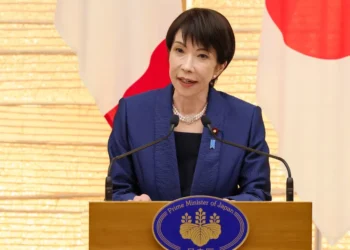
Prime Minister Sanae Takaichi and other conservatives have argued that maintaining succession through the uninterrupted male bloodline is fundamental to the legitimacy of the imperial institution.




Reforms focus on expanding the imperial household
Rather than changing succession rules, the revised legislation is intended to increase the number of imperial family members available to carry out official duties.
One provision allows unmarried male descendants aged 15 or older from 11 former imperial branch families to be adopted into the imperial household. Those branches lost their royal status in 1947 as part of postwar reforms designed to reduce the financial burden of the monarchy.
According to Imperial Household Agency official Yoshimi Ogata, the descendants of those branches trace their paternal ancestry to a common imperial forebear from roughly 600 years ago.
The law also allows princesses to retain their imperial status after marrying commoners, enabling them to continue performing official public duties. However, their spouses and children would remain outside the imperial family and would not enter the line of succession.
The reforms leave Princess Aiko’s status unchanged
The reforms do not alter Princess Aiko’s eligibility for the throne.
The 24-year-old daughter of Emperor Naruhito and Empress Masako remains excluded under current law because succession is restricted to men in the paternal line.
The issue has fueled renewed public debate over whether Japan should eventually permit female emperors.
Japan has had eight reigning empresses throughout its history, most recently Empress Gosakuramachi, who ruled from 1762 to 1770. However, the principle of succession through the paternal male line was formally codified in the Imperial House Law of 1890 and largely retained in the postwar legislation enacted in 1947.
Public opinion surveys conducted in recent years have consistently shown broad support for allowing a woman to inherit the throne.
Scholars Question Long-Term Impact
Some constitutional scholars, historians and commentators argue that the reforms address the declining size of the imperial family without resolving the broader succession challenge.
Nagoya University monarchy expert Hideya Kawanishi said the measures are designed to preserve the male lineage rather than reconsider succession eligibility.
“It’s a declaration to prevent female monarchs … and to defend the male-lineage at all costs,” Kawanishi said.
Critics have also questioned whether descendants of former imperial branches would be willing to return to royal life, which carries strict personal and professional limitations.
Asahiro Kuni, 81, whose family relinquished its imperial status after World War II, told Japanese broadcaster TBS he would advise his relatives against returning if asked.
“You are asked to sacrifice your life for the happiness of the people. I can’t tell my family to choose such a difficult life,” Kuni said.
Monarchy confronts demographic and institutional challenges
Japan’s imperial household has steadily declined in size because female members traditionally lose their royal status upon marrying commoners and because relatively few male heirs remain.
Princess Mako, Emperor Naruhito’s niece, relinquished her royal status in 2021 after marrying a commoner and later moved to New York.
The newly approved legislation is intended to preserve the imperial family’s ability to carry out official responsibilities, including state ceremonies, diplomatic engagements, memorial events and public appearances.
For now, lawmakers have chosen to reinforce the imperial household without altering the succession system itself. Whether that approach can preserve the monarchy over the coming decades remains one of Japan’s most closely watched constitutional and cultural questions.
This report is based on reporting by The Associated Press.
Article Topics: Japan | Imperial Family | Imperial House Law | Emperor Naruhito | Princess Aiko | Imperial Succession | Monarchy | Parliament