Journos News
Monday, June 29, 2026
  • Login
  • Home
  • World
    • Africa
    • Americas
    • Asia
    • Europe
    • Middle East
    • Oceania
  • Politics
  • Business
  • Technology
  • Health
  • Science
  • Sports
  • Entertainment
  • Culture
No Result
View All Result
  • Home
  • World
    • Africa
    • Americas
    • Asia
    • Europe
    • Middle East
    • Oceania
  • Politics
  • Business
  • Technology
  • Health
  • Science
  • Sports
  • Entertainment
  • Culture
No Result
View All Result
Journos News
No Result
View All Result
Home Business

Nvidia Faces Growing Pressure in China as Huawei Expands AI Chip Market Share

Chinese technology firms are increasingly turning to domestic AI chips as export controls reshape competition.

The Daily Desk by The Daily Desk
June 29, 2026
in Business, Industry
0
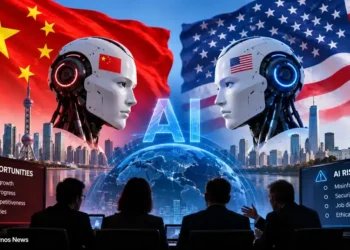
Nvidia and Huawei compete in China's artificial intelligence chip market. - AP Photo/Ng Han Guan

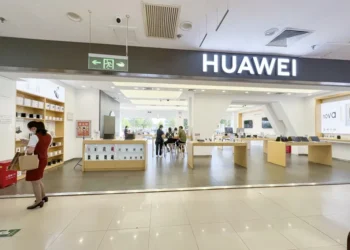
Huawei gains momentum as Nvidia faces export-related challenges in China. - AP Photo/Ng Han Guan

HONG KONG – Nvidia is losing ground in China’s artificial intelligence chip market as domestic competitors led by Huawei strengthen their position, highlighting how years of U.S. export restrictions have accelerated China’s push for semiconductor self-sufficiency.

The shift underscores a broader strategic realignment in the global AI industry, where access to advanced computing hardware has become central to technological competitiveness. While Nvidia remains the world’s leading AI chip designer, its ability to compete in China has been constrained by U.S. export controls, creating opportunities for Chinese manufacturers to capture market share.

Nvidia Chief Executive Jensen Huang acknowledged the company’s changing position during a recent interview with The Associated Press, saying the company once controlled approximately 95% of China’s AI chip market before U.S. export restrictions significantly limited its business.

“We have to have, number one, make sure that we have national security and that we protect our nation, but we also simultaneously should go and compete and grow our technology industry and maximize our exports,” Huang said.

His comments came after a visit to Beijing in May, where he attracted significant public attention while the United States and China continued discussions on trade and technology issues. Although U.S. President Donald Trump later agreed to permit sales of Nvidia’s H200 AI chips, Chinese policymakers had already intensified efforts to promote domestically designed alternatives.

RELATED POSTS

AI-Driven Chip Shortages Push Tech Giants to Raise Prices on Consumer Devices

Wall Street Ends Mixed as AI Stocks Weigh on Market Despite Lower Oil Prices

Saks Global Rebrands as Exemplar Luxury Group After Emerging From Chapter 11 Bankruptcy

OpenAI and Anthropic Restrict Advanced AI Model Access During U.S. Cybersecurity Review

Former Meta Executive Challenges Arbitration Order in Lawsuit Over Memoir Promotion

Wall Street Retreats as AI Stock Sell-Off Deepens Across Global Markets

Huawei emerges as China’s leading AI chip competitor

Since Washington imposed restrictions beginning in 2019 on Huawei and later expanded controls covering China’s access to advanced semiconductors and chipmaking equipment, Chinese companies have accelerated investments in domestic semiconductor development.

Huawei has emerged as the leading beneficiary of that policy shift.

According to research from Bernstein, Nvidia held roughly 40% of China’s AI chip market during 2025, about equal to Huawei’s share. The research firm projects Huawei’s market share could climb to around 50% this year, while Nvidia’s could decline to approximately 8%.

Antonia Hmaidi, a semiconductor specialist at the Mercator Institute for China Studies, said Huawei has become the dominant domestic supplier.

“Nvidia has definitely lost significant ground to Huawei, which now leads domestically,” she said.

Industry analysts say Huawei’s latest commercial AI processors in its Ascend 950 series are broadly comparable in some respects to Nvidia’s H200 chips, although Nvidia continues to lead in cutting-edge AI hardware.

He Hui, director of semiconductor research at Omdia, said China’s confidence in domestic chip development has grown significantly.

“China now believes in its own self-sufficiency and supply capabilities,” He said.

Huawei has also expanded its AI computing infrastructure by deploying large computing clusters powered by thousands of its own processors despite relying on domestically manufactured semiconductors because of continuing export restrictions.

Asked recently how Huawei’s chip technology compares with international competitors, He Tingbo, who heads Huawei’s semiconductor business, said the company has found “pretty good solutions.”

“Who can walk faster? Huawei or other companies? I don’t know the answer,” she said. “I think only time will tell.”

Nvidia remains critical for advanced AI development

Despite Huawei’s rapid progress, analysts say Nvidia’s technology continues to play a vital role in China’s AI ecosystem.

The semiconductor industry remains deeply interconnected globally. Nvidia designs its processors using technology that depends on advanced extreme ultraviolet lithography machines produced by Dutch company ASML, while Taiwan Semiconductor Manufacturing Co. manufactures many of Nvidia’s most advanced chips.

China remains prohibited from purchasing Nvidia’s highest-end AI processors as well as ASML’s most advanced chipmaking equipment under U.S. export controls.

Industry observers note that Huawei’s latest processors still trail Nvidia’s most advanced offerings in several technical areas, particularly for training large AI models.

Chinese AI developers, including DeepSeek, continue to rely on Nvidia hardware for some advanced workloads, while universities and major technology companies also seek access to chips such as the H200 for research and development.

Recent cases involving the alleged smuggling of Nvidia AI chips into China further illustrate continuing demand for the company’s technology despite export restrictions.

AI demand continues to drive Nvidia’s global growth

Although China has become a more difficult market, Nvidia’s worldwide business continues to expand rapidly as investment in artificial intelligence infrastructure accelerates.

The company expects revenue of approximately $91 billion during its May-to-July quarter, excluding any China data-center computing revenue, compared with nearly $82 billion in the previous quarter.

Nvidia generated nearly $216 billion in annual revenue during its latest fiscal year, while Huawei reported approximately $126 billion in revenue over a comparable period.

Nvidia developed its H20 processor specifically to comply with U.S. export restrictions by reducing computing performance. However, shipments into China have gradually declined, according to Brady Wang, a semiconductor analyst at Counterpoint Research.

Huang also told shareholders recently that Nvidia has not yet generated revenue from H200 chip sales in China and remains uncertain whether imports will ultimately receive approval.

Huawei expands long-term global ambitions

Huawei’s ambitions extend beyond China’s domestic market.

Already the world’s largest supplier of telecommunications networking equipment, the company says it operates across 170 countries and regions while pursuing broader digital infrastructure expansion.

Analysts say China’s current manufacturing capacity for advanced chips remains insufficient to fully satisfy domestic demand, limiting exports in the near term.

However, as manufacturing capacity improves and pricing becomes increasingly competitive, Chinese AI chips could become more attractive in overseas markets, particularly across Southeast Asia.

Counterpoint Research analyst Brady Wang said China’s broader strategy is unlikely to change regardless of whether Nvidia eventually regains broader access to the Chinese market.

“China’s strategy of pursuing technological self-sufficiency — and eventually exporting its technologies — is unlikely to change regardless of whether Nvidia can sell its chips in China,” Wang said.

Tags: Nvidia, Huawei, Artificial Intelligence, China, Semiconductors, AI Chips, Export Controls, DeepSeek, Technology, Corporate Strategy


This article was rewritten and editorially reviewed by Journos News based on verified reporting from trusted sources. All content is independently fact-checked and edited for accuracy, neutrality, tone, and global readability in line with Google News and AdSense publishing standards.

Opinions, quotes, and statements from contributors, experts, or cited organizations do not necessarily reflect the views of Journos News. The newsroom maintains full editorial independence from external funders, sponsors, and affiliated entities.

Editorial Standards  |  Journos News

Tags: #AIChips#ArtificialIntelligence#ChinaTech#CorporateStrategy#ExportControls#GlobalBusiness#Huawei#Nvidia#Semiconductors#TechnologyNews
The Daily Desk

The Daily Desk

The Daily Desk – Contributor, JournosNews.com, The Daily Desk is a freelance editor and contributor at JournosNews.com, covering politics, media, and the evolving dynamics of public discourse. With over a decade of experience in digital journalism, Jordan brings clarity, accuracy, and insight to every story.

Related Posts

AI-Driven Chip Shortages Push Tech Giants to Raise Prices on Consumer Devices

by The Daily Desk
June 29, 2026
0
Memory chip shortages linked to AI increase consumer technology prices. - Getty Images/BBC

Technology companies including Apple, Microsoft, Nintendo and Valve are raising prices on consumer hardware as surging demand for memory chips...

Read moreDetails

Wall Street Ends Mixed as AI Stocks Weigh on Market Despite Lower Oil Prices

by The Daily Desk
June 27, 2026
0
Traders monitor stock market performance as AI shares decline. - AP Photo/Richard Drew

NEW YORK - Declining energy costs lift many sectors, but continued weakness in artificial intelligence shares limits broader market gains....

Read moreDetails

Saks Global Rebrands as Exemplar Luxury Group After Emerging From Chapter 11 Bankruptcy

by The Daily Desk
June 27, 2026
0
Exemplar Luxury Group emerges from Chapter 11 bankruptcy after restructuring. - AP Photo/Anne D’Innocenzio, File

NEW YORK - Saks Global has officially completed its Chapter 11 bankruptcy restructuring, emerging with a significantly stronger balance sheet,...

Read moreDetails

OpenAI and Anthropic Restrict Advanced AI Model Access During U.S. Cybersecurity Review

by The Daily Desk
June 27, 2026
0
OpenAI and Anthropic AI models undergo U.S. cybersecurity review. - AP Photo/Julia Demaree Nikhinson

OpenAI and Anthropic have limited public access to their latest artificial intelligence models as the Trump administration expands its review...

Read moreDetails

Former Meta Executive Challenges Arbitration Order in Lawsuit Over Memoir Promotion

by The Daily Desk
June 27, 2026
0
Sarah Wynn-Williams challenges Meta in court over memoir restrictions. - AP Photo/Mark Schiefelbein, File

A former Meta executive has filed a federal lawsuit accusing the technology company of unlawfully attempting to prevent her from...

Read moreDetails

Wall Street Retreats as AI Stock Sell-Off Deepens Across Global Markets

by The Daily Desk
June 24, 2026
0
Traders monitor market declines amid technology stock sell-off - AP Photo/Richard Drew

U.S. stocks finished mostly lower on Tuesday as a broad sell-off in technology companies extended across global markets, reflecting growing...

Read moreDetails

Wall Street Mixed as Oil Prices Retreat and Technology Shares Weigh on Markets

by The Daily Desk
June 22, 2026
0
Traders monitor U.S. stock indexes amid falling oil prices - AP Photo/Richard Drew

NEW YORK - U.S. stocks ended Monday with mixed results as falling oil prices provided some relief to investors while...

Read moreDetails

Asian Shares Mixed as Japan and South Korea Hit Record Highs on AI Rally

by The Daily Desk
June 22, 2026
0
Asian stock markets mixed with Japan and South Korea record highs - AP Photo/Ahn Young-joon

HONG KONG - Global equity markets delivered a mixed performance on Monday, with Asian benchmarks diverging as Japan and South...

Read moreDetails

US Gas Prices Fall Below $4 as Oil Markets Ease After Iran Peace Deal

by The Daily Desk
June 19, 2026
0
Gas station price boards showing falling fuel prices - AP Photo/Nam Y. Huh

U.S. gasoline prices have slipped below $4 per gallon for the first time since March, according to data from AAA,...

Read moreDetails
Load More
JournosNews logo

Journos News delivers globally neutral, fact-based journalism that meets international media standards — clear, credible, and made for a connected world.

  • Categories
  • World News
  • Politics
  • Business & Markets
  • Technology
  • Health
  • Science
  • Sports
  • Arts & Culture
  • Resources
  • Editorial Standards
  • Submit a Story
  • Advertise with Us
  • Syndication & Partnerships
  • Site Map
  • Press & Media Kit
  • Editorial Team
  • Careers

Join thousands of readers receiving the latest updates, tips, and exclusive insights straight to their inbox. Never miss an important story again.

  • About Us
  • Accessibility Statement
  • Contact Us
  • Privacy Policy
  • Terms and Conditions

© JournosNews.com – Trusted source for breaking news, trending stories, and in-depth reports.
All rights reserved.

Welcome Back!

Login to your account below

Forgotten Password?

Retrieve your password

Please enter your username or email address to reset your password.

Log In
No Result
View All Result
  • Home
  • World
    • Africa
    • Americas
    • Asia
    • Europe
    • Middle East
    • Oceania
  • Politics
  • Business
  • Technology
  • Health
  • Science
  • Sports
  • Entertainment
  • Culture

© JournosNews.com – Trusted source for breaking news, trending stories, and in-depth reports.
All rights reserved.

This website uses cookies. By continuing to use this website you are giving consent to cookies being used. Visit our Privacy and Cookie Policy.