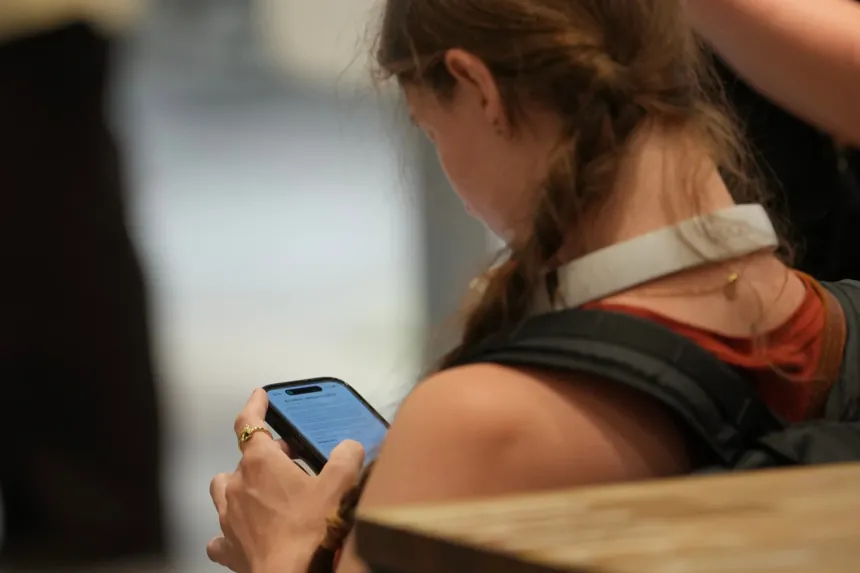
The proposal, reported by the Associated Press, is expected to take effect early next year and would place the UK among a growing number of countries tightening age-based restrictions on social media use. Government officials said the measure is intended to protect young users from harmful content, addictive design features, and excessive screen time, while shifting enforcement responsibility to technology companies rather than children.
The announcement has triggered international attention, with implications for global tech regulation and cross-border digital policy, particularly as governments struggle to balance online safety with access to digital platforms.
Growing global push for age-based digital restrictions
According to government statements cited in the announcement, the UK initiative aligns with broader international efforts. Countries including Australia, Canada, Brazil and Indonesia have introduced or announced age-related restrictions on children’s access to social media, while others such as France, Spain, Denmark, Thailand and South Korea are exploring similar frameworks.

The UK plan follows a model similar to that adopted by Australia, which last year became the first country to bar users under 16 from holding social media accounts. Under that system, platforms face potential fines if they fail to take reasonable steps to block underage users.
Prime Minister Keir Starmer said the policy reflects growing concern among parents and policymakers over children’s mental health and online behavior. “Every parent can see it with their own eyes. Social media is making children unhappy,” he said, adding that he had heard “first hand from families crying out for change.”
Platforms warn of unintended consequences
Major technology companies pushed back against the proposal. A spokesperson for YouTube, owned by Google, warned that blanket restrictions could push young users toward less regulated online spaces.
“Blanket bans push kids out of such curated, supervised, beneficial experiences and towards anonymous, less-safe services,” the company said.
Meta Platforms, which owns Facebook and Instagram, also argued that sweeping bans could weaken safety protections already built into teen-focused accounts. It warned that strict age bans might drive teenagers toward platforms without parental controls or oversight.
■ Related News




The policy will also cover TikTok, Snapchat, and the platform formerly known as X, though messaging services such as WhatsApp and Signal, as well as YouTube Kids, are exempt under the current plan.
Enforcement challenges and political pressure
Starmer acknowledged that some teenagers would likely attempt to bypass restrictions but insisted enforcement would be feasible, placing responsibility on technology companies to comply.
He compared the measure to restrictions on underage alcohol consumption, arguing that regulatory difficulty does not justify inaction. “Teenagers drink before they should, but we do not then say, ‘in which case let us abandon any attempt to stop them buying alcohol,’” he said.
The prime minister also faces political pressure domestically, including internal criticism within his Labour Party over leadership performance, though he said he would not “compromise on the safety and happiness of our children.”
Safety advocates divided over effectiveness
The proposal has drawn mixed reactions from child safety campaigners and digital rights advocates.
Ellen Roome, a campaigner whose teenage son died after an online incident, welcomed stronger regulation and criticized technology companies for not acting sooner. “We need to come down hard on them,” she said, arguing that voluntary industry changes had been insufficient.
However, others warned the policy may not address deeper structural issues. Kate Edwards of the Molly Rose Foundation said enforcement through age verification could be unreliable and argued that algorithm-driven content risks remain unresolved.
“This is far too easy to work around,” she said, adding that such measures “do nothing to address the actual problem itself, the harmful algorithms, the harmful content that is existing on those platforms.”
International and regulatory implications
The policy could also create friction with the United States, where officials have previously cautioned against broad restrictions on digital speech and warned that regulations should remain narrowly defined. A statement from the U.S. Embassy in London expressed concern over regulatory burdens on American technology firms.
Starmer said he expects to discuss the issue with U.S. President Donald Trump and other world leaders at a Group of Seven summit in France, emphasizing that child protection is widely recognized as a shared international concern.
“I honestly think that across world leaders, there has always been a recognition that leaders have to take steps to protect children,” he said.
More details on enforcement mechanisms and platform compliance are expected in the coming weeks.
Tags: UK, Social Media Ban, Keir Starmer, Online Safety, TikTok, YouTube, Meta, Child Protection, UK bans under-16s, Social Media