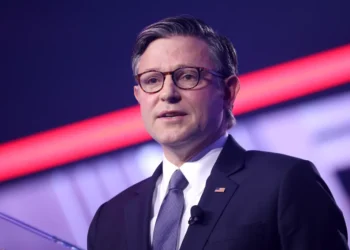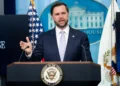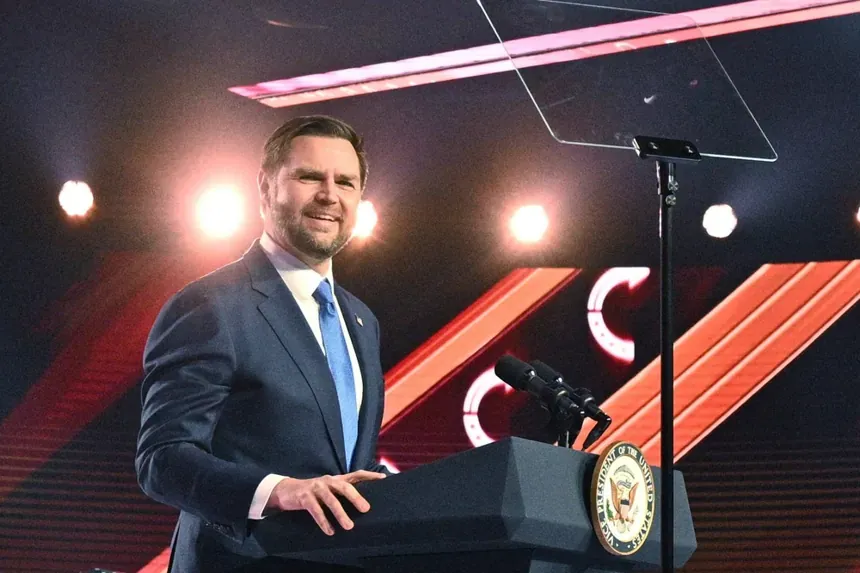
Vice President JD Vance used a major conservative gathering in the United States to project unity within the Republican movement, even as divisions and leadership speculation shape the party’s future following President Donald Trump.
Speaking at Turning Point USA’s AmericaFest, Vance called for cohesion among conservatives, urging supporters to avoid ideological infighting. His remarks came as the movement continues to navigate internal disagreements and questions about its direction in a post-Trump political landscape.
The event also drew widespread attention for a series of high-profile appearances and symbolic gestures, underscoring both the influence of grassroots conservative networks and the evolving power structure within the Republican Party.

Conservative Movement Grapples With Internal Divisions
The JD Vance TPUSA speech came amid visible ideological tensions within the conservative movement, particularly between prominent media figures and commentators. Public criticism exchanged between speakers reflected broader debates over the ideological direction of the Republican coalition.
Analysts note that these internal disputes highlight a struggle over messaging, identity, and leadership succession as the party prepares for future electoral cycles. The presence of competing voices at the same मंच underscores the lack of a single unifying figure following Trump’s political dominance.
Vance’s call for unity appeared aimed at consolidating support among younger conservatives and aligning factions ahead of upcoming elections, including the 2026 midterms.
Leadership Transition and Movement Identity After Charlie Kirk
The conference marked a pivotal moment for Turning Point USA following the leadership transition to Erika Kirk, who assumed control of the organization after the death of her husband, founder Charlie Kirk.
According to reporting from BBC News, the event was both a tribute to Kirk’s legacy and a demonstration of the organization’s continued influence, drawing tens of thousands of attendees. Speakers emphasized continuity while also acknowledging the uncertainty surrounding the movement’s future direction.


Erika Kirk played a central role in shaping the tone of the gathering, aiming to maintain cohesion among attendees despite underlying tensions.
High-Profile Appearances Reflect Expanding Political Influence
The event also featured notable cultural and political figures, including an appearance by rapper Nicki Minaj, who joined conversations on stage and addressed themes including faith and public discourse.
Her participation highlights the increasing intersection between entertainment and political platforms, particularly within movements seeking to broaden their appeal beyond traditional audiences.
Other speakers emphasized civic engagement and unity, reinforcing messaging around mobilization and political participation as the conservative movement looks to sustain its influence among younger voters.
Emerging 2028 Dynamics and Republican Succession Debate
The JD Vance TPUSA speech comes amid growing speculation about the Republican Party’s future leadership, particularly in the lead-up to the 2028 U.S. presidential election.
While Vance has not confirmed any plans to run, he has emerged as a potential contender within the party. His presence at the event and endorsement from TPUSA signal increasing alignment between his political trajectory and influential conservative networks.
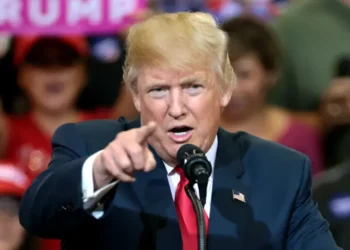
President Trump has previously indicated support for multiple potential successors, reflecting an open and evolving contest for influence within the party. Observers suggest that internal endorsements and grassroots backing could play a decisive role in shaping the Republican nomination landscape.
Strategic Implications for U.S. Political Alignment
The events at AmericaFest underscore broader shifts within the U.S. political ecosystem, where ideological alignment, media influence, and grassroots organizing are increasingly intertwined. The JD Vance TPUSA speech highlights efforts to maintain cohesion within a coalition that has played a significant role in shaping recent U.S. elections.
As the Republican Party navigates leadership succession and internal debate, its ability to unify competing factions will likely influence its performance in upcoming national contests.
The gathering signals that while Trump remains a central figure, emerging leaders such as Vance are positioning themselves within a complex and evolving political landscape, setting the stage for future power transitions.