A sharp spike in oil prices—driven by escalating strikes across the Persian Gulf—has exposed how tightly global markets are tethered to energy security risks, triggering wide but uneven selloffs across equities and bonds before partial stabilization.
Brent crude briefly surged above $119 per barrel during early trading, according to reporting from the Associated Press, before retreating later in the session. The move marked a dramatic jump from pre-war levels near $70, underscoring how rapidly geopolitical conflict is being translated into financial volatility.
The swings reflect not just market sentiment, but the growing perception that energy flows themselves are now a central pressure point in the conflict.

Strategic Energy Routes Face Heightened Exposure
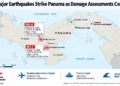
At the center of market anxiety is the Strait of Hormuz, a critical chokepoint through which roughly one-fifth of global oil shipments pass. Disruptions to this corridor would reverberate far beyond regional producers, directly impacting global supply chains.
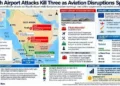
In parallel, attacks on energy infrastructure across the Persian Gulf have intensified, adding a layer of uncertainty that traders are struggling to price in. The immediate effect has been rapid repositioning across asset classes, rather than sustained directional movement.
Even brief supply shocks are now enough to trigger global repricing, signaling that markets are treating the conflict as a systemic risk rather than a localized disruption.
Equity Markets Signal Uneven Confidence Under Pressure
Stock markets across Asia and Europe initially absorbed the shock more sharply than U.S. exchanges. Indices in Japan, Germany, and South Korea posted losses exceeding 2%, reflecting heightened exposure to energy imports and manufacturing costs.
Wall Street, however, showed relative resilience. The S&P 500 ended only marginally lower after recovering from deeper early losses, a shift partly attributed to lower reliance on Middle Eastern oil compared to other major economies.


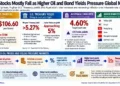
This divergence highlights a growing asymmetry in global risk exposure—where regional economies feel the first wave of energy disruption more acutely than the United States.
Bond Markets Signal Repricing of Monetary Expectations
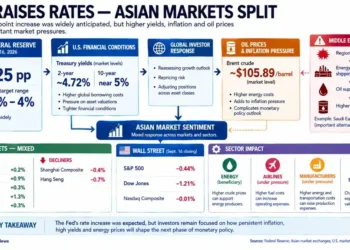
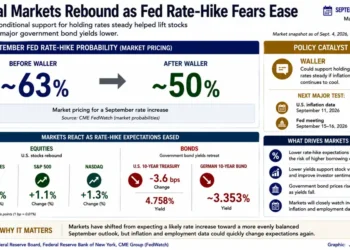
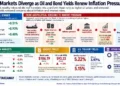
The volatility extended into sovereign debt markets, where Treasury yields fluctuated in tandem with oil prices before settling near prior levels. The two-year yield briefly climbed toward 3.96% before easing, reflecting shifting expectations around central bank policy.
According to market data cited by CME Group, traders have rapidly reversed earlier expectations of rate cuts. The probability now favors steady or potentially higher interest rates, a sharp departure from just weeks ago when easing was widely anticipated.
This repricing suggests that inflation risks—driven in part by sustained energy costs—are reasserting themselves as a dominant concern for policymakers.
Central Banks Confront Inflation vs. Growth Trade-Off
Major central banks, including the Federal Reserve, European Central Bank, Bank of England, and Bank of Japan, have opted to hold interest rates steady, reflecting caution amid the energy shock.
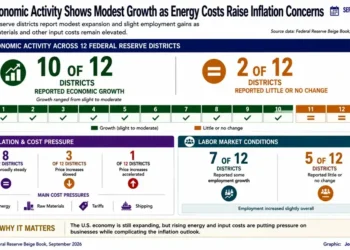
The Fed’s decision comes as markets reassess the likelihood of monetary easing in 2026, with policymakers signaling limited room for cuts if inflationary pressures persist. These constraints are now feeding directly into financial conditions, influencing borrowing costs across sectors.
Higher yields have already begun to affect real economic activity, including a reported weakening in U.S. housing sales, suggesting early signs of demand-side pressure.
Commodities and Investment Assets Under Broad Pressure
The ripple effects of higher yields and oil volatility extended into commodities, with gold and silver experiencing sharp declines. Industrial and mining stocks also came under pressure, reflecting tightening liquidity conditions and reduced risk appetite.
Even strong corporate earnings have failed to fully shield equities. Semiconductor and technology firms, despite reporting robust performance, saw partial reversals as broader macroeconomic concerns dominated trading.
At the same time, selective gains—such as in emerging partnerships in the electric and autonomous vehicle sector—indicate pockets of resilience, though these remain highly sensitive to broader market sentiment.
Diplomatic Signals Temporarily Ease Immediate Risk
Efforts to stabilize the situation have included diplomatic signaling from key regional actors. Late in the trading session, Israeli Prime Minister Benjamin Netanyahu indicated a pause in further strikes on a key Iranian facility following external pressure, according to reporting from the Associated Press.
While such developments have helped temper immediate fears, they have not resolved the underlying uncertainty. Markets continue to price in a wide range of potential outcomes, from contained escalation to broader disruption of regional energy infrastructure.
Forward Risk — Markets Locked in a High-Volatility Regime
The current pattern of rapid price swings across oil, equities, and bonds reflects a broader transition into a high-volatility environment where geopolitical developments are the primary driver of financial stability.
With energy infrastructure remaining exposed and diplomatic efforts still tentative, traders are likely to continue reacting to incremental developments rather than long-term fundamentals.
Until clearer signals emerge on the security of supply routes and the trajectory of the conflict, global markets appear set to remain in a reactive and highly sensitive state.