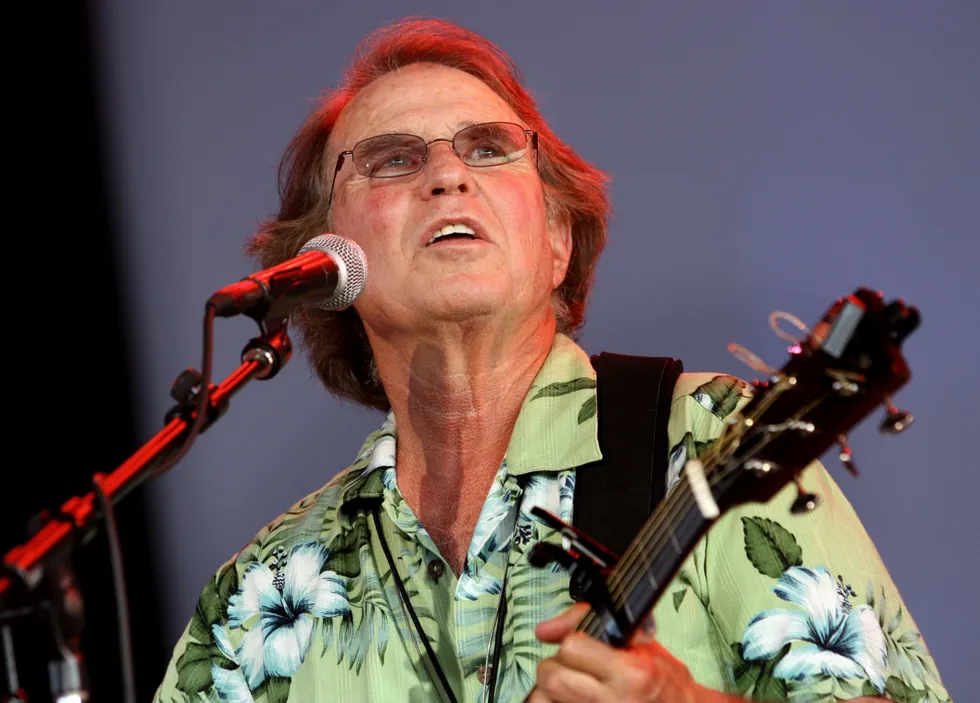
The music world is marking the loss of Country Joe McDonald, the 1960s rock musician and activist whose anti-war anthem I‑Feel‑Like‑I’m‑Fixin’‑to‑Die Rag became one of the defining protest songs of the Vietnam War era. McDonald died Sunday in Berkeley, California, at the age of 84.
His death followed complications related to Parkinson’s disease, according to a statement released by his wife, Kathy McDonald, through the musician’s publicist.
A central figure in the Bay Area’s psychedelic rock scene, McDonald rose to international prominence with his band Country Joe and the Fish, blending folk, rock and political satire at the height of the Vietnam War protest movement.

Woodstock Performance and Protest Anthem
McDonald’s most enduring cultural moment came during the Woodstock Festival in 1969, where he performed solo before a massive crowd after technical delays left him filling time between acts. His performance of “I-Feel-Like-I’m-Fixin’-to-Die Rag” quickly became one of the festival’s most recognizable scenes.
The song’s satirical chorus — questioning the purpose of the Vietnam War — turned into a sing-along protest chant among hundreds of thousands of attendees. The performance was later immortalized in the Woodstock documentary film.
Speaking to The Associated Press in 2019, McDonald described the famous opening chant as an outlet for generational anger over the war, calling it an expression of frustration among young Americans facing the draft.
A Bay Area Counterculture Figure
McDonald spent much of his career immersed in the Northern California music community alongside artists such as Grateful Dead, Jefferson Airplane, and singer Janis Joplin, with whom he had a brief romantic relationship during the late 1960s.
He wrote or co-wrote hundreds of songs and released dozens of albums throughout his career, spanning psychedelic rock, folk, blues and political commentary.
■ Related News



His best-known song was written quickly in 1965 as U.S. military involvement in Vietnam escalated under Lyndon B. Johnson. The track’s mock-celebratory tone about war casualties reflected the growing anti-war movement on American college campuses.
Controversy and Political Fallout
The song’s provocative opening chant later sparked controversy. Television host Ed Sullivan canceled a planned appearance by Country Joe and the Fish after learning about the lyrics.
Following Woodstock, McDonald was arrested and fined after performing the chant during a concert in Worcester, Massachusetts, an episode that contributed to tensions within the band as it approached its breakup.
His political connections also drew him into one of the era’s most high-profile trials. McDonald was called as a witness in the Chicago Seven trial, which centered on protests during the 1968 Democratic National Convention protests. During his testimony, he attempted to perform his anti-war song in court before being stopped by the judge.
Music Career Beyond the 1960s
Although the Woodstock performance remained the defining moment of his career, McDonald continued recording and touring for decades. His albums included Country, Carry On, Time Flies By, and 50.
He also wrote later protest songs, including the environmental track Save the Whales, released in 1975.
The band’s debut album, Electric Music for the Mind and Body, released in 1967, captured the psychedelic sound emerging from San Francisco and featured the minor hit Not So Sweet Martha Lorraine.
Country Joe and the Fish were among the performers at the Monterey Pop Festival, a landmark event widely credited with launching the global “Summer of Love” cultural movement.
Personal History and Political Roots
Born on Jan. 1, 1942, in Washington, D.C., McDonald grew up in El Monte, California. His parents were politically active and encouraged both music and social awareness.
Before entering the music scene, McDonald served in the United States Navy during the late 1950s, stationed in Japan.
His experiences shaped a complicated relationship with the Vietnam War debate. While he became one of the era’s best-known anti-war voices, he later expressed empathy for U.S. veterans who had served overseas.
In the 1990s, McDonald helped organize the creation of a Vietnam Veterans Memorial, which was formally unveiled in 1995 as a gesture of reconciliation between veterans and former protesters.
Personal Life and Legacy
McDonald was married four times and is survived by his wife Kathy, along with five children and four grandchildren.
Though he recorded across multiple decades, his cultural legacy remained closely tied to the 1960s counterculture movement — an era he later referenced in his song Bring Back the Sixties, Man.
His music captured the tensions of the period, combining satire, folk traditions and psychedelic experimentation to produce one of the protest movement’s most recognizable anthems.