DUBAI, United Arab Emirates (Journos News) – As diplomats prepare to meet in Geneva over Iran’s nuclear program, tensions between Tehran and Washington have escalated sharply, with both sides trading accusations ahead of a pivotal round of talks. Iranian officials on Wednesday rejected recent comments by U.S. President Donald Trump, describing them as “big lies,” while also indicating that negotiations could still yield results if conducted with what they called mutual respect.
The exchanges come against the backdrop of an unusually large U.S. military deployment across the Middle East, a move widely interpreted as both a deterrent and a signal of leverage before negotiations. Regional governments are watching closely, wary that a breakdown in talks could deepen instability in a region already strained by prolonged conflict.
Iranian officials rebuke Trump’s claims
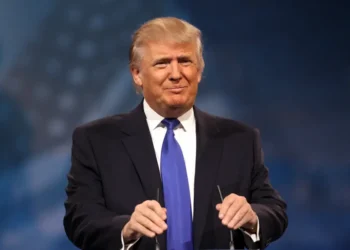
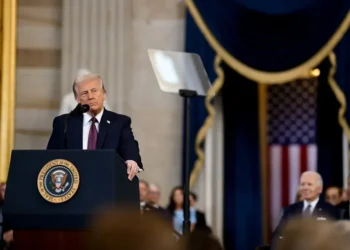
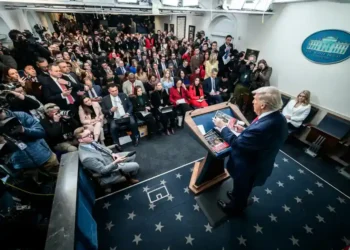
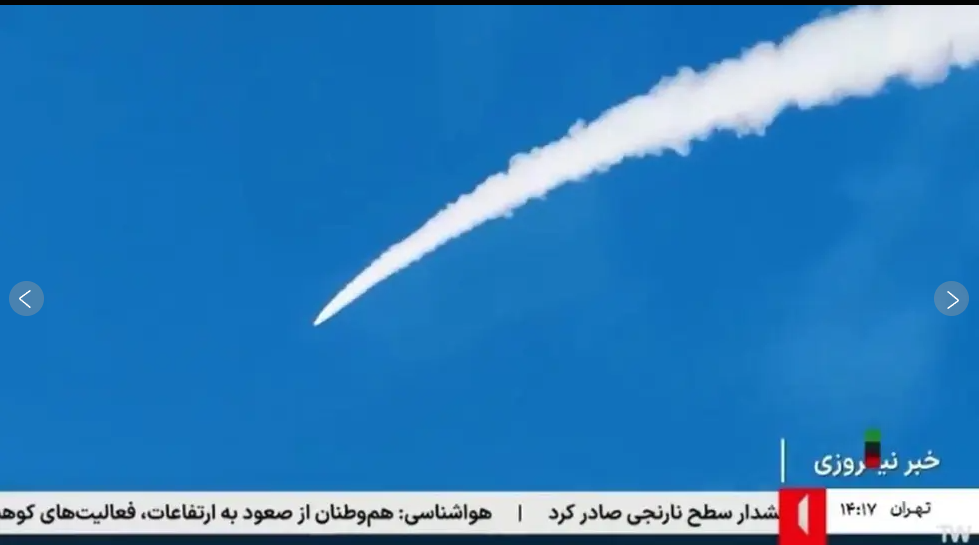
During a speech in Washington, Trump accused Iran of continuing efforts to rebuild its nuclear capabilities and develop long-range missile systems capable of threatening Europe and potentially the United States. He reiterated that Tehran had been warned against reviving any weapons-related nuclear activity.

Iran’s Foreign Ministry spokesman, Esmail Baghaei, rejected those assertions in a post on X, accusing the U.S. administration of conducting a “disinformation and misinformation campaign.” He compared Trump’s rhetoric to historic propaganda tactics and said claims regarding Iran’s nuclear program, ballistic missiles, and casualty figures from recent unrest amounted to “big lies.”
Iran has consistently maintained that its nuclear activities are for peaceful purposes, a position it has held for years amid international scrutiny.
Disputed figures from nationwide protests
The political backdrop to the talks includes last month’s nationwide protests in Iran, which have intensified domestic pressures on the government. In his address, Trump cited figures suggesting at least 32,000 people were killed during the unrest.
That number is significantly higher than other published estimates. The U.S.-based Human Rights Activist News Agency has reported more than 7,000 deaths and suggested the real figure may be higher. Iran’s government, which has historically provided limited transparency on unrest, said in January that 3,117 people had been killed.
The differing casualty estimates underscore the broader mistrust between Tehran and Washington as they enter negotiations.
■ Related News

U.S. military posture raises stakes
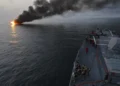
At sea, the U.S. Navy’s Fifth Fleet, headquartered in Bahrain, appeared to have dispersed ships that are typically docked there. Satellite imagery captured by Planet Labs and analyzed by The Associated Press showed American vessels at sea rather than in port. U.S. Central Command declined to comment when asked about the movements.
The dispersal mirrors a similar step taken before Iran’s missile attack on Qatar in June, when U.S. naval assets were repositioned to reduce vulnerability. Washington has assembled one of its largest regional force deployments in decades, including aircraft and warships, in what officials describe as a defensive posture.
Iran has previously warned that U.S. military bases in the Middle East would be considered legitimate targets if conflict erupts. Tens of thousands of American service members are stationed across the region.
Oil markets have reacted nervously to the buildup and rhetoric, with prices rising in recent days amid concerns about potential disruptions.
Geneva talks under Omani mediation
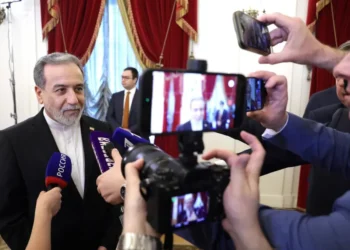
The third round of indirect talks between Iran and the United States is scheduled to take place Thursday in Geneva, under mediation by Oman. A plane carrying Iranian Foreign Minister Abbas Araghchi arrived in Switzerland late Wednesday. The U.S. delegation is being led by special envoy Steve Witkoff.
U.S. Secretary of State Marco Rubio said the discussions would focus primarily on Iran’s nuclear activities and assessing Tehran’s seriousness about reaching an agreement that could avert potential military action.
While Rubio expressed hope for progress, he suggested a breakthrough was unlikely at this stage. He also noted that Washington remains concerned about Iran’s ballistic missile program, an issue Tehran has repeatedly declined to include in negotiations.
Before U.S. strikes in June, Iran had been enriching uranium up to 60% purity, according to international inspectors — a level that is technically short of weapons-grade but significantly above what is required for civilian energy use. Western governments and the International Atomic Energy Agency have long said Iran maintained a nuclear weapons program until 2003, an allegation Tehran denies.
Rubio said Iran is not currently enriching uranium but is “trying to get to the point where they ultimately can.”
Uncertainty over next steps
Trump previously said U.S. strikes last year had “obliterated” Iran’s nuclear program. However, satellite imagery reviewed by The Associated Press indicated rebuilding activity at missile production facilities and some work at nuclear sites struck in June.
Inspectors from the International Atomic Energy Agency have not been granted access to those locations to independently verify their status, leaving uncertainty about the true condition of the program.
Iran’s parliament speaker, Mohammad Bagher Qalibaf, said Tehran remained open to negotiations if conducted in a manner that respects Iranian dignity and mutual interests. But he warned that any military action during talks would be met with a “firm blow” from Iran’s armed forces.
Regional analysts note that the stakes extend beyond the nuclear file. Any escalation could draw in U.S. allies in the Persian Gulf or Israel and risk broader confrontation at a time when regional tensions remain high.
For now, diplomacy and deterrence are unfolding in parallel. Whether the Geneva talks can narrow the gap between the two sides — or merely underscore how far apart they remain — will shape the next phase of an already volatile standoff.
Source: AP News – Iran accuses Trump of ‘big lies’ ahead of Geneva talks in face of major US military deployment