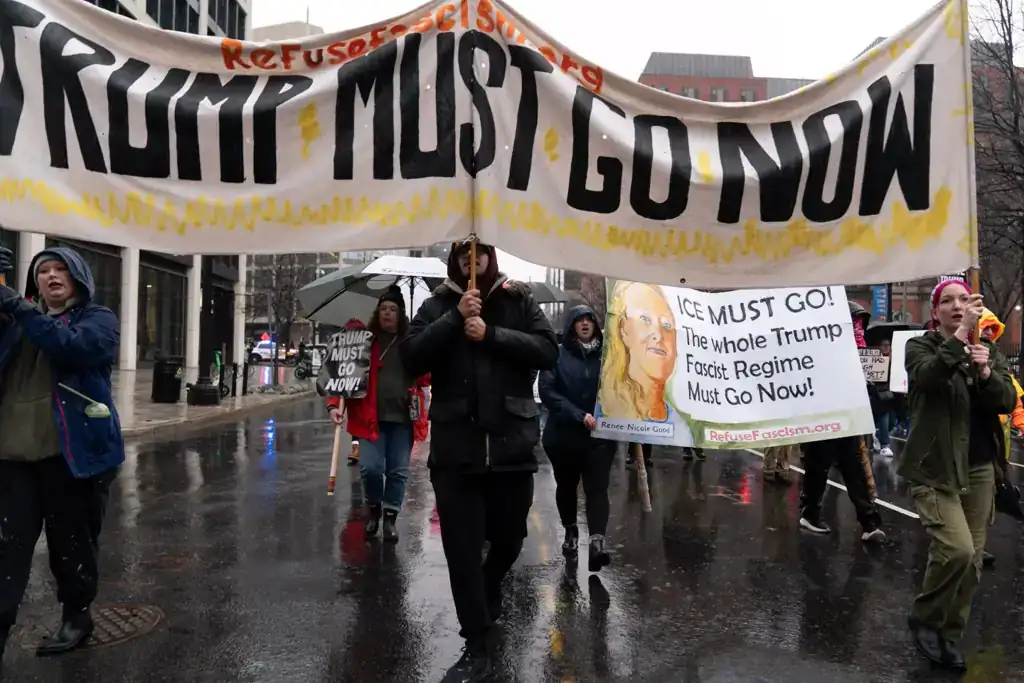
Thousands of demonstrators gathered in Minneapolis and other U.S. cities over the weekend to protest recent shootings involving federal immigration officers, as state and local leaders appealed for calm and warned against violence. The protests followed the fatal shooting of a woman in Minneapolis by an Immigration and Customs Enforcement officer and the shooting of two people in Portland, Oregon, earlier in the week.
The Minneapolis rally was among hundreds of coordinated demonstrations planned nationwide, reflecting mounting opposition to the Trump administration’s expanded immigration enforcement efforts. Minnesota officials stressed that while peaceful protest is protected, acts of violence or property damage would not be tolerated.
Minneapolis protest follows fatal shooting
The largest gathering took place in Minneapolis, where thousands marched through city streets on Saturday. Tensions have been high since Wednesday’s killing of Renee Good, 37, who was shot by a federal immigration officer during an enforcement operation, according to authorities.

“We’re all living in fear right now,” said Meghan Moore, a Minneapolis resident who attended the protest with her children. “ICE is creating an environment where nobody feels safe, and that’s unacceptable.”
City officials said most demonstrations have remained peaceful. However, Minneapolis Police Chief Brian O’Hara said a protest outside a downtown hotel late Friday drew about 1,000 people and escalated when some demonstrators threw ice, snow, and rocks at officers. One officer sustained minor injuries, and 29 people were cited and released.
Mayor Jacob Frey said the city supports the right to protest but will act against those who endanger others or damage property. He blamed “agitators” for attempting to inflame crowds and linked the unrest to broader political tensions around immigration enforcement.
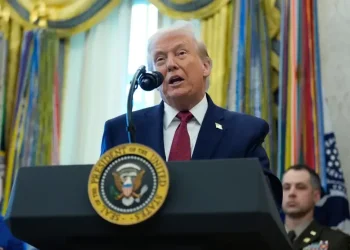
“This is what Donald Trump wants,” Frey said, referring to the president’s push for large-scale immigration operations in several U.S. cities. “He wants us to take the bait.”
Minnesota Governor Tim Walz echoed that message, urging demonstrators to remain peaceful and focused. In social media posts, Walz said the federal deployment had quickly resulted in loss of life and warned that disorder would distract from accountability.
“We will fight with peaceful expression, in court, through public debate, and at the ballot box,” Walz wrote. “Keep the peace.”
Nationwide demonstrations reflect broader frustration
Organizers said protests were held or planned in cities across Texas, Kansas, New Mexico, Ohio, Florida, and other states. Indivisible, a progressive social movement formed during Trump’s first term, said the demonstrations aimed to oppose what it described as aggressive and destabilizing immigration tactics.
In Minneapolis, protesters braved subfreezing temperatures and light snowfall, carrying handmade signs reading “De-ICE Minnesota” and “ICE melts in Minnesota.” Families with children joined the march, which passed through a culturally diverse neighborhood known for murals celebrating immigrant communities.
Connor Maloney, who attended the Minneapolis rally, said his frustration had been building for months. “Almost daily I see them harassing people,” he said, referring to immigration officers. “It’s sickening that it’s happening in our community.”
Elsewhere, Steven Eubanks, 51, said he joined a protest in Durham, North Carolina, after learning of the Minneapolis shooting. “We can’t allow it,” he said. “We have to stand up.”
Federal response and law enforcement presence
The U.S. Department of Homeland Security has said the Twin Cities deployment represents its largest immigration enforcement operation to date. The Trump administration has described both the Minneapolis and Portland shootings as acts of self-defense, alleging that drivers involved attempted to use their vehicles as weapons against officers.
Despite the large public demonstration, federal officers continued operating across Minneapolis on Saturday. An Associated Press photographer witnessed heavily armed agents, including at least one in Border Patrol uniform, confront a person who had been following them. Officers ordered the individual to stop, warning it was a “first and final warning,” before driving away without making an arrest.
In Richfield, a Minneapolis suburb, federal agents with their faces covered detained a man outside a home improvement store and warned journalists to keep their distance, according to witnesses.
Police Chief O’Hara said city officers have responded to multiple calls involving vehicles left behind after drivers were apprehended by immigration authorities. In one instance, a car was abandoned while still in park; in another, a dog was left inside a vehicle.
“Immigration enforcement activities are happening all over the city,” O’Hara said, adding that 911 calls have increased as residents report ICE activity and abandoned cars.
Comparisons to past unrest, calls for restraint
While some confrontations have occurred, officials noted that the current protests differ markedly from the unrest that followed the killing of George Floyd in 2020. Law enforcement presence has generally been limited, and neighborhood demonstrations have been largely peaceful.
Smaller clashes were reported near Minneapolis–St. Paul International Airport on Thursday and Friday, where officers were guarding a federal building used as a base for the immigration operation.
The administration has deployed more than 2,000 federal officers to Minnesota as part of the crackdown, which officials say is linked in part to allegations of fraud involving some Somali residents. Community leaders and advocacy groups have criticized the operation as overly broad and intimidating.
Lawmakers denied access to ICE facility
Tensions extended to Capitol Hill oversight efforts on Saturday when three Minnesota congresswomen attempted to tour an ICE facility inside the Minneapolis federal building. Reps. Ilhan Omar, Kelly Morrison, and Angie Craig said they were initially allowed inside but were asked to leave after about 10 minutes.
The lawmakers accused ICE of obstructing Congress’s oversight responsibilities. Their visit came amid ongoing legal disputes over access to immigration facilities.
Last month, a federal judge temporarily blocked the administration from enforcing policies that restrict congressional visits to detention centers. The ruling followed a lawsuit filed by 12 members of Congress after they were denied entry to ICE facilities, challenging revised visitor rules implemented by the agency.
As demonstrations continue nationwide, Minnesota officials have reiterated calls for peaceful protest, warning that further violence would undermine public safety and shift attention away from the central issues raised by the shootings and the broader immigration crackdown.
This article was rewritten by JournosNews.com based on verified reporting from trusted sources. The content has been independently reviewed, fact-checked, and edited for accuracy, neutrality, tone, and global readability in accordance with Google News and AdSense standards.
All opinions, quotes, or statements from contributors, experts, or sourced organizations do not necessarily reflect the views of JournosNews.com. JournosNews.com maintains full editorial independence from any external funders, sponsors, or organizations.
Stay informed with JournosNews.com — your trusted source for verified global reporting and in-depth analysis. Follow us on Google News, BlueSky, and X for real-time updates.