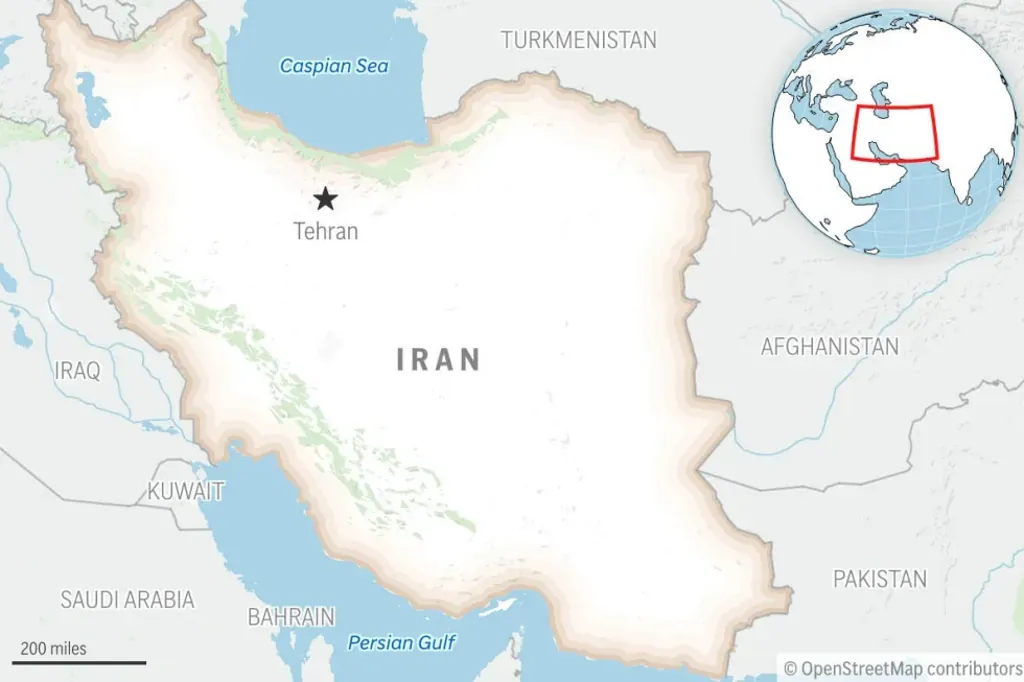
DUBAI, United Arab Emirates (Journos News) – Iran’s Supreme Leader Ayatollah Ali Khamenei signaled a tougher response to nationwide protests on Friday, accusing demonstrators of damaging public property to please the United States. His remarks came as security forces moved to contain unrest that has spread across major cities, even as authorities imposed a sweeping communications blackout that obscured the full scale of the demonstrations.
The protests, initially driven by economic hardship, have evolved into the most serious challenge to Iran’s leadership in several years, drawing sharp reactions from Washington and renewed scrutiny of Tehran’s internal stability.
Khamenei denounces protests and foreign influence
In comments broadcast on Iranian state television, Khamenei dismissed the demonstrators as acting on behalf of foreign powers, saying protesters were “ruining their own streets to make the president of another country happy.” He directly criticized U.S. President Donald Trump, describing him as having hands “stained with the blood of Iranians,” while crowds shown in state media footage chanted “Death to America!”

Khamenei’s remarks were widely interpreted as a warning that security forces would intensify their response. Iranian officials have repeatedly framed the unrest as the work of hostile foreign actors, a narrative that has accompanied past crackdowns on dissent.
State media reported that fires were set and public infrastructure damaged during the protests, alleging the involvement of what it described as “terrorist agents” linked to the United States and Israel. It acknowledged casualties but provided no details on deaths or injuries.
Protests spread despite communications blackout
The demonstrations continued overnight into Friday despite near-total disruptions to internet access and international telephone calls. Short videos shared by activists before the blackout appeared to show protesters gathering in Tehran and other cities, chanting slogans against the government as fires burned in streets strewn with debris.
Because of the communications shutdown, the full scope of the unrest could not be independently verified. Iran has previously used internet restrictions during periods of unrest, a tactic criticized by rights groups for limiting documentation and outside scrutiny.
The protests began on Dec. 28, sparked by frustration over Iran’s deteriorating economy. In recent weeks, they have intensified and broadened in scope, with chants increasingly targeting the country’s political system and senior leadership.
Rising toll reported by rights groups
According to the U.S.-based Human Rights Activists News Agency, at least 42 people have been killed since the protests began, and more than 2,270 have been detained. Iranian authorities have not released comprehensive casualty figures.
Rights advocates say the blackout may be aimed at preventing images and accounts of the protests from reaching the outside world. Analysts note that such conditions can also reduce accountability for the actions of security forces on the ground.
Calls from exiled crown prince add new dimension
The unrest has also drawn attention to Reza Pahlavi, Iran’s former crown prince, whose father fled the country ahead of the 1979 Islamic Revolution. Living in exile, Pahlavi called on Iranians to protest at 8 p.m. on Thursday and again on Friday, a message that circulated widely on social media before communications were cut.
When the clock struck 8 p.m. on Thursday, residents across Tehran reported loud chanting from rooftops and streets. Slogans included “Death to the dictator!” and “Death to the Islamic Republic!” Some demonstrators voiced support for the former monarchy, chanting, “This is the last battle! Pahlavi will return!”
In a statement issued before the blackout, Pahlavi accused the government of silencing the population. He urged European leaders to join the United States in pressuring Tehran and to use diplomatic and technical means to restore communications.
Support for the former monarchy remains difficult to assess. While chants praising the shah reflect deep anger at the current system, it is unclear whether they represent backing for Pahlavi personally or a broader nostalgia for pre-revolutionary Iran.
Economic pressures and recent conflict fuel unrest
Iran has experienced repeated waves of protests in recent years, often linked to economic strain, corruption allegations, and political repression. The current unrest follows a sharp economic downturn, with the national currency collapsing in December to around 1.4 million rials to the U.S. dollar, exacerbating inflation and eroding purchasing power.
The protests have also unfolded against the backdrop of heightened regional tensions following a 12-day war involving Israel earlier this year, which further strained Iran’s economy and international position.
Trump renews warnings to Tehran
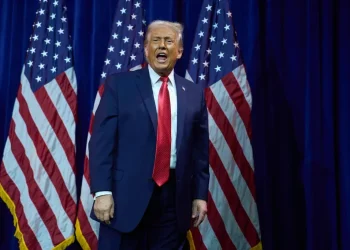
President Trump has publicly pledged support for peaceful protesters, warning Iranian authorities against the use of lethal force. Speaking last week and again in interviews aired on Thursday, Trump said the United States would respond if Tehran “violently kills peaceful protesters.”
In an interview with radio host Hugh Hewitt, Trump said Iran had been warned “very strongly” about the consequences of such actions. He stopped short of outlining specific measures but emphasized that Iran would “have to pay hell” if protesters were killed.
Trump declined to say whether he would meet with Pahlavi, suggesting it would be premature. In a separate interview on Fox News, he went further, speculating that Khamenei himself might be considering leaving the country as the situation deteriorates.
Uncertain path ahead
For now, Iran’s leadership appears determined to reassert control, relying on security forces, information restrictions, and familiar accusations of foreign interference. Whether the protests can be sustained under such conditions remains unclear, particularly as communication lines remain severed.
What is evident is that the demonstrations mark a significant escalation in public dissent, combining economic grievances with direct challenges to Iran’s political order. As authorities weigh their next steps, the standoff is being closely watched both inside the country and abroad.
This article was rewritten by JournosNews.com based on verified reporting from trusted sources. The content has been independently reviewed, fact-checked, and edited for accuracy, neutrality, tone, and global readability in accordance with Google News and AdSense standards.
All opinions, quotes, or statements from contributors, experts, or sourced organizations do not necessarily reflect the views of JournosNews.com. JournosNews.com maintains full editorial independence from any external funders, sponsors, or organizations.
Stay informed with JournosNews.com — your trusted source for verified global reporting and in-depth analysis. Follow us on Google News, BlueSky, and X for real-time updates.