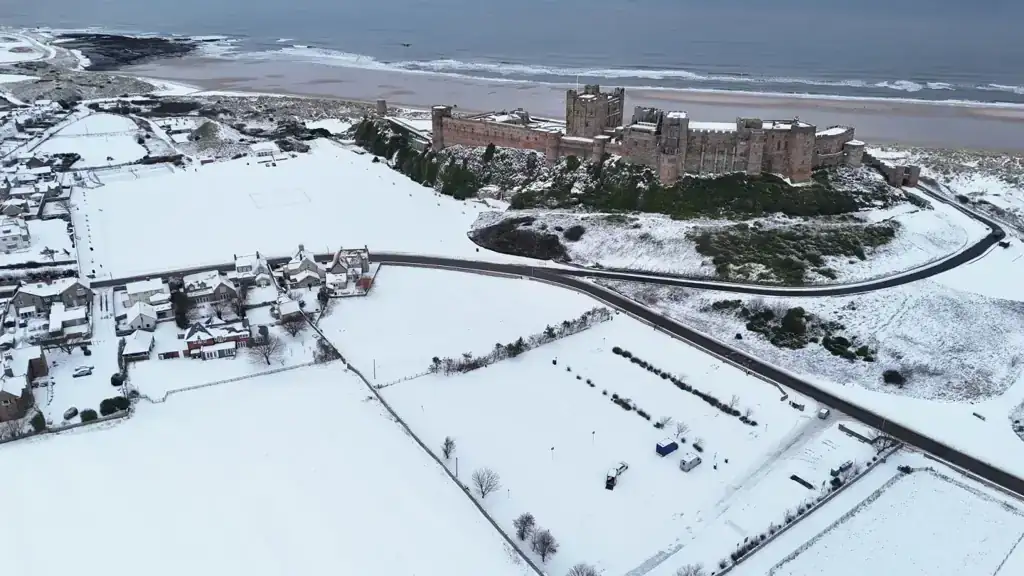
Britain moved into emergency preparedness mode on Thursday as a powerful winter storm approached from the southwest, prompting the country’s highest-level weather warnings and the activation of nationwide emergency phone alerts.
The Met Office issued a rare red weather warning for parts of southwest England, warning of potentially life-threatening conditions from violent winds, heavy rain and snow. Officials said the storm could cause widespread disruption to transport, power supplies and daily life as the country endures one of its sharpest cold spells in years.
Severe winds and rare red warning
The red warning, the most serious level issued by the Met Office, covers Cornwall and the Isles of Scilly from Thursday evening. Forecasters warned of gusts reaching up to 100 miles per hour (160 kilometres per hour), particularly along exposed coastal areas.

The Met Office said such winds could lead to structural damage, flying debris, fallen trees and extended power outages. Rail, road and ferry services are expected to be heavily disrupted, with authorities advising people to avoid travel unless essential.
Red warnings are issued only when forecasters judge that severe weather is very likely and poses a direct risk to life, with the potential for significant damage to infrastructure and prolonged disruption.
Storm Goretti moves inland
The storm, named Goretti by France’s national weather service Météo-France, is expected to move northeast across England overnight. As it tracks inland, forecasters say it will bring a rapid transition from rain to snow across central parts of the country.
Snowfall of up to 30 centimetres (12 inches) is possible in some areas over a short period, raising concerns about road safety, school closures and supply chain disruption, particularly in rural communities.
Goretti is forecast to exit the United Kingdom on Friday, before strengthening further as it crosses the English Channel. The Met Office said even stronger winds are expected to affect the Channel Islands and northern France.
“This multi-hazard event will bring significant disruption to many,” said Neil Armstrong, chief forecaster at the Met Office. “This is a complex spell of severe weather.”
Emergency alerts sent to mobile phones
In response to the red warning, the British government activated its emergency alert system, sending warnings directly to mobile phones in affected areas. The alerts include safety advice and information about the severity of the conditions.
Compatible phones emit a loud siren-like sound and vibration for around 10 seconds, even if set to silent. The system has been used only a handful of times since its introduction.
The first alert was sent on Thursday afternoon to residents of the Isles of Scilly, followed by a second alert two hours later covering Cornwall.
Amber warnings and health risks nationwide
Beyond the red warning zone, the Met Office issued amber weather warnings across large parts of England, Wales and Scotland. Amber alerts signal an increased likelihood of severe impacts, including travel delays, road and rail closures, flight cancellations and power cuts.
The U.K. Health Security Agency extended amber cold weather alerts across all regions of England until Jan. 12. Officials warned that prolonged cold conditions could lead to severe health impacts, including an expected rise in deaths, particularly among people aged 65 and older or those with underlying health conditions. Authorities said younger age groups could also be affected.
Recent snowfall has already disrupted large areas of Wales, northern England and Scotland, forcing school closures and complicating travel.
Wider European disruption
The storm system is part of a broader bout of extreme winter weather affecting large parts of Europe.
In the Netherlands, conditions eased on Thursday after several days of disruption at Amsterdam’s Schiphol Airport, where hundreds of flights were canceled earlier in the week. Airport operations were briefly affected by a power outage, though officials said services were stabilizing.
Dutch carrier KLM reported long queues at the airport but said it was working to minimize further delays.
Elsewhere, severe weather continued to affect southeastern Europe. Heavy snow disrupted traffic in Serbia, while temperatures in Slovenia fell to as low as minus 25 degrees Celsius (minus 13 Fahrenheit).
In parts of Bosnia, Kosovo and Montenegro, a combination of heavy rain and melting snow caused rivers to overflow, flooding communities and forcing dozens of residents to evacuate their homes.
Authorities urge caution
British authorities urged residents in affected areas to follow official guidance, secure loose objects, avoid coastal exposure and limit travel where possible. Emergency services and local councils said contingency plans were in place but warned that conditions could deteriorate rapidly.
The Met Office said the situation remained under close review, with updates expected as the storm progresses.
This article was rewritten by JournosNews.com based on verified reporting from trusted sources. The content has been independently reviewed, fact-checked, and edited for accuracy, neutrality, tone, and global readability in accordance with Google News and AdSense standards.
All opinions, quotes, or statements from contributors, experts, or sourced organizations do not necessarily reflect the views of JournosNews.com. JournosNews.com maintains full editorial independence from any external funders, sponsors, or organizations.
Stay informed with JournosNews.com — your trusted source for verified global reporting and in-depth analysis. Follow us on Google News, BlueSky, and X for real-time updates.