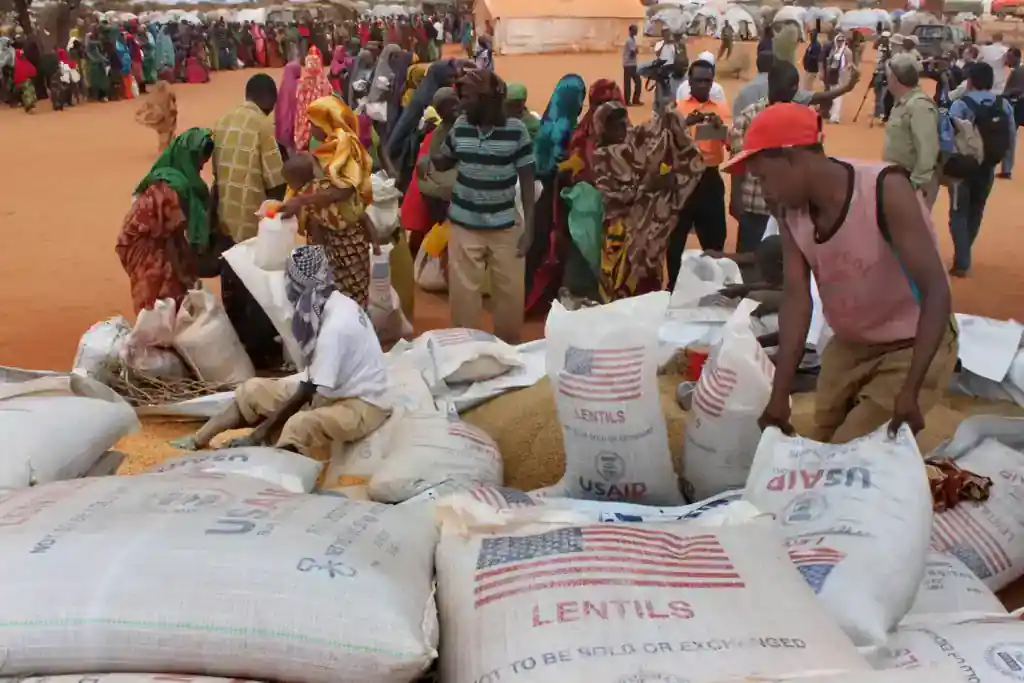
The United States has suspended all aid to Somalia’s federal government after reports that Somali officials destroyed a U.S.-funded warehouse and seized 76 metric tons of food aid supplied by the World Food Program for civilians.
The State Department said the suspension reflects the administration’s “zero-tolerance policy for waste, theft, and diversion of life-saving assistance.” It added that aid will only resume once Somalia takes responsibility for its actions and implements corrective measures.
Assistance Programs Under Review
A senior State Department official, speaking on condition of anonymity, said Washington is carefully reviewing all ongoing programs. The goal is to identify which aid directly or indirectly benefits the Somali government. Officials will then decide whether programs should be paused, redirected, or ended.

“Somalia has long been a black hole of poorly monitored U.S. assistance,” the official said. “The administration is taking steps to close programs that are at risk of misuse.”
The suspension follows the demolition of a World Food Program warehouse at Mogadishu Port, reportedly ordered by Somali President Hassan Sheikh Mohamud. U.S. officials said the action took place without prior notice or coordination with international donors.
Broader U.S.-Somalia Aid Context
The total impact of the suspension is not yet clear. The Trump administration has reduced foreign aid budgets, dismantled parts of the U.S. Agency for International Development, and not published updated country-level aid data.
During the final year of President Joe Biden’s administration, the United States provided $770 million in Somalia. However, only a portion of that funding went directly to the federal government.
The senior official emphasized that the administration is “taking steps to ensure aid reaches its intended recipients” while shutting down programs vulnerable to mismanagement.
Somalia’s Ongoing Challenges
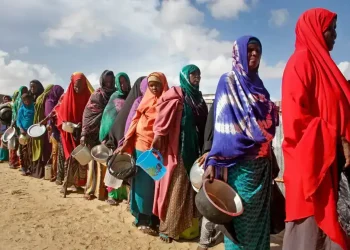
Somalia, in the Horn of Africa, is one of the world’s poorest countries. Decades of conflict, political instability, and repeated natural disasters, including severe droughts, have left millions dependent on humanitarian assistance.
The U.S. suspension adds uncertainty for organizations operating in the country. These include the United Nations and non-governmental groups providing emergency food, healthcare, and development programs.
Somalia’s Ongoing Challenges
Somalia, in the Horn of Africa, is among the world’s poorest nations. Decades of conflict, political instability, and recurrent natural disasters, including severe droughts, have left millions reliant on humanitarian aid.
The U.S. suspension adds further uncertainty for organizations operating in the country, including the United Nations and non-governmental groups providing emergency food, health services, and development programs.
This article was rewritten by JournosNews.com based on verified reporting from trusted sources. The content has been independently reviewed, fact-checked, and edited for accuracy, neutrality, tone, and global readability in accordance with Google News and AdSense standards.
All opinions, quotes, or statements from contributors, experts, or sourced organizations do not necessarily reflect the views of JournosNews.com. JournosNews.com maintains full editorial independence from any external funders, sponsors, or organizations.
Stay informed with JournosNews.com — your trusted source for verified global reporting and in-depth analysis. Follow us on Google News, BlueSky, and X for real-time updates.