TOKYO (Journos News) – Japan has lifted a week-long megaquake advisory issued after a powerful offshore tremor rattled its northeastern coastline, though officials are urging residents to remain vigilant in one of the world’s most seismically active regions.
The advisory followed a magnitude 7.5 earthquake that struck off northern Japan, prompting warnings of a possible larger aftershock. While the immediate heightened risk has now subsided, authorities stress that the underlying seismic threat remains a constant reality for communities along the Pacific coast.
The decision underscores Japan’s evolving approach to disaster communication—balancing caution with efforts to avoid unnecessary disruption.

Advisory Lifted After Risk Assessment
The Japan Meteorological Agency (JMA), alongside the Cabinet Office, announced Tuesday that the probability of a subsequent “megaquake” in the affected zone has decreased since the initial shock. Officials said the advisory, issued last Monday, is no longer in effect.
Under the advisory, residents in designated areas along the northeastern coast were urged to take additional precautions. Guidance included sleeping in day clothes and keeping helmets, sturdy shoes and emergency grab bags within reach in case a magnitude 8 or stronger quake struck.
With the advisory lifted, such measures are no longer formally recommended. However, officials emphasized that the end of the warning does not mean the seismic risk has disappeared. Japan sits atop multiple tectonic plate boundaries and experiences frequent earthquakes of varying intensity.
“The likelihood has somewhat reduced, but preparedness remains critical,” agency officials said at a joint briefing.
Impact of the Magnitude 7.5 Earthquake
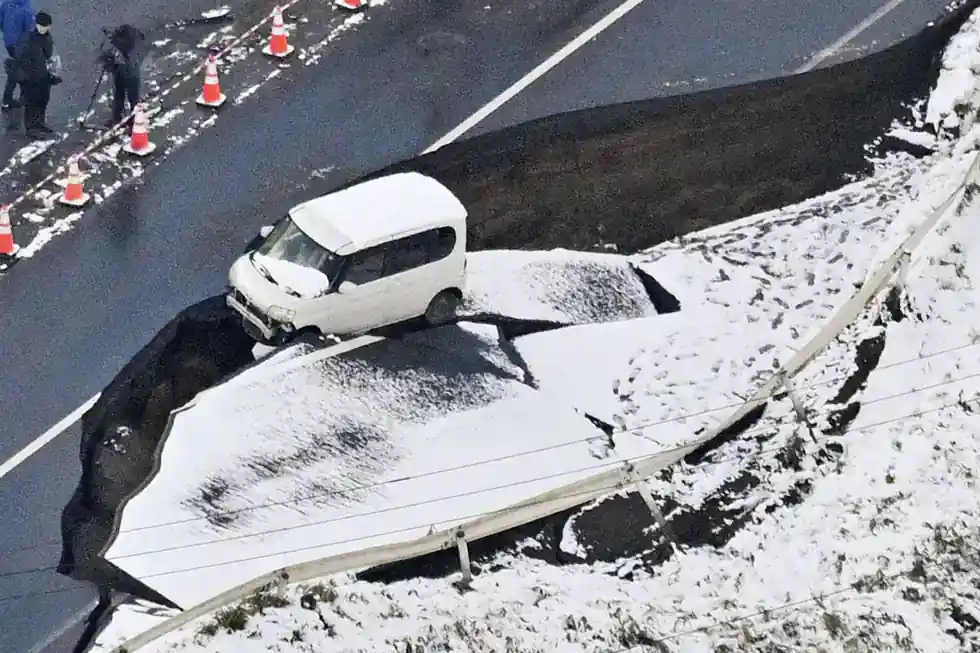
The earthquake struck off the eastern coast of Aomori, near the northern tip of Japan’s main island of Honshu and just south of Hokkaido. According to the Fire and Disaster Management Agency, more than 40 people sustained injuries, most of them minor. Dozens of homes were damaged.
■ Related News




Tsunami alerts and advisories were issued shortly after the quake. Waves measuring up to 70 centimeters (27 inches) were recorded in some coastal areas, though no significant tsunami damage was reported.
Infrastructure disruption was limited, and authorities said residents and local governments responded calmly. There were no reports of panic buying or widespread evacuations, in contrast to previous high-profile warnings.
The relatively measured public response reflects lessons learned over more than a decade of disaster preparedness reforms.
Lessons From 2011 and Subsequent Advisories
Japan’s modern earthquake alert system was shaped by the catastrophic events of March 2011, when a magnitude 9.0 earthquake triggered a massive tsunami that devastated the northeastern coast and led to the Fukushima nuclear crisis.
That disaster prompted authorities to refine both seismic monitoring and public communication strategies. In 2022, a specific advisory framework for the Hokkaido–Sanriku offshore region was introduced to provide earlier warnings of potential large-scale quakes.
Officials have sought to avoid both underestimating risk and triggering unnecessary alarm. In the summer of 2024, when a first-ever “Nankai Trough” megaquake advisory was issued for parts of southern Japan’s Pacific coastline, public reaction included panic buying of emergency supplies, event cancellations and temporary business closures.
By contrast, authorities said the recent advisory for the northeastern coast was met with steady compliance and limited disruption. Municipalities reinforced preparedness messaging without escalating concern beyond official guidance.
Balancing Vigilance and Stability
Japan’s approach reflects the difficulty of managing probabilistic risk. Earthquake forecasting cannot predict precise timing, but statistical modeling can indicate elevated likelihood following major tremors.
Officials said the decision to lift the advisory was based on updated seismic data and ongoing monitoring. The advisory mechanism is designed to be temporary and responsive to changing conditions.
Experts note that Japan’s strict building codes, routine emergency drills and widespread public awareness have helped reduce casualties from frequent seismic events. Even so, authorities continue to encourage households to maintain emergency kits and evacuation plans.
The recent quake serves as a reminder of Japan’s vulnerability to tectonic activity stretching from Hokkaido through the Tohoku region and further south along the Pacific “Ring of Fire.”
For residents along the northeastern coastline, daily life may be returning to normal. But officials stress that preparedness—rather than alarm—remains the cornerstone of Japan’s disaster strategy.
Source: AP News – Japan lifts its megaquake advisory but urges caution a week after magnitude 7.5 temblor